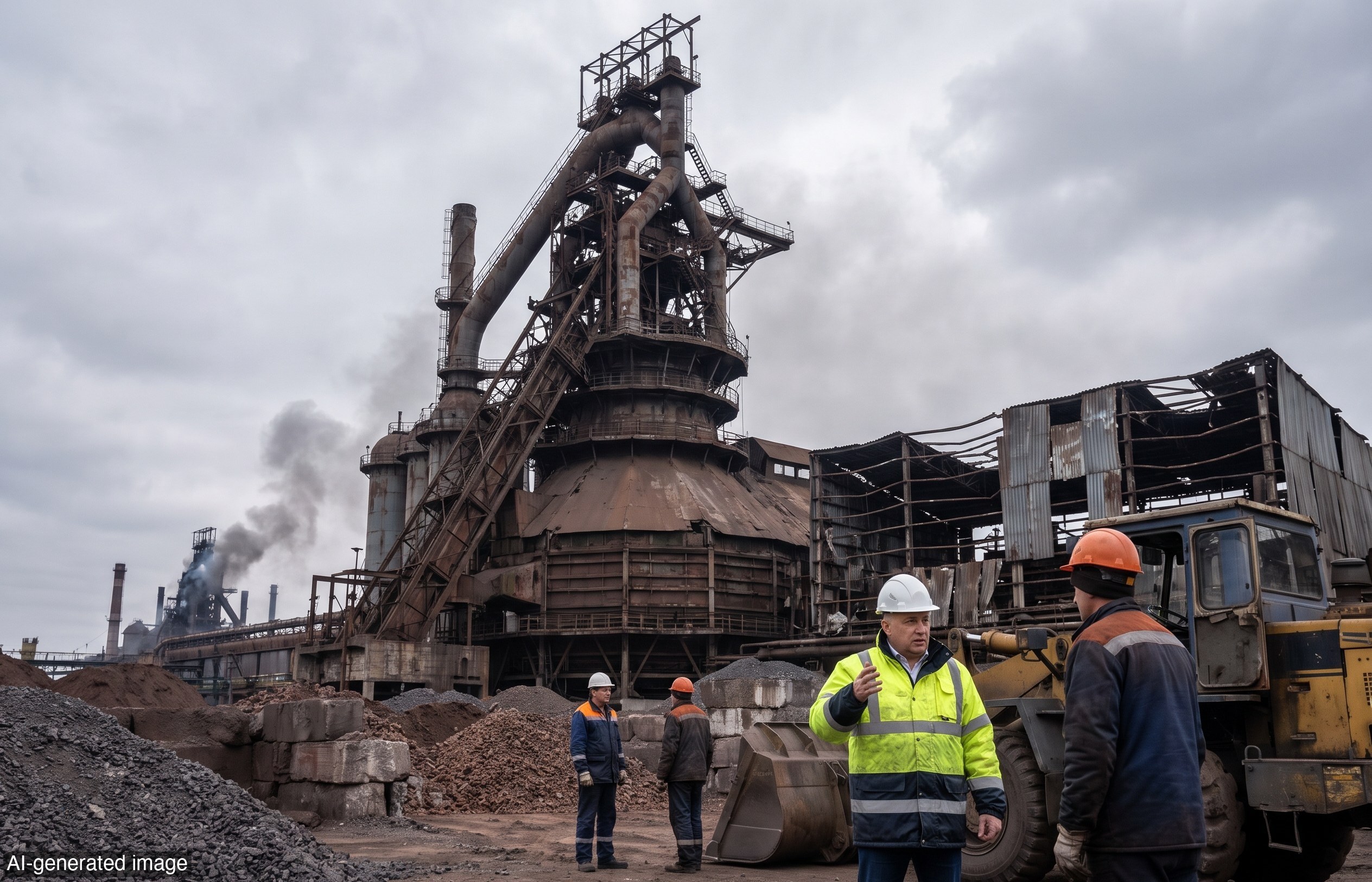
Ukraine's steel industry is being squeezed from both sides: Russian bombs on one side, and new EU trade barriers on the other. Yuriy Ryzhenkov, chief executive of Metinvest, says the result is a business environment that is becoming impossible to sustain.
Metinvest is Ukraine's largest steelmaker, with 33,700 people. Ryzhenkov says more than 8,000 employees are fighting Russian forces, factories are under constant bombardment, and hundreds of colleagues have been killed. He says the company had to stop both steel mills after what he called one of the most severe bombing campaigns in August and September this year.
'We lost 14 people at our steel mills,' Ryzhenkov says, adding that this was 'probably the largest loss since 2023 in a single bombing.' He says the blockade of the seaports is now more severe than in 2022, leaving the company with no easy way to move product.
The pressure is not only military. In July, the European Union imposed new tariffs on all EU steel imports to protect its own industry from cheaper foreign competition. For Ukraine, the key steel tariff-rate quota from July 2026 was cut by 60%, according to the GMK Center, a Ukrainian think tank. GMK Center says that is expected to reduce steel imports from Ukraine to the EU by 1.3 million metric tons per year.
Ryzhenkov says Ukraine was effectively left with the European market as its only available outlet after the invasion and the blockade of ports. He says the first response from the EU was to abolish restrictions on steel shipments, which he calls 'the correct answer.' But he says the new quotas do not account for Ukraine's exceptional logistics, energy and labor disruptions.
The numbers show how hard the sector has been hit. Between 2021 and 2025, steel production in Ukraine fell from 21 million metric tons to 7.4 million metric tons. Export value dropped from $22 billion to $6 billion, and tax revenues fell from $3.5 billion to $870 million.
Ryzhenkov says steelmaking cannot stay viable without a market to sell into and long-term commitments from buyers. He says the industry typically needs more than 90% capacity utilization to be profitable even in normal times, and that today's conditions make that impossible.
'If nothing is done, it’s almost inevitable,' he says when asked whether steelmaking in Ukraine could disappear. 'If Ukraine is not allowed to participate in the European market fully, and at the same time the circumstances preclude any significant investments, then I mean everything comes to an end eventually.'
For Ukraine, this is more than a corporate problem. Steel is not just an industrial line item; it is revenue, jobs, and supply for the armed forces. When capital cannot move, production cannot scale, and trade routes are blocked, the market does what it always does: it contracts.
Capital rewards clear rules, but war and protectionism impose the opposite. The taxpayer and the broader economy pay for that breakdown in lost output, lost revenue, and weaker industrial capacity. In Ukraine's case, the cost is measured not only in margins, but in the survival of a strategic sector.



