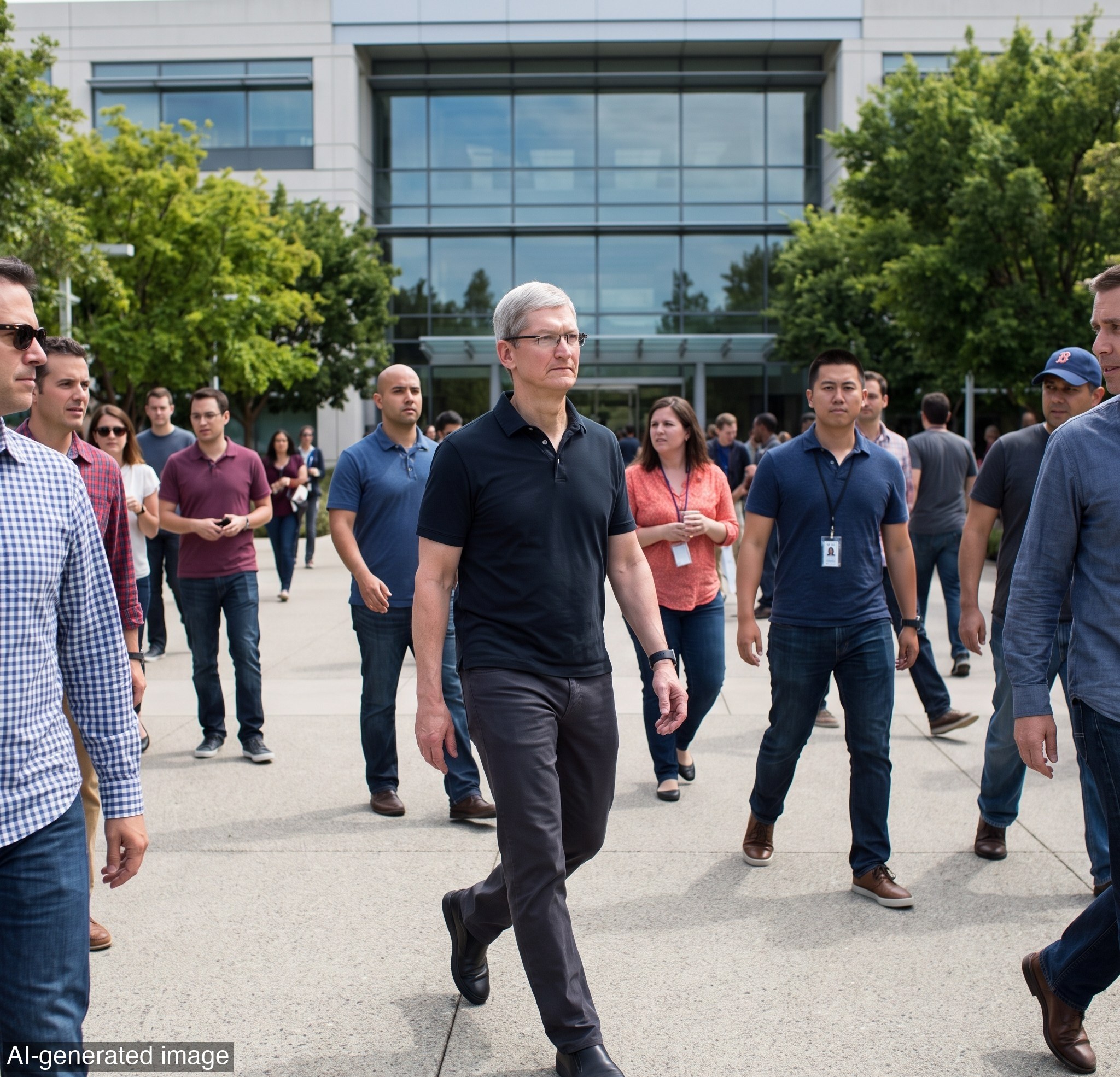
When Fortune first put Tim Cook on its cover in 2008, senior writer Adam Lashinsky described him as the 'under-the-radar guy' who might someday succeed Steve Jobs as Apple CEO. He was called a 'genius' and an 'operations whiz,' but also a 'blank slate' to outsiders.
Cook pushed back on the idea that he could replace Jobs. 'Come on, replace Steve? No. He's irreplaceable,' he said.
By 2012, after Jobs stepped down in 2011 and died soon after, Lashinsky found Cook six months into the job and described him as a CEO 'in complete control.' Fortune says Cook 'consistently pays homage to the legacy of Jobs, but he doesn't apologize for charting a new course.'
By 2015, there was no longer any debate in the Fortune profile. Under Cook, Apple had become 'richer, bigger, and more expansive in its ambitions.' One Apple executive said, 'He never tried to be Steve. He tried to always be himself.'
Fortune’s portrait matters because leadership transitions at a company like Apple are never just personality stories. They are tests of whether the machine keeps producing when the founder is gone. In Cook’s case, the numbers were not a footnote. They were the point: a calmer operator, a new course, and a company that kept growing under a different kind of CEO.
That is the market’s verdict in plain English. Capital does not reward imitation for long. It rewards execution, discipline, and the ability to keep a large enterprise moving without losing control of the margins. Cook, at least in Fortune’s telling, did exactly that.



