The numbers come first. In the span of a few days, Microsoft's email and office tools went down, the Federal Aviation Administration grounded all planes for more than four hours, and Chase, Wells Fargo, United Airlines and Apple all suffered temporary service disruptions. The National Security Agency's internal classified communications network also went dark. The FAA later blamed a copper wire that was being upgraded to fiber-optic cable.
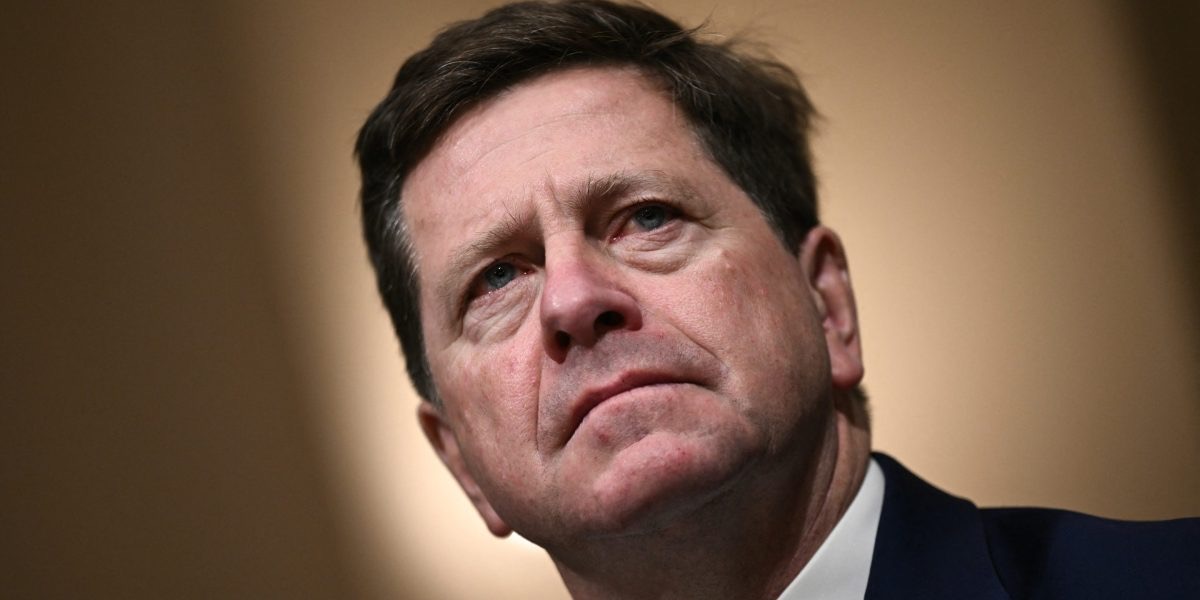
Director of National Intelligence Jay Clayton, speaking on CNN's State of the Union, was asked whether Americans should stock up. He answered that 'America is the most amazing and resilient place,' and pointed to COVID as evidence. Pressed on what citizens should actually do, he said preparation meant 'knowing that systems are going to be upgraded.' Clayton also said U.S. officials have found no evidence of coordinated, state-sponsored attacks, and suggested that network upgrades meant to patch vulnerabilities uncovered by AI were deployed hastily before the bugs were worked out.
The official reassurance sits uneasily beside what insiders are saying. According to the Washington Post, two officials at the Federal Emergency Management Agency were concerned about the outages and had trouble believing they were a coincidence. One took out extra cash. One official told the Post: 'This is scary, and there is no leadership.' Reports also described cyberattacks at the FBI and the Agriculture Department, and Fortune noted that last month was dubbed 'Black October' for the volume of attacks.
Not everyone sees a pattern. Mark Giles, director of Downdetector parent company Ookla Research, told Fortune there is nothing linking the outages. 'This is a big blip, but it's kind of on par for the course for what we're seeing in terms of those longer-term trends,' he said, adding that most disruptions are 'fairly self-contained and remedied quite quickly.'
The market has already voted in its own way. Households are hoarding canned goods, bottled water and cash, and the Pentagon's FORTRESS initiative seeks to let every major U.S. military base run for 90 days without outside help. The United Kingdom has urged Britons to keep three days of supplies on hand. Those are the moves of institutions and citizens who no longer assume the system will simply hold.
That is the editorial point. When the infrastructure that carries payments, flights and communications is upgraded in a rush, the cost lands on private firms, on travelers and on the households who pay for a resilience they were told they did not need. Capital rewards clear rules and accountable operators. A government that answers a crisis of confidence with a comparison to a pandemic and a request for awareness gives the citizen little to plan around. Free enterprise depends on predictable systems, and this episode shows how quickly that predictability can be lost.