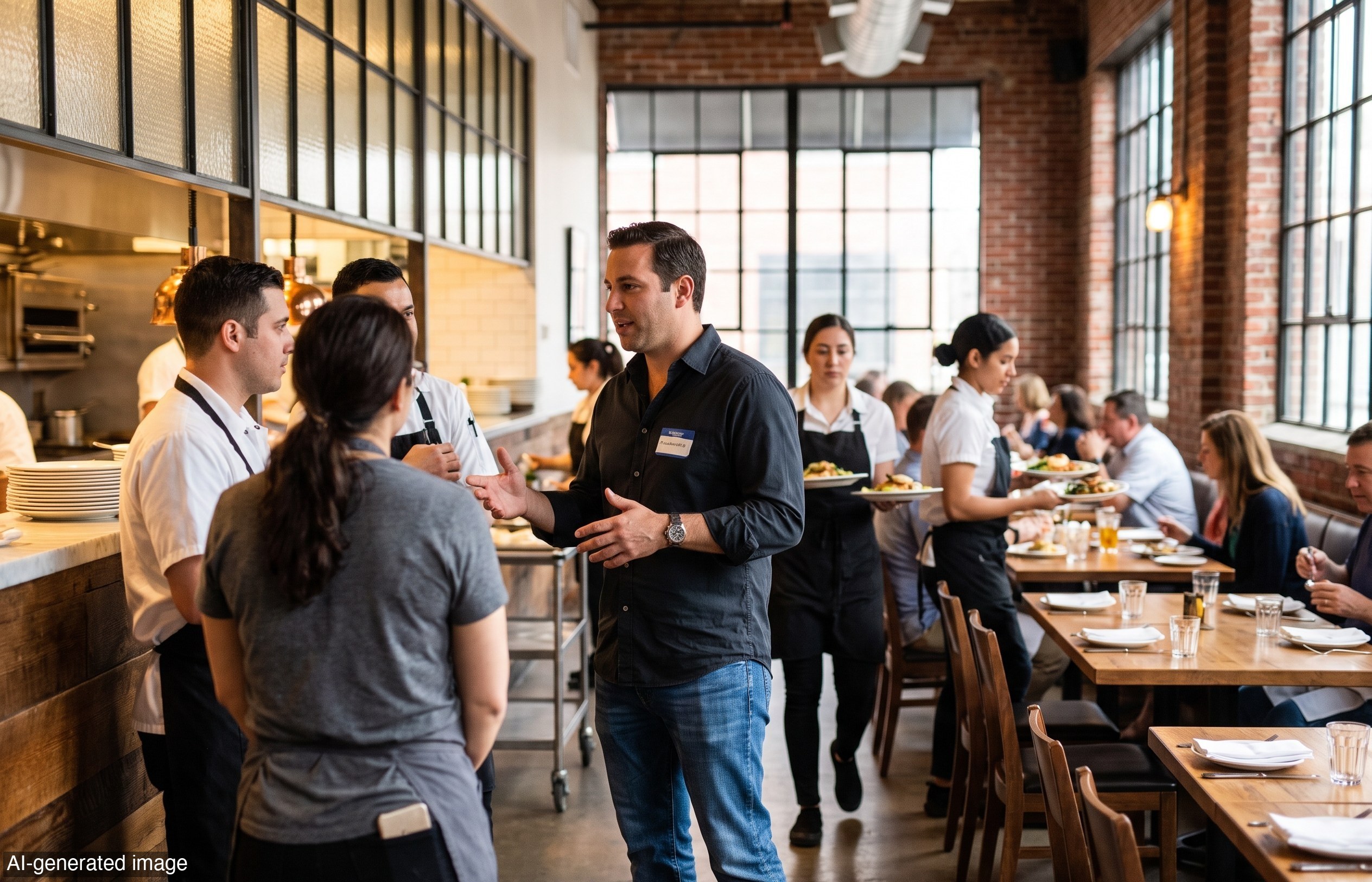
Anthony Scotto III walked away from a sought-after job at BlackRock to help build Pelato, a Brooklyn-style Italian restaurant business that has grown from one Nashville location into a three-city operation. The company now employs 300 people, expects to serve roughly 450,000 guests this year, and has committed to opening two more restaurants in 2027.
Scotto said he once dreamed of finance and real estate after growing up in Manhattan and seeing classmates build generational wealth in those fields. His family’s restaurant, Fresco by Scotto, sat under BlackRock’s former headquarters on East 52nd Street, where employees ate regularly and where Scotto saw the company name almost every day.
He began taking unpaid internships with commercial real estate brokerages as a teenager, earned his real estate license at 18, and later chose Northeastern University partly for its co-op program. He spent a year building his BlackRock internship opportunity himself, interned there twice, and eventually landed a full-time job after graduation.
At BlackRock, Scotto worked on the real estate private-equity team, helping source, underwrite, acquire and sell properties. He was later promoted to associate and became an assistant portfolio manager for one of the team’s largest funds.
The pandemic changed the family’s path. Fresco closed for an extended period, cutting off the family’s primary source of income, and the Scottos moved to Nashville. Scotto initially kept working remotely for BlackRock while helping his parents open Luogo, a Nashville restaurant modeled after Fresco. He negotiated the lease, handled the financial projections, and worked on its legal and accounting arrangements before handing daily operations to his father.
BlackRock then called employees back to New York, forcing a decision between the career he had spent years building and the restaurant work that was now pulling his family forward. Scotto chose the restaurant business.
He also found a new space in Nashville’s Germantown neighborhood that he described as an ‘amazing’ restaurant space. He learned the tenant had fallen four months behind on rent and said, ‘As soon as I saw it, I was like, I want that. That’s my space.’ The building had once been a mop-and-broom factory and had housed five restaurants in 10 years.
Scotto said the tradeoff is steep. He works seven days a week, rarely takes vacations, and is responsible for hundreds of employees. ‘I’ve never worked harder in my life,’ he told Fortune. ‘I’ve never been more stressed on a day-to-day in my life.’
Still, the numbers tell a simple story: when a family business compounds, it creates jobs, builds income and keeps ownership tied to people who know the work. That is free enterprise at its most durable. Capital may wear a suit at BlackRock, but it still has to answer to execution, risk and the customer.
The broader lesson is that wealth is not just managed on Wall Street. It is also built in kitchens, in leases, in payrolls and in the discipline required to serve 450,000 guests. Government does not create that kind of value. Entrepreneurs do.



