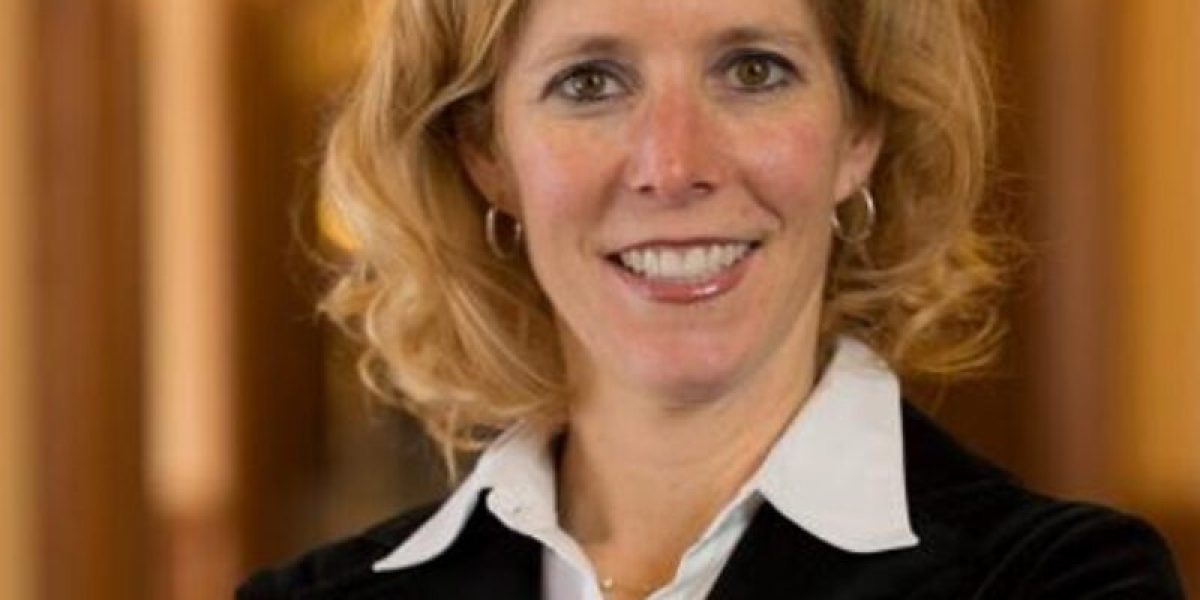
Sarah Kreps, a Cornell professor, recalled that in 2019 she attended an artificial intelligence workshop at a D.C. think tank where OpenAI presented a new language model called GPT-2. She said the presentation was meant as a show-and-tell, but she began thinking about its implications for political influence and national security.
Kreps said she followed up with OpenAI and raised concerns that, following the 2016 foreign election interference, the technology could be used by bad actors for large-scale misinformation campaigns. According to Kreps, OpenAI brought her on as an early academic collaborator to study whether a machine could write political content convincing enough to fool the people it targeted, including leaders and the public.
Her background shaped that concern. Kreps said she had served as an Air Force officer and had seen how emerging technologies could take on lives of their own. She pointed to the Predator drone, which went from a surveillance platform to an armed aircraft. She also quoted Obama's remark about armed drones, that it was 'so easy to use them without thinking through all the ramifications.'
Working with colleagues, Kreps said the team found, well before ChatGPT became known, that the technology could produce 'news' indistinguishable from human-written content. She described OpenAI's staged release as the closest thing she has seen to the kind of outside review she advocates: a lab asking people who study political consequences before it ships a product.
Kreps also acknowledged that some predictions were off. The bigger risk today, she wrote, is not necessarily that people are fooled by AI content, but that the flood of AI content makes people more skeptical of everything they encounter. She argued the early studies still provided benchmarks against which later evidence could be measured.
She noted that developers are recruiting economists, philosophers and political scientists in-house. Yet she said the companies still look outward to 'pace the frontier' while sitting at the vanguard of acceleration, a push driven by enormous financial investment and stakes.
Kreps also questioned the weight given to some risk estimates. She cited builders who assign a greater than 10 percent probability to existential annihilation, a figure she described as of uncertain provenance and questionable methodological footing. Her broader point is that technical skill does not automatically confer expertise in judging societal risk.
She drew a historical parallel to the 1954 hearings on Robert Oppenheimer, citing Norris Bradbury's description of scientists' curiosity and open-mindedness. Kreps argued that the same traits that drive breakthroughs can leave innovators unprepared for political consequences while still sounding confident about them.
The market has already voted on AI, with capital pouring into the largest labs. Kreps's warning is a reminder that the rules governing that capital should not be written by the companies alone. Free enterprise works best when liability is clear, when developers answer for what they ship, and when accountability does not depend on the goodwill of the people with the most at stake. Outside scrutiny is not a tax on innovation; it is the discipline that keeps innovation from becoming someone else's bill.