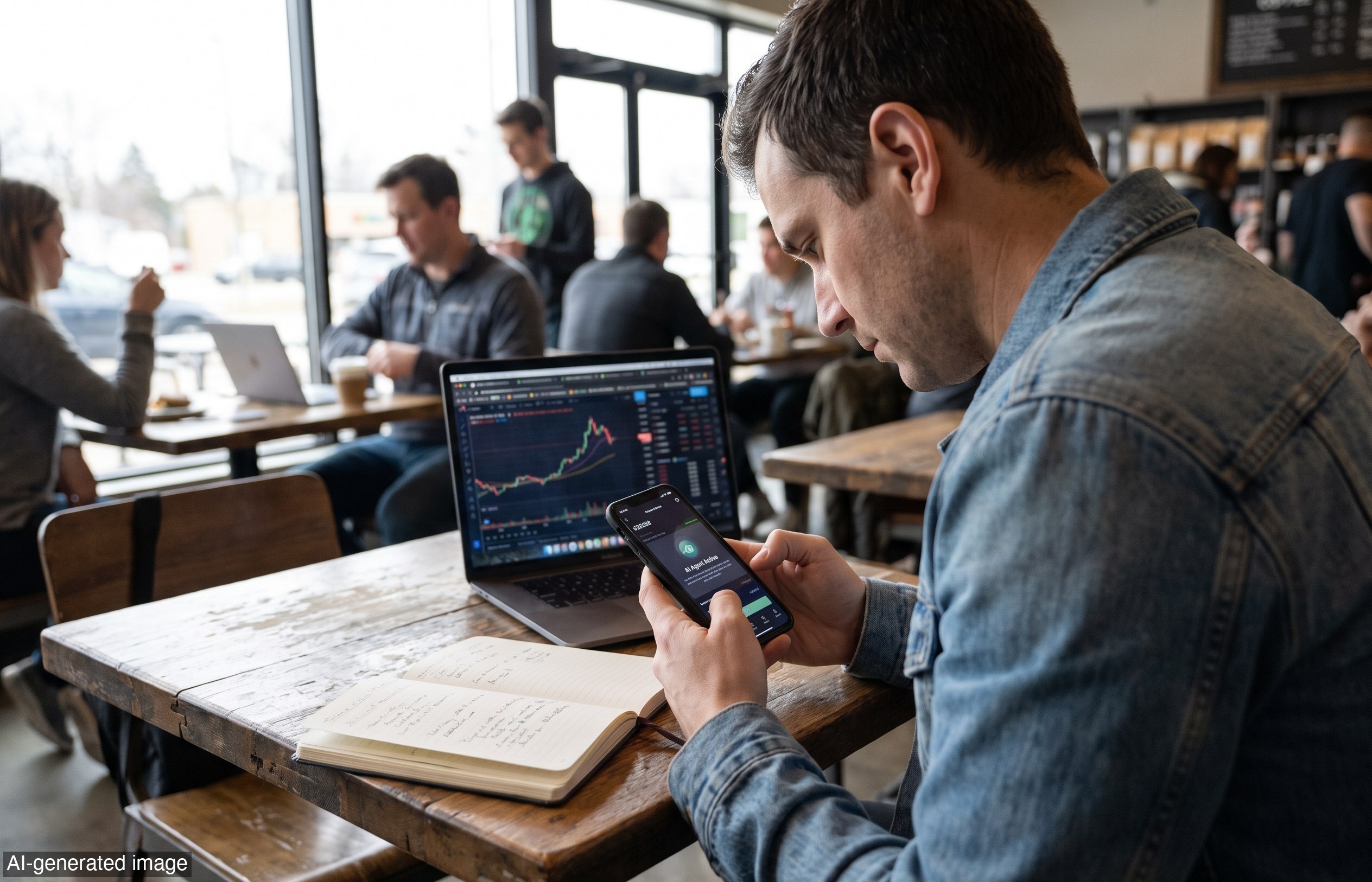
Robinhood has rolled out trading agents to roughly 29 million customers, giving users access this week to AI tools powered by OpenAI and Anthropic.
The company said customers can choose between OpenAI and Anthropic models and instruct the agents to carry out trades, conduct research, and build complex investment strategies. In a demonstration viewed by Fortune, a user could name the agent, pick a model, and then issue plain English instructions ranging from 'Buy $200 of Ford stock' to more complex 'Loops.' Robinhood says a Loop can check the market every morning and execute a trade when conditions are met, or run a continuous overnight strategy while the user sleeps.
Robinhood launched the service alongside its annual HOOD summit, following a May rollout of an MCP tool that let technical users connect their own agents to the platform. The company said the new service also includes guardrails, such as a dedicated trading account for the agent, limits on how much it can trade at a time, and an optional confirmation process before a transaction goes through.
Robinhood will also give users free access, for a limited period, to data providers including Unusual Whales and Token Terminal. Company executives said those tools, along with easy-to-use agents, can give users investing capabilities comparable to Wall Street.
'Ownership doesn’t work without markets, and markets don’t work without traders,' Robinhood CEO Vlad Tenev said in a statement. 'We’re making Robinhood the best place in the world for active traders by delivering tools once reserved for hedge funds, big banks, and quant firms.'
The numbers come first. Robinhood said more than 150,000 customers have already opened agentic accounts using the technical version of the tool introduced this spring. It also said various agents are transacting on the platform nearly 30 million times a day as of late September.
The market has already voted on the idea that AI belongs inside finance. The harder question is whether mass access to automated trading makes markets more efficient or simply faster and more volatile. Robinhood itself said trading agents could lead to a major uptick in active trading, new strategies, or, in less rosy scenarios, coordinated moves into or out of an asset that might increase volatility or trigger panic.
Legal liability remains unclear if something goes wrong. Robinhood says hosting agents does not amount to providing financial advice and compares the setup to customers asking the internet or a friend. Costs are also uncertain over time: the company said GPT-6 Luna will be free until the end of the year, while OpenAI and Anthropic agents will be charged at the standard token rate.
Capital rewards clear rules. If automated agents become a permanent feature of investing, the winners will be the firms that can offer speed, controls, and trust without turning the market into a black box. Robinhood is betting that ordinary investors want the same leverage once reserved for Wall Street. The test now is whether the administrative state and the courts can keep pace with machines that trade first and ask questions later.



