When Democrats won both houses of Congress in November’s midterm elections, some did so on the strength of campaigns aimed at the AI boom and the spread of giant data centers.
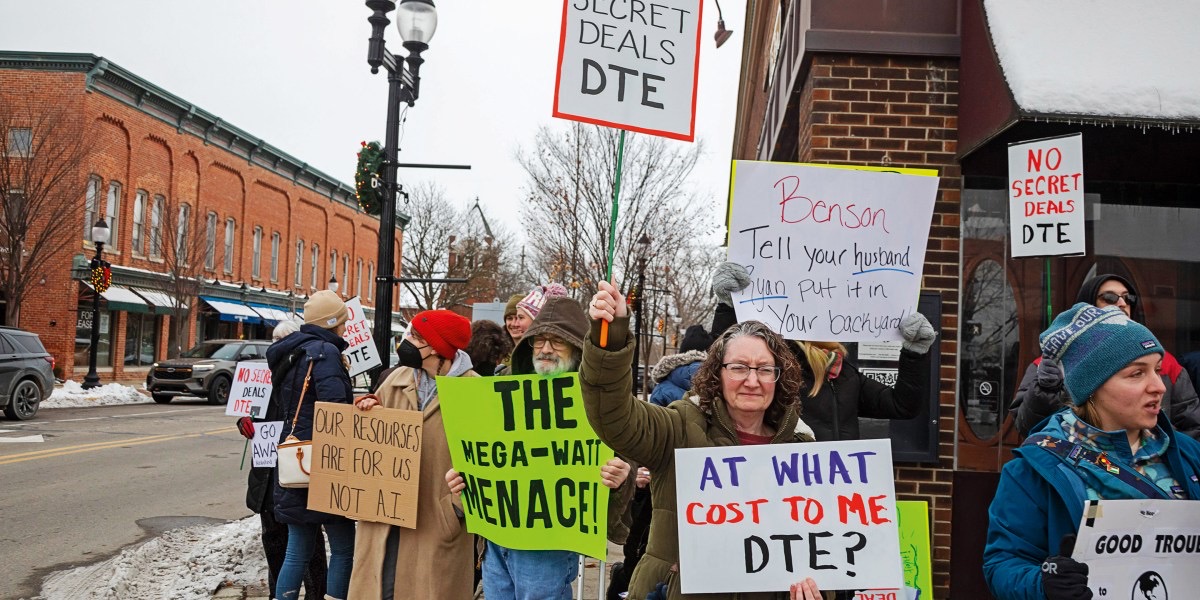
Sherrod Brown won back his Senate seat after calling his Ohio opponent 'the face of data centers.' Abdul El-Sayed, Michigan’s next senator, said: 'People really effing hate data centers.' In 41 local data center measures on midterm ballots in 10 states, voters sided against the industry in 40. A March Gallup poll found 71% of Americans opposed a data center in their area.
The numbers come first. Wholesale electricity prices near some data centers have risen as much as 267% in five years, according to a Bloomberg analysis. Cornell researchers found data center operators are paying for only about 38% of the infrastructure costs linked to their growth. That has turned what was sold as a technological leap into a direct fight over household bills, grid costs and who should foot the bill.
The political problem for Democrats is obvious. They have to answer complaints about electricity, water, jobs and the darker fears around AI without stopping a technology that drives growth and that both Democratic and Republican administrations have said is central to competing with China.
Some lawmakers are pushing for moratoriums. New York Democratic Gov. Kathy Hochul froze permits for new hyperscale data centers for up to a year, and Texas Republican Gov. Greg Abbott halted new grid connections pending an audit. After the midterms, Rep. Yassamin Ansari of Arizona said: 'Democratic agenda on day 1 needs to be a pause on advanced AI development.' Sen. Bernie Sanders has called for 'democratic oversight' instead of an outright ban.
Others in Washington are looking at hearings, subpoenas, confirmations and the budget. Rep. Greg Casar, who chairs the Progressive Caucus, said he wants to haul in AI CEOs 'to testify under oath.' Sen. Ed Markey warned that executives should 'plant new forests for all of the subpoenas we’ll be printing.' But subpoenas are a slow instrument, and grilling executives on camera can look like political theater when voters asked for lower power bills.
There are also narrower policy tools. Bipartisan bills including the Create AI Act, the AI Whistleblower Protection Act and the AI LEAD Act have support in both chambers. State utility regulators may be the most immediate lever, because they decide who pays for the power. Regulators can make data centers cover the grid upgrades they trigger, and some states are already doing that.
That is where the market has already voted. Capital can build faster than politics can regulate, but the taxpayer and the ratepayer still end up paying for bad incentives. If lawmakers want to keep the AI build-out without handing voters a bigger utility bill, the answer is not more slogans. It is clear rules, honest pricing and a system that makes growth pay its own way.