The Government Accountability Office sits at the center of how Congress checks the spending of the executive branch. Its head, the Comptroller General, audits programs, investigates waste and evaluates whether federal money does what it was appropriated to do. For a taxpayer, few offices in Washington matter more. So the way that office is filled should be beyond dispute.
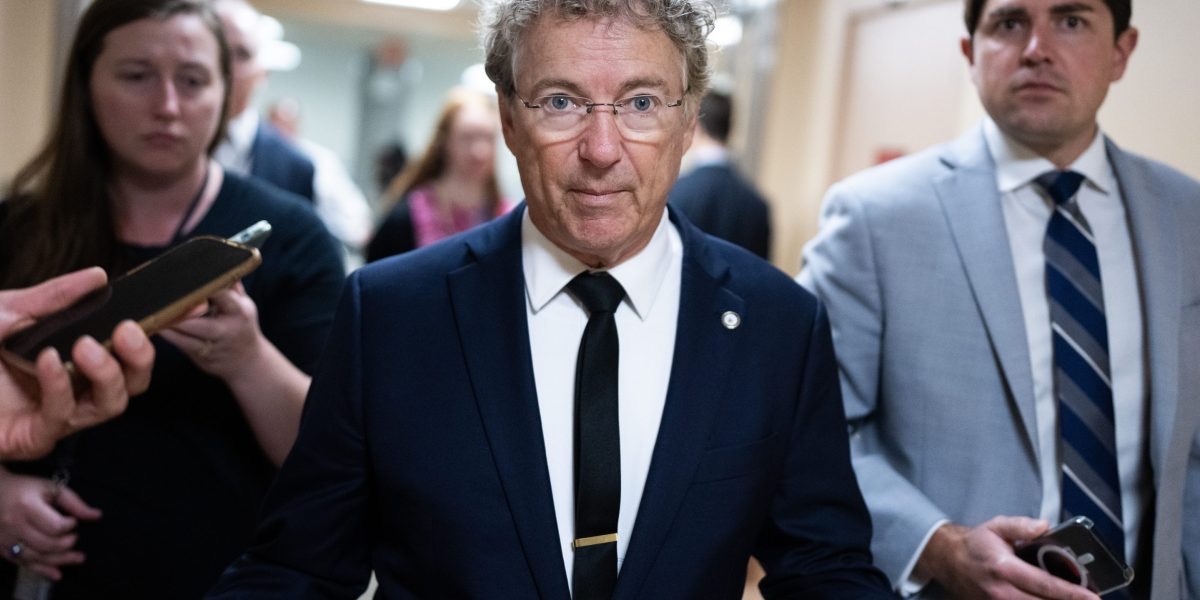
Three former officials and watchdog leaders, Steve H. Hanke, David M. Walker and Gene Dodaro, now say it is not. Writing in Fortune, they argue that Senator Rand Paul, the Republican who chairs the Senate Committee on Homeland Security and Governmental Affairs, asked for names on a short deadline to be recommended to the President. That request bypassed the mechanism the law sets out.
Under the GAO Act of 1980, a 10-member bipartisan and bicameral Comptroller General Selection Commission is supposed to jointly develop and transmit a list of at least three qualified nominees to the President. Paul sits on that commission as chairman of the committee, but he does not chair the commission itself. According to the authors, the commission has never met. The current vacancy began on December 30, 2025.
The authors also say Paul inserted an empty placeholder for an unnamed nominee on the agenda of a November 19, 2026, committee confirmation hearing. Then, on November 16, President Trump submitted a nominee for confirmation. The authors decline to name the candidate, saying they do not want the dispute to become personal.
The legal argument turns on the statute's text. The 1980 law does not say in so many words that the President must choose from the commission's list. A Senate report on the bill said he may look elsewhere 'in his discretion,' but should give the commission's recommendations 'great weight.' The authors' point is that a list which does not exist cannot be weighed. Every Comptroller General nominated since 1980, they note, came from a commission list. Henry Wray, a former GAO attorney who helped develop the 1980 law, told them the current process 'violates both the letter and the spirit of the law.'
The design was deliberate. The position sits in the legislative branch, and the law gave it a 15-year non-renewable term with demanding removal requirements, the longest for any appointed federal position, to protect its independence. Walker and Dodaro were both confirmed through the commission method, in 1998 and 2010, and the authors call that process one that 'has worked like a charm.'
None of this is a quarrel over who should lead the GAO. The authors say the next Comptroller General should be a highly qualified, non-partisan executive who is independent of the branch the office audits, and that every one of the past eight holders won confirmation with overwhelming bipartisan support. Their demand is procedural: cancel the November 19 hearing and let the statutory process run.
That is the question free-market taxpayers should be asking. Shortcuts in appointments tend to become precedents, and the watchdog that checks federal spending is only as credible as the process that installs it. A Congress that wants to rein in the administrative state has to start by following its own rules.