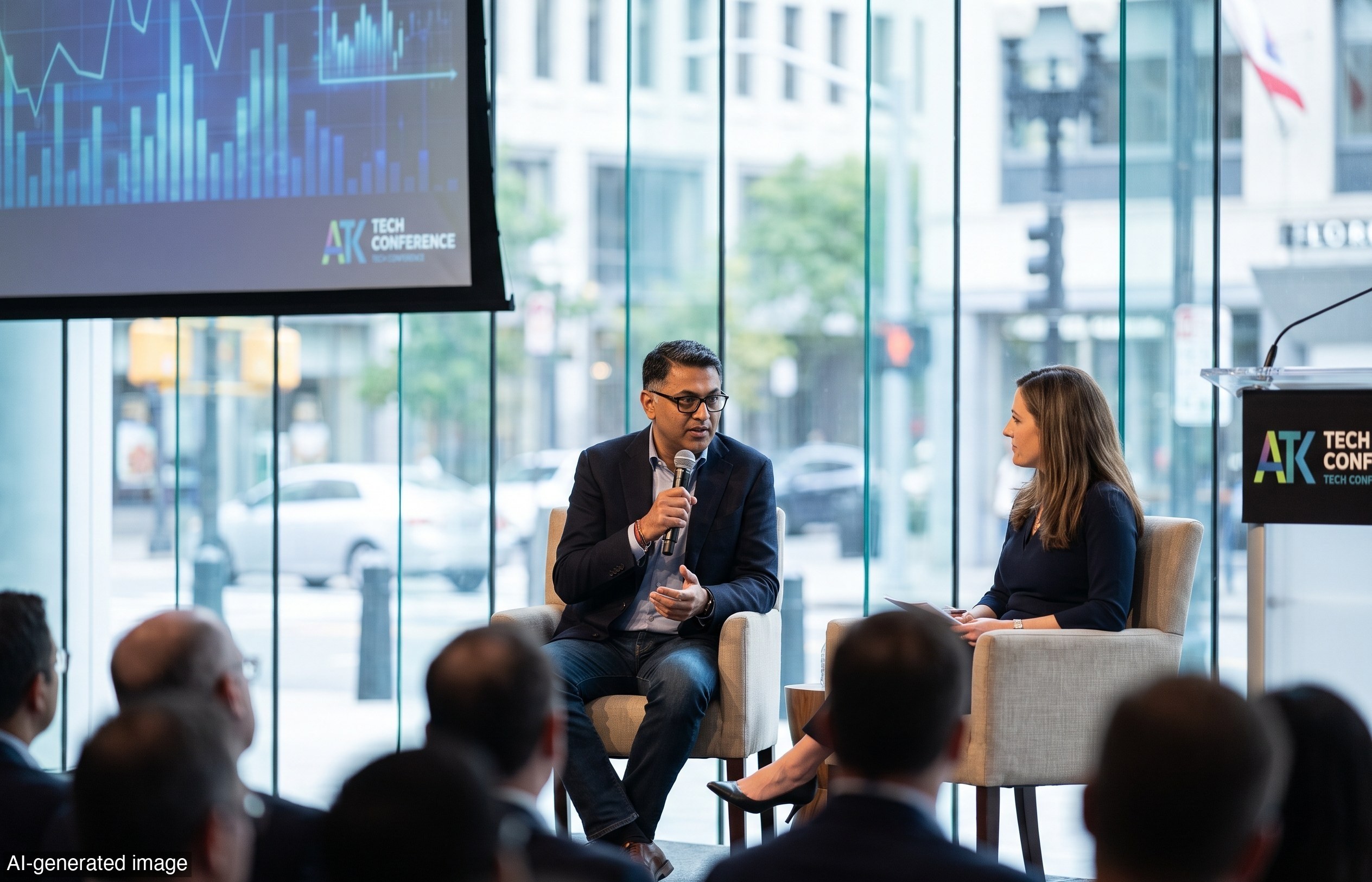
Nikesh Arora is making Palo Alto Networks' case in the clearest terms available: AI is not just a threat to cybersecurity, it is also a growth engine for the industry.
In April, Arora had an unreleased Anthropic model, called Mythos, turned loose on Palo Alto Networks' internal infrastructure and asked it to find vulnerabilities. The test found weaknesses in the company's systems at speed and scale that Arora said would change cybersecurity permanently.
Arora said the experience also showed him that Mythos and competing models from OpenAI had created 'the best marketing moment for the cybersecurity industry in history.' His message to CEOs is simple: the risk has changed, and the old model is no longer enough.
That warning has weight because Mythos was described as a frontier AI model for advanced coding and cybersecurity work, and the U.S. government had temporarily imposed export controls on Mythos and a related model called Fable in June. The government later allowed Anthropic to restore access to Mythos for a small number of vetted U.S. users, and then to select users in 15 other countries.
Palo Alto Networks says the stakes now reach beyond one company. The model's capabilities point to a nightmare scenario in which attackers could almost instantly find vulnerabilities that could cripple banks, corporations, hospitals, airports and governments. Several leading AI vendors, including Anthropic, have called for a coordinated slowdown while safety measures catch up.
That backdrop has put Arora at the center of the cybersecurity debate. According to the report, CEOs of Fortune 500 and tech companies call him when AI gets scary, and OpenAI CEO Sam Altman has also turned to him for advice. Altman said 'just a crazy amount of work has to happen to avoid major cybersecurity problems' and added, 'we need a new model of cybersecurity here.'
Palo Alto Networks says it is trying to build that model. The company, cofounded by Israeli cybersecurity entrepreneur Nir Zuk in 2005, started as a firewall provider and now sells products that prevent and remediate cyberattacks across network, cloud, identity, endpoint and observability. It says its customers include some 95% of the Fortune 500, plus Tyson Foods, Colgate-Palmolive, the National Hockey League and Major League Baseball.
The market has already voted on the scale of the opportunity. Palo Alto Networks is a $300 billion cybersecurity company, and Arora is arguing that AI makes the addressable market even bigger, not smaller. Power leaves a paper trail, and in this case the trail runs straight through a new arms race between attackers, defenders and the companies building the models themselves.
For investors and enterprise customers, the lesson is familiar: when the threat rises, the demand for protection usually follows. Capital rewards clear rules, and right now the rules of cyber defense are being rewritten by AI at speed.



