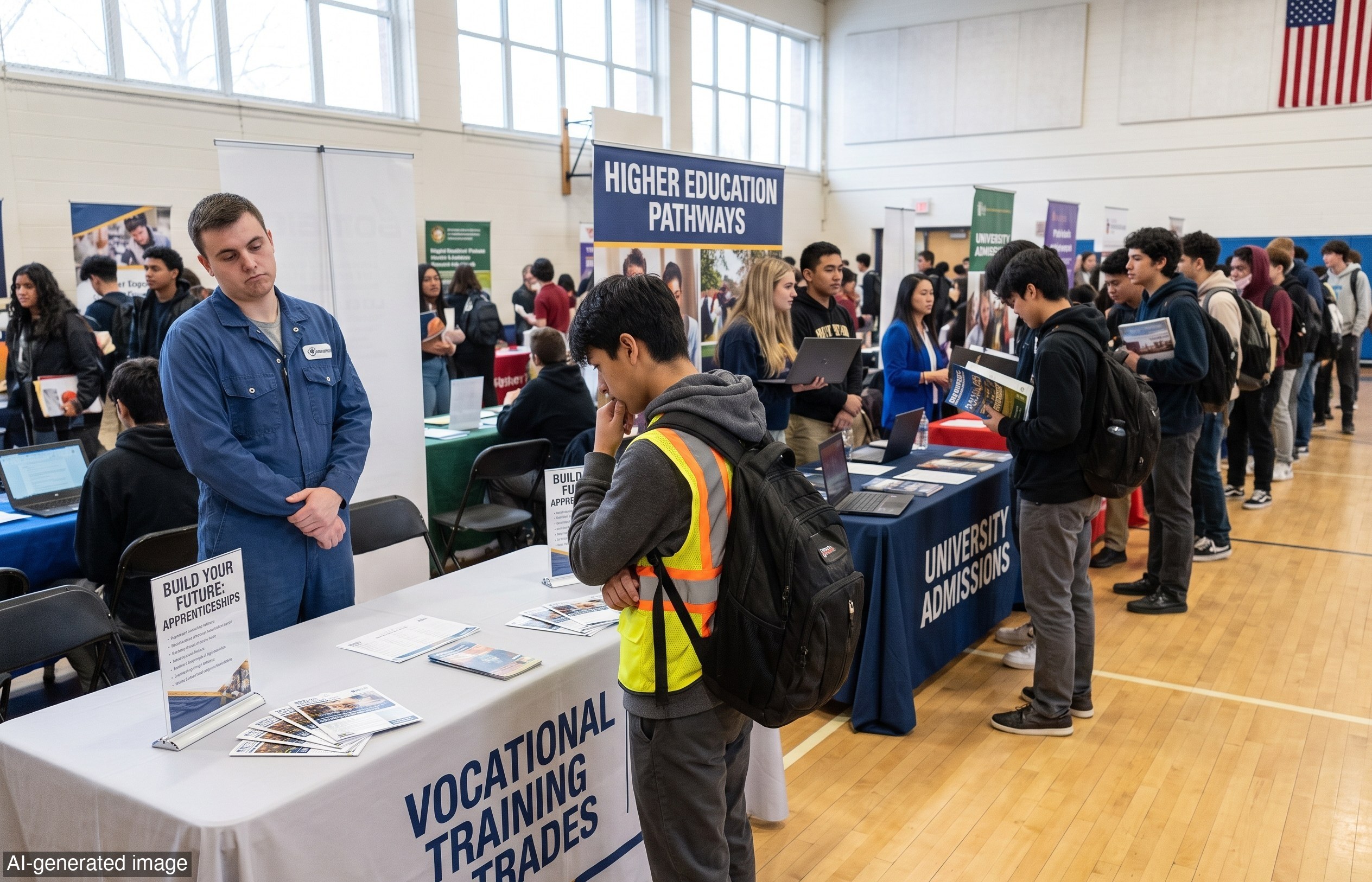
The contradiction at the center of America’s skilled-labor shortage is now easy to measure. At Ford Pro Accelerate in Detroit, SkillsUSA executive director Chelle Travis put it bluntly: 'We value the skill, but maybe not for my child.'
That line captures the problem facing employers, schools and families. Students, educators and industry advocates say the work is respected in theory, but too often rejected as a future for one’s own children. College remains the default marker of success, even as employers look for more technicians, mechanics, builders and other skilled workers.
Derek Feldmann, managing director at the Ad Council Research Institute, said the research with Ford found a widening gap between what young people say they want from work and the careers they actually connect with those goals. Students want financial stability, fulfillment and advancement. Yet only 11% of the students surveyed were genuinely interested in trade careers, even though 38% said they would consider one.
Feldmann said young people can usually describe the path to college in simple steps. The trades, by contrast, can look fragmented. High-school career-and-technical education programs, union apprenticeships, community colleges, private training programs, employer-sponsored training and direct-entry jobs all exist, but not every student has a counselor, parent or mentor who can explain the options.
'It’s easier to go with what’s known than what’s unknown,' Feldmann said.
Matt Panella, a carpenter and home builder with a sizable social-media audience, said he regularly hears from teenagers who want to enter the trades but cannot persuade their parents. He said many families have been told for years that college is the way to success.
Panella said his online presence is meant to give young people a visible guide when they do not have a personal connection to the industry. He said his father and grandfather helped him enter the field, and not every prospective worker has that advantage.
Tanisha Brana, a Detroit educator, said she encourages families to view career-tech courses as a low-cost test run. She called it the 'try it before you buy it' method. Brana said students can sample welding, meet a mentor, pursue an internship and learn whether the work fits them before spending years and thousands of dollars on the wrong college major.
The panel also pushed back on the idea that college and the trades must be an either-or choice. Brana said, 'Sometimes it’s both.'
The numbers come first. America cannot solve a skilled-labor shortage by pretending every good job has to pass through a four-year campus. Capital rewards clear rules, practical training and pathways that lead to real earnings. When families dismiss the trades out of habit, the market pays the price in lost productivity and fewer workers ready to build, fix and make things.



