The numbers come first: more than 95,000 metric tons of spent nuclear fuel sit in temporary storage across roughly 80 sites in over 30 states, with no permanent disposal solution in sight. A nuclear startup and an oilfield services giant believe they have the answer — and they are already breaking ground in central Texas.
Deep Isolation Nuclear and Halliburton have established the Deep Borehole Demonstration Center near Cameron, Texas, population 5,300. The partnership aims to use modern directional oil-drilling techniques — the same technology that powered the American shale revolution — to bury radioactive waste approximately two miles underground in specially designed, 5,000-pound canisters.
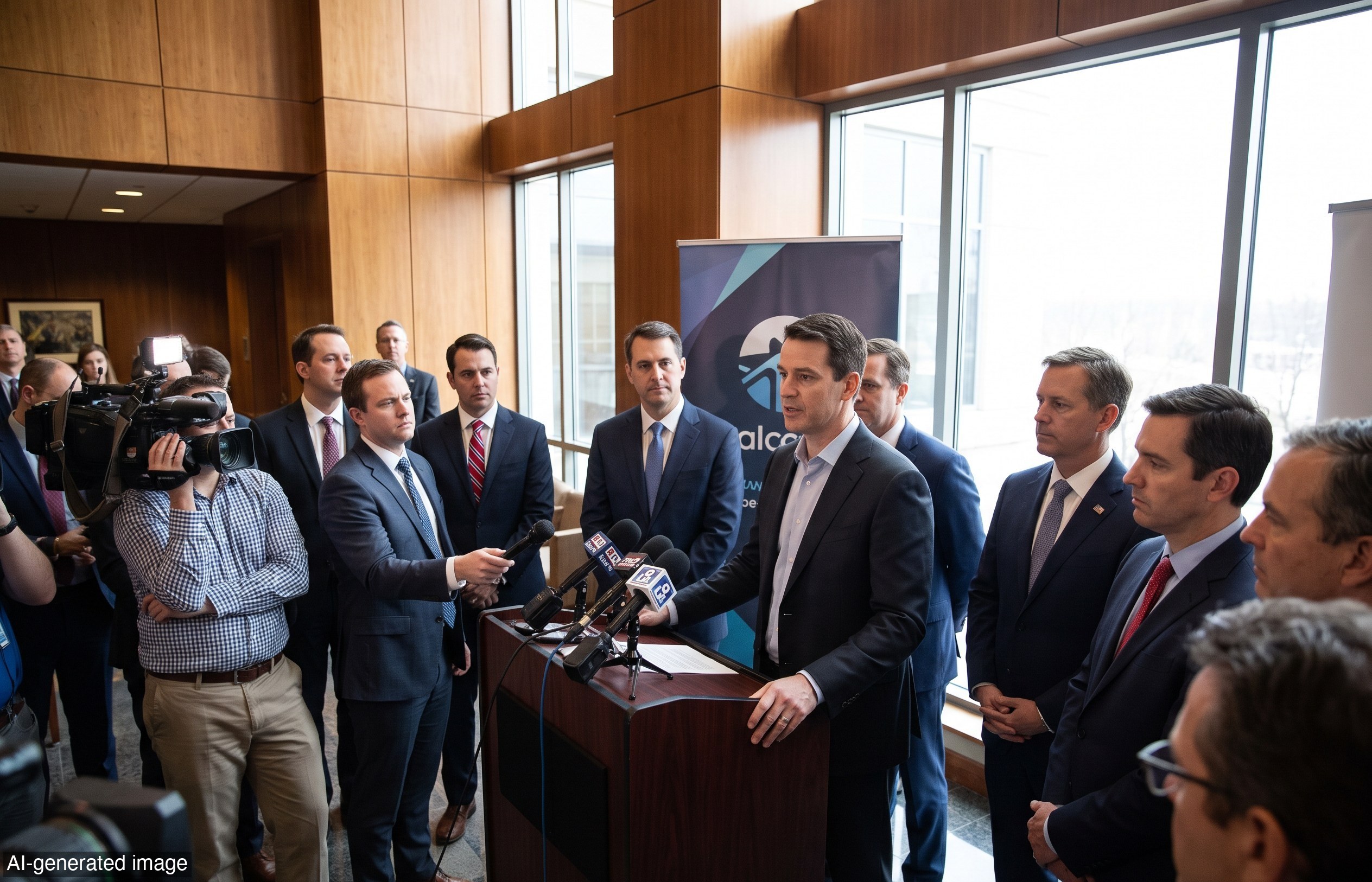
'To make sure we have a good path for new nuclear, we need to make sure we take care of the waste,' said Deep Isolation CEO Baltzer. 'We can go twice as deep as a typical repository, and then follow a formation that's been out of touch with the surface for a million years.'
Early next year, Halliburton will drill the first test well — using an extra-large drill bit — to reach thousands of feet underground both vertically and horizontally, then demonstrate that a crane can retrieve each canister individually. That retrieval capability addresses a core concern in the nuclear community: what happens if something goes wrong.
'Even today, people are saying, well, I don't know, it's so risky,' said Griffith, executive director of the demonstration center and former deputy assistant secretary of nuclear energy at the DOE. 'And the oil and gas industry people are like, this is not a big deal.'
The disconnect between the two industries, Baltzer told Fortune, was the core problem. 'Everybody in oil and gas was like, we do this every day. And everybody in nuclear went, holy cow, I did not know you could do this and retrieve it.'
The urgency is real. The Trump administration has committed to a fourfold increase in nuclear power by 2050, driven in part by surging electricity demand from AI data centers. 'You can't do that without answering the question of, well, what do you do with the waste?' said Sloane, Deep Isolation's executive vice president of engineering.
The federal government's decades-long attempt to build a centralized repository at Yucca Mountain in Nevada has largely failed. In July, the U.S. Department of Energy named five states — Idaho, Louisiana, Oklahoma, Tennessee, and Utah — as finalists for 'Nuclear Lifecycle Innovation Campuses' focused on fuel recycling and waste. But even recycling leaves residual waste that must go somewhere.
Deep Isolation's model sidesteps the political gridlock entirely: drill boreholes near existing nuclear plants, dispose of waste where it is generated, and scale the solution site by site. Capital rewards clear rules — and a private-sector solution that bypasses Washington's permitting paralysis is exactly the kind of free-enterprise innovation the energy transition actually needs.
The editorial read is straightforward. Decades of federal mismanagement at Yucca Mountain left 95,000 metric tons of spent fuel in legal and physical limbo, a liability that has quietly suppressed nuclear investment for a generation. What two private companies are now demonstrating in a Texas field — with drilling rigs, not congressional hearings — is that the market, given room to operate, finds paths that bureaucracy cannot. If the demonstration well succeeds, it will not just solve a waste problem; it will remove the single most cited obstacle to the nuclear renaissance the Trump administration has staked its energy agenda on. The taxpayer has already paid for Yucca Mountain's failure. The next chapter should be written by the private sector.