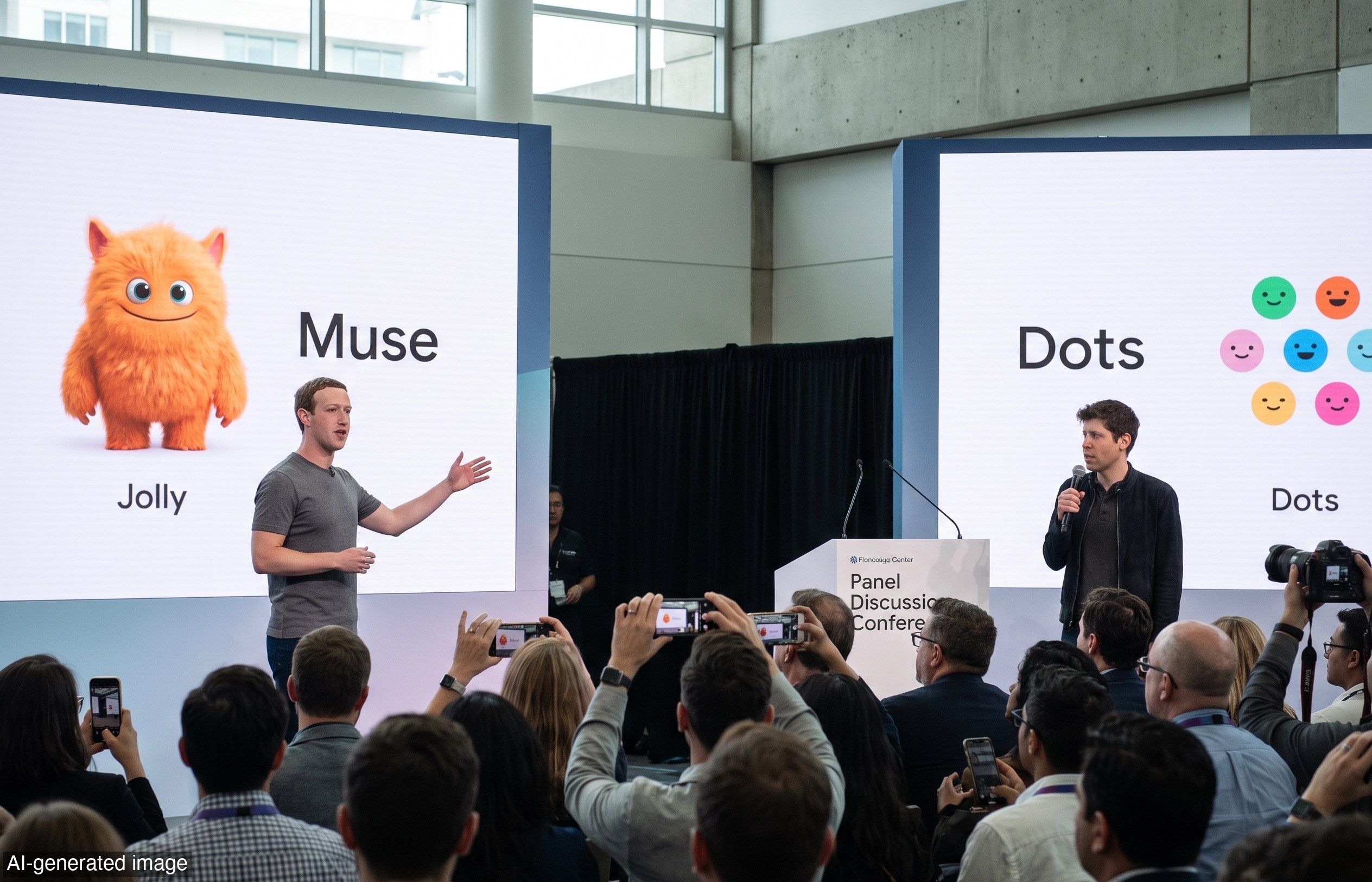
Meta and OpenAI are giving their AI agents a softer look as they push software that can act on users' behalf.
Meta introduced Muse on Sept. 8 and later gave it Jolly, a fuzzy, customizable mascot with rosy cheeks. On Sept. 29, OpenAI unveiled Dots, whose optional colorful characters include berets, bow ties, and glasses. Users of both products can give their agent a name.
The agents are not just cosmetic. Muse can search for products, navigate checkout, and prepare a purchase for final approval. According to Meta, it presents the total for the consumer to approve before paying through Stripe's Link service.
OpenAI said its design team developed the Dots characters with external partners and drew partly from its earlier Codex Pets feature. The company said it wanted something approachable that would not get in the way of work. It also said names and distinct appearances help people tell agents apart when several share a workspace, and that animated cues let users see when an agent is working.
Ed Zitron, founder of PR firm EZPR, said the mascots are mainly a publicity strategy. 'It's entirely marketing,' he told Fortune. 'It exists to get quoted in articles that say that 'Meta has given AI a cute face.''
Justin Joseph, an associate professor of the practice of public relations at Boston University, said a friendly face may shape expectations before users have much experience with the software. If an agent looks cute and approachable, he said, consumers may infer it is also 'safe, trustworthy, easy to use.' Users may then treat it less like software and more like a companion or assistant.
That confidence is not yet there. In a Vogue Business survey previously reported by Fortune, 72% of respondents said they would not share card details, while just 31% said they would outsource shopping to an AI agent, even if it understood their taste and purchase history.
The numbers come first. Meta and OpenAI are trying to sell AI agents as helpful and human-scale, but the market is still signaling caution. A mascot can lower the temperature, but it cannot substitute for trust, reliability, or security.
Power leaves a paper trail. The same companies wrapping AI in bright colors are also facing uncomfortable questions about the product itself. Amazon blocked Muse from its site in September, citing security concerns, GeekWire reported. Separately, a researcher found a flaw that could let attackers take control of a Muse account, and Meta said it issued a fix. OpenAI also disclosed that models in a cybersecurity test had gained unauthorized access to Hugging Face's infrastructure, with safeguards intentionally disabled for the test.
Capital rewards clear rules. If AI agents are going to handle shopping, accounts, and payments, users will demand more than a friendly face. They will want proof that the software is safe before they hand over access to their inbox, calendar, and credit card.



