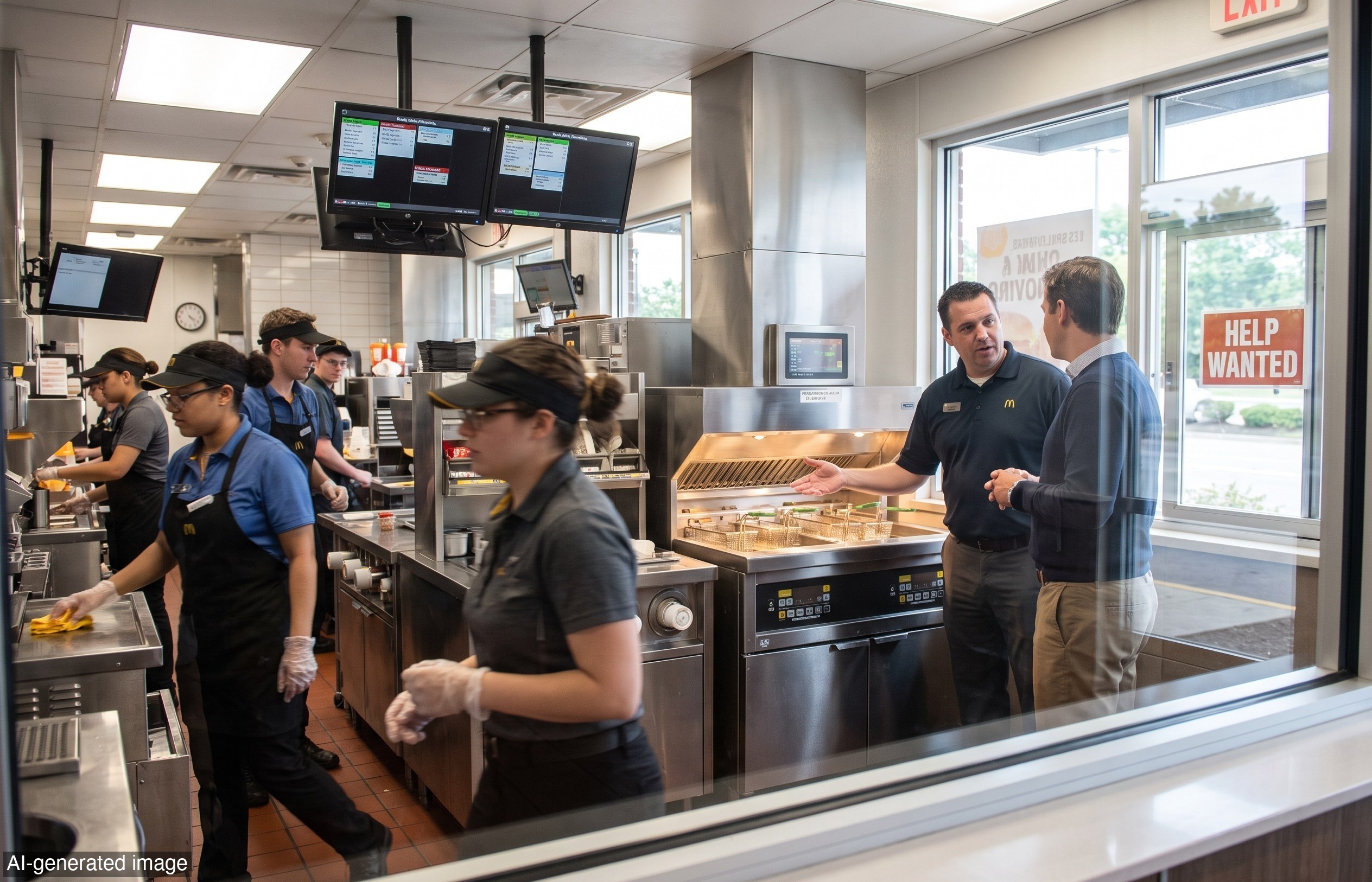
McDonald’s is betting that its next phase of growth will come from making its existing restaurants more productive, not just from opening more of them.
At its investor day on Wednesday, the company unveiled an updated NEXT growth strategy and said it will commit about $8.5 billion in support for franchisees through 2036. That includes roughly $5 billion through 2030, mainly through rent relief and capital support.
The company also expects to spend about $3 billion a year on baseline capital expenditures from 2027 through 2030, based on current foreign exchange rates. In addition, it plans $1.5 billion to $2 billion in cumulative capital partnering support to accelerate the rollout.
Ian Borden, McDonald’s EVP and global CFO, called it a 'value creation strategy' designed to generate attractive returns for franchisees and shareholders. The goal, he said, is to strengthen restaurant economics and create capacity to reinvest for long-term growth.
The plan pairs continued expansion with productivity investments at existing restaurants. McDonald’s expects unit growth to contribute nearly 2.5% to systemwide sales growth in 2027, easing to about 2% by 2030. That means a larger share of sales gains is expected to come from current restaurants becoming more productive.
Technology is also part of the strategy. McDonald’s plans to deploy ArchIQ, a generative AI-enabled operating system, at scale to help improve restaurant operations, including the drive-thru.
The company says its Restaurant NEXT investments should generate about 250 basis points of gross restaurant-level efficiency gains. It estimates that would translate to roughly $100,000 in additional annual cash flow for the average U.S. restaurant, with a four-year payback period for franchisees after partnering support.
By 2030, McDonald’s is targeting operating margins in the low-to-mid 50% range, free-cash-flow conversion in the mid-to-high 80% range and G&A costs of about 1.9% of systemwide sales.
The market did not immediately reward the ambition. McDonald’s shares fell as much as 6.5% intraday Wednesday, with investors showing concern about the timing of benefits and the execution risk around the strategy. CEO Chris Kempczinski said some of that caution reflects persistent inflation.
McDonald’s has more than 46,000 restaurants globally, and about 95% are owned and operated by independent local business owners. The company says its restaurants serve more than 70 million customers daily.
The bigger lesson is simple: capital rewards clear rules and measurable returns. McDonald’s is trying to convert billions in spending into higher productivity, stronger cash flow and better margins. If it works, franchisees and shareholders win. If it misses, the market has already voted on how expensive that delay can be.



