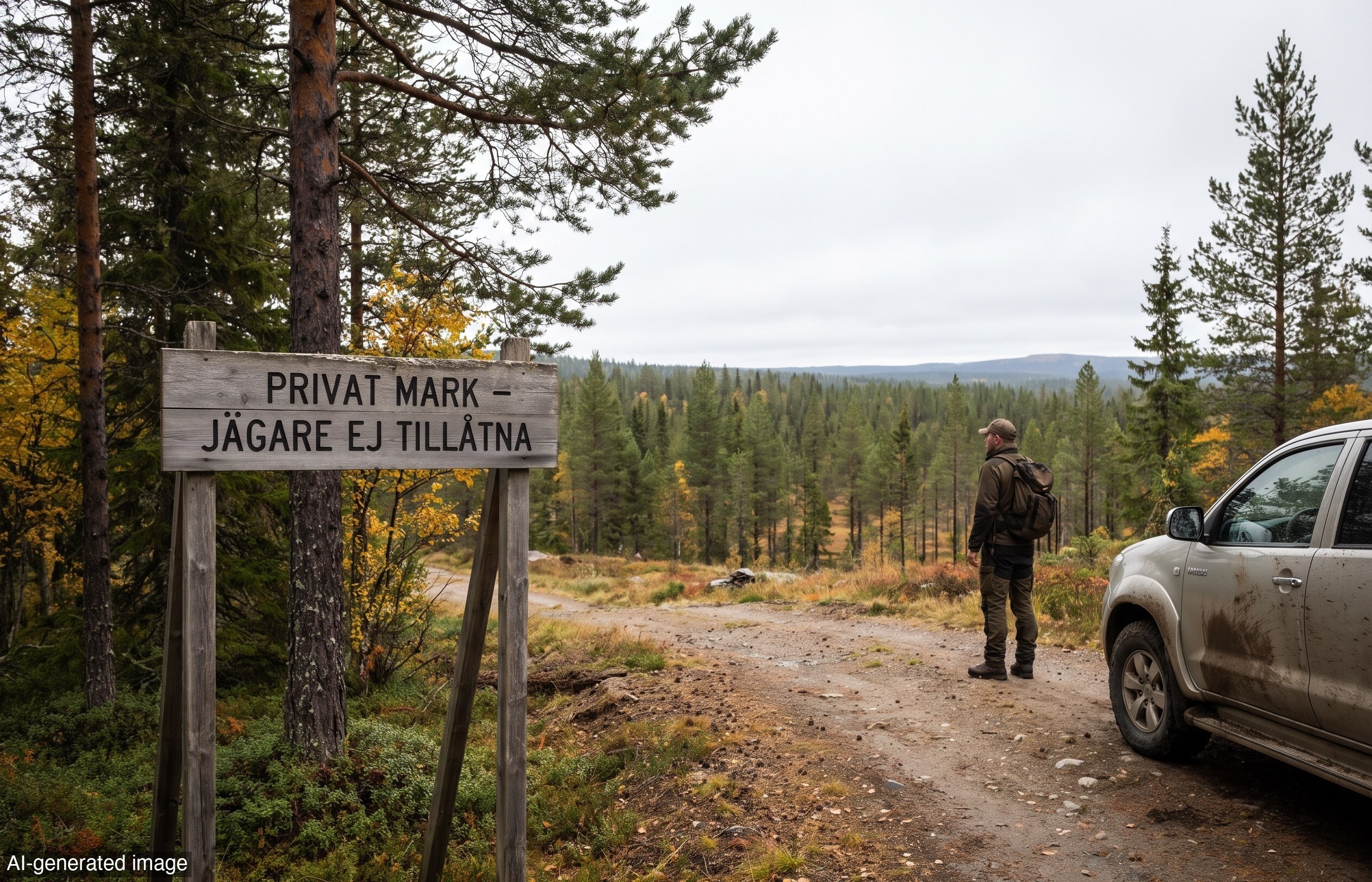
Palantir founder and CEO Alex Karp has bought 15,000 hectares, or 37,000 acres, of forest in Härjedalen, Sweden, through his newly registered company Cladonia Skog AB.
The sale was reportedly worth 235 million kronor, or $22 million. Swedish newspaper Tidningen Härjedalen first reported the deal.
Local hunters said they received letters telling them they could no longer lease the land to hunt south of Storsjö Kapell, a quiet village known for hiking and fishing. Svenska Cellulosa Aktiebolaget, or SCA, the paper manufacturer that previously owned the land, confirmed it sold the property because it was suboptimal for forestry.
SCA said banning hunting on the grounds was part of the sales agreement. In an email to Tidningen Härjedalen, the company said terminating hunting agreements linked to the land was 'a natural part of the sales process' because it can only grant hunting rights on land it owns.
Cladonia told Swedish media outlets it would use the land to 'carry out forestry and other related activities.' Jenny Lopes Da Silva, a board member of Cladonia and a sales manager at Scandinavian Trust, said in a statement that the new owner is committed to 'the beauty of the land and its preservation.' She said the forest landscapes offer habitats for plants and animals and serve as a place for recreation and restoration.
Karp already has ties to Sweden through Palantir, which established a partnership with Swedish defense authorities, according to Anders Fridén, Palantir’s Sweden Country Manager.
The deal lands inside a broader trend among the ultrawealthy. Fortune cited Steve Bruere, president of Peoples Company, saying farmland has grown into a $4.3 trillion asset class in the U.S. alone. The piece also notes that the cost of land in the U.S. increased 4.3% year-over-year in 2025, averaging about $4,350 per acre, according to U.S. Department of Agriculture data.
The market has already voted on land as a scarce asset. When capital chases finite property, the consequences show up quickly for local access, leasing rights and control over use. That is the real story here: private ownership is not just an investment thesis, it is leverage over how land gets used.
For investors, the appeal is obvious. Land can serve as a hedge against inflation and market volatility, and it can also produce nonfinancial benefits. For everyone else, the question is whether a finite resource should keep drifting into the hands of the ultrawealthy while the people who used it before are told the lease is gone.



