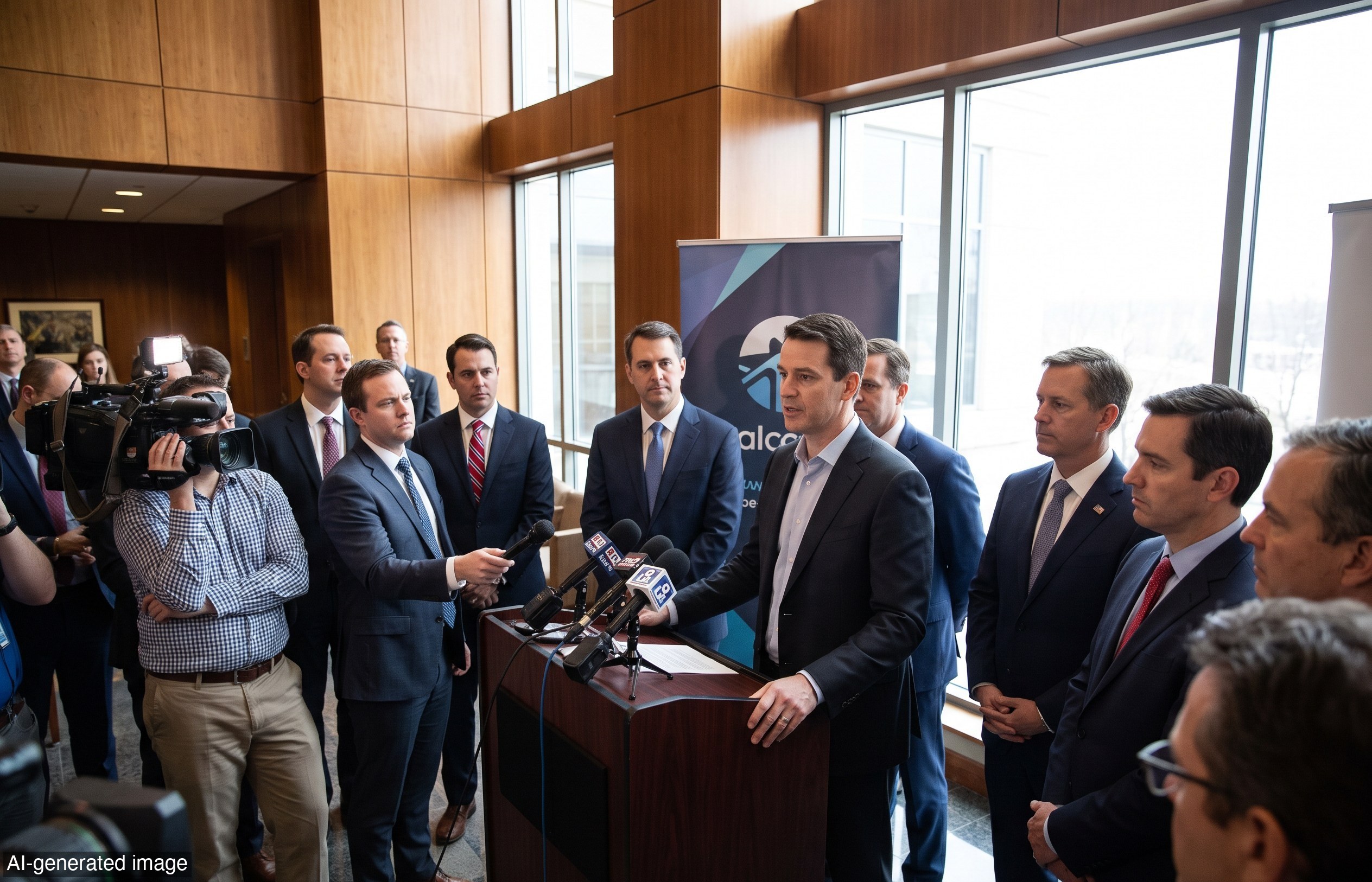
The numbers come first. Jensen Huang, CEO of Nvidia, told Y Combinator's Startup School in San Francisco over the weekend that artificial intelligence will eliminate tasks, not jobs — and that the prevailing white-collar-bloodbath narrative has the future of work 'exactly backwards.'
'Many tasks will be automated away,' Huang said in a video published Monday by the Silicon Valley startup accelerator. 'Every single job will change, and there'll be a whole bunch of new jobs.'
The distinction matters. A job, Huang argued, carries a purpose. That purpose is served by many tasks. Automate the tasks, and the purpose — and the worker — remain. 'AI automates tasks away, but it doesn't necessarily eliminate jobs,' he said.
The counterargument is real and documented. Goldman Sachs reported in its AI Adoption Tracker earlier this year that AI-affected industries — marketing, graphic design, customer service — were shedding 11,000 net jobs per month, an improvement from a prior estimate of roughly 16,000 net monthly cuts. Goldman senior global economist Joseph Briggs has projected that about 9% of the U.S. workforce, approximately 15 million people, could be displaced over the next decade as AI spreads.
Anthropics CEO Dario Amodei told Axios in May 2025 that AI could eliminate half of entry-level white-collar jobs within one to five years and push unemployment as high as 20%. He has since walked that prediction back, now saying automation may expand human responsibilities. OpenAI CEO Sam Altman, who once said even the CEO role was not immune to displacement, similarly reversed course in May, saying AI's rapid development will not produce a global 'jobs apocalypse.'
Huang's exhibit A is radiology. In 2016, AI pioneer Geoffrey Hinton declared that hospitals should stop training radiologists because deep learning would outperform them within five years. The field ignored the advice. The number of practicing radiologists grew approximately 12% from 2010 to 2022, according to a study in the peer-reviewed Journal of the American College of Radiology. A separate JACR study projects the workforce will expand another 25.7% to 40.3% by 2055.
The explanation is straightforward economics: AI handling image analysis freed radiologists to consult, monitor, and perform procedures — while hospitals, able to admit more patients, needed more staff across the board. 'Now doctors and hospitals can admit a lot more patients,' Huang said. 'In order to admit a lot more patients, you need more nurses, more radiologists.'
The same logic applies to software engineers. If AI agents automate the writing of code, Huang argued, companies will hire more developers to pursue more ambitious projects. 'The backlog of ideas, the backlog of ambition and aspiration, is so high,' he said. 'If we can automate away the task of programming, we could hire more software engineers to do more things.'
Huang has acknowledged, including in January, that some jobs will disappear altogether, as they have in every prior wave of technological change.
The CEO Times read: Free enterprise has always rewarded the reallocation of labor toward higher-value work. The doom forecasters — many of them running companies with a direct financial interest in overstating AI's disruptive power — keep confusing task substitution with job destruction. Huang's radiology data point is not anecdote; it is a peer-reviewed projection. Capital flows toward ambition, and ambition requires people. The taxpayer and the worker are better served by a labor market built on that insight than by policy panics engineered around worst-case headlines.