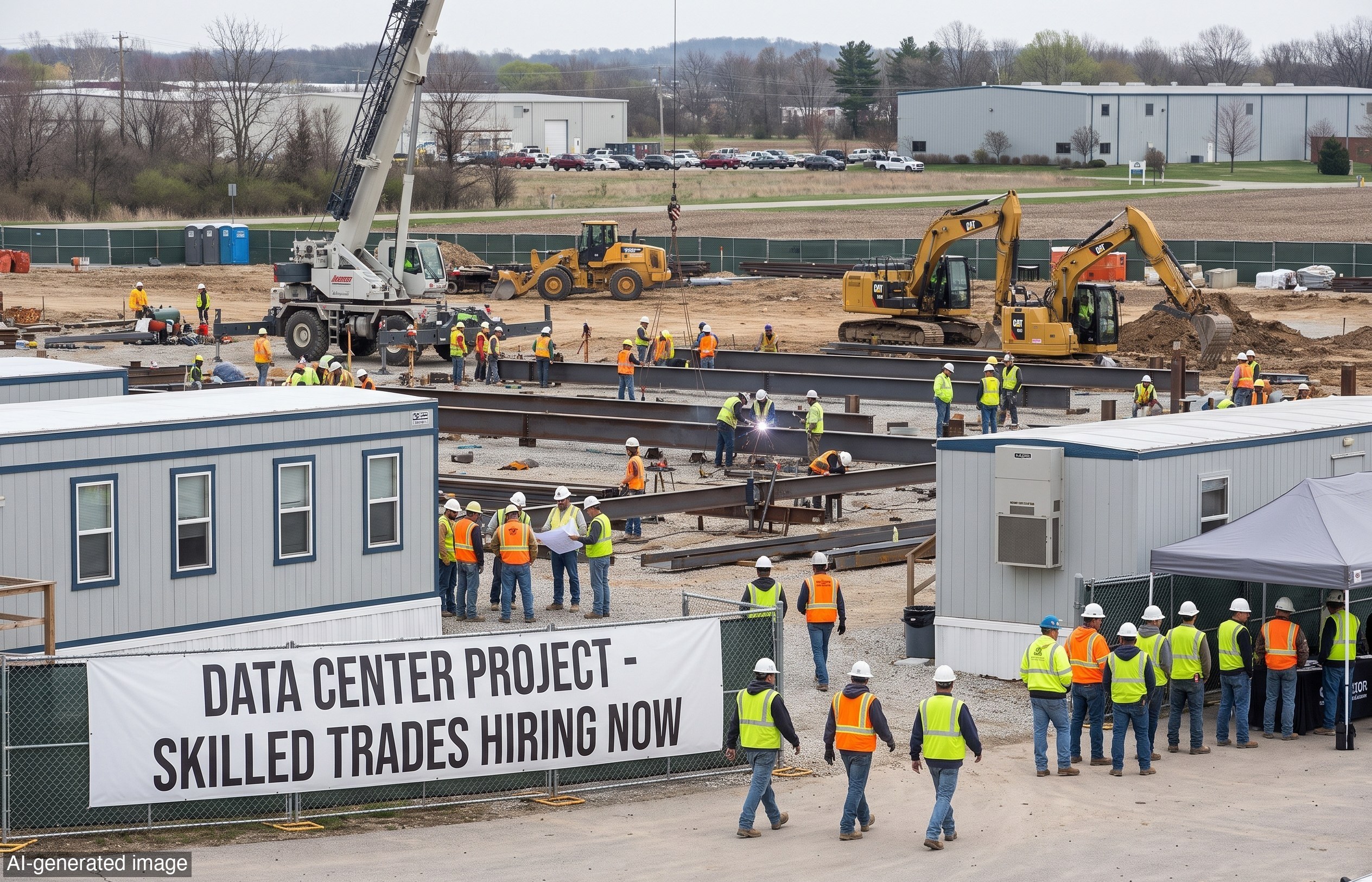
Data centers are turning into a major source of skilled trade demand across the U.S. Tim Chadwick, Google Data Center Operations Area lead for Ohio and Indiana, wrote that there are 'hundreds of thousands' of skilled trade roles open nationwide 'just waiting to be filled.'
Those jobs include master electrician, lead pipefitter and project manager, and Chadwick described them as 'high-growth careers' that offer 'long-term financial stability.' The openings sit inside a wider labor shortage: an estimated 2.1 million skilled trades jobs in the U.S. could go unfilled by 2030, according to U.S. Department of Education estimates cited in a JLL report.
The demand is being pushed by a wave of AI infrastructure spending. Worldwide, data centers are projected to require $6.7 trillion in investment through 2030 to keep pace with demand for computing power, according to McKinsey. Fortune reported that despite backlash over water use, electricity demand and noise pollution, data centers are creating massive demand for workers in the skilled trades.
The shortage is not just about raw openings. A 2026 survey of construction firms working on data center projects found that 58% reported increased competition for skilled workers, while 49% reported increased wage pressure. Another 37% cited the availability of workers or subcontractors as their biggest challenge in pursuing or delivering data center projects.
Several major executives have been pushing the same message. Nvidia CEO Jensen Huang said the world is on the cusp of what he called the 'largest infrastructure build-out in human history,' one that will create 'a lot of jobs.' General Motors CEO Mary Barra said the U.S. faces a 'societal problem' in treating skilled trades as less desirable than white-collar professions.
Barra told Fortune that a technician could make '$80,000 to $90,000,' and 'potentially even higher, depending on how many hours they work.' Chadwick’s own note framed the trades as a path to 'long-term financial stability' without a four-year college degree.
The market has already voted. Capital is flooding into AI infrastructure, and the labor market is responding with wage pressure and opportunity. What Washington and the education system have spent decades undervaluing, private investment is now repricing in real time.
For workers willing to pick up technical training, apprenticeships and on-the-job experience, the opening is clear. For employers, the harder lesson is that the administrative state and the degree-first pipeline did not produce enough supply for a building boom this large. Capital rewards clear rules, but it also exposes bottlenecks when the workforce was trained for a different economy.



