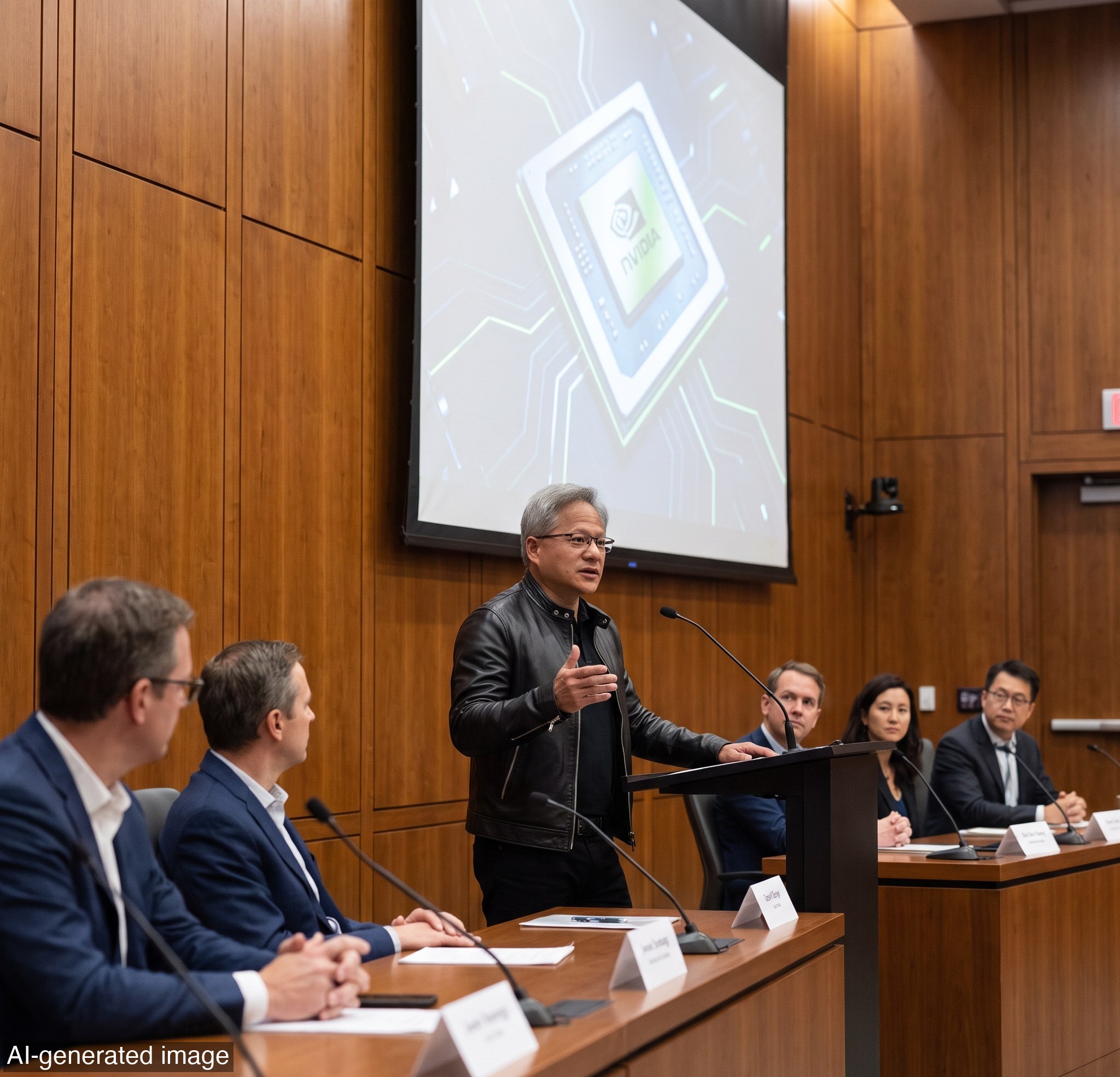
Nvidia CEO Jensen Huang said Pope Leo XIV was asking 'all the right questions' after the pope criticized AI safety claims and regulation.
Huang told Fortune that he was looking forward to seeing the pope’s concerns. He said, 'We all care about the same thing,' describing that shared goal as 'an optimistic future' for AI with 'great positive impact in society' and 'great responsibility, safety, and accountability.'
The pope made his comments in late September, warning that fears AI could 'destroy the world' are not 'fake news' and should be taken seriously. He also criticized Huang directly, saying he was skeptical of Nvidia’s announcement about AI guardrails because Huang has argued there should be no limits and no government regulation.
Huang said earlier this month on CBS News that he agreed with Trump that AI safety concerns were overblown. Nvidia has also launched a software platform aimed at stopping AI agents from breaching containment.
In his Fortune interview, Huang defended Nvidia’s record. He said, 'few are doing as much in advancing AI safety in a way that helps the entire industry as we are.' He pointed to Nvidia’s open-source safety technology, its work on a framework for improving the quality of companies, and its efforts on audit, governance, and standards-setting.
Huang argued that the industry should focus on building methods to handle real-world incidents rather than hypothetical ones that have not happened. The pope, for his part, has warned of the dangers of AI throughout his 16-month papacy and has urged the world 'to promote dialogue, study, investigation' on the technology.
The numbers come first. This is not just a moral argument; it is a contest over who writes the rulebook for one of the most powerful platforms in the market. When a company like Nvidia says it is advancing safety through open-source tools, governance, and standards, it is also making the case that free enterprise can police itself better than the administrative state.
Capital rewards clear rules, but it also punishes confusion. As AI spreads through industry, investors will watch whether the next phase is shaped by engineering discipline, voluntary standards, and accountability — or by a regulatory scramble that slows innovation while claiming to protect it.



