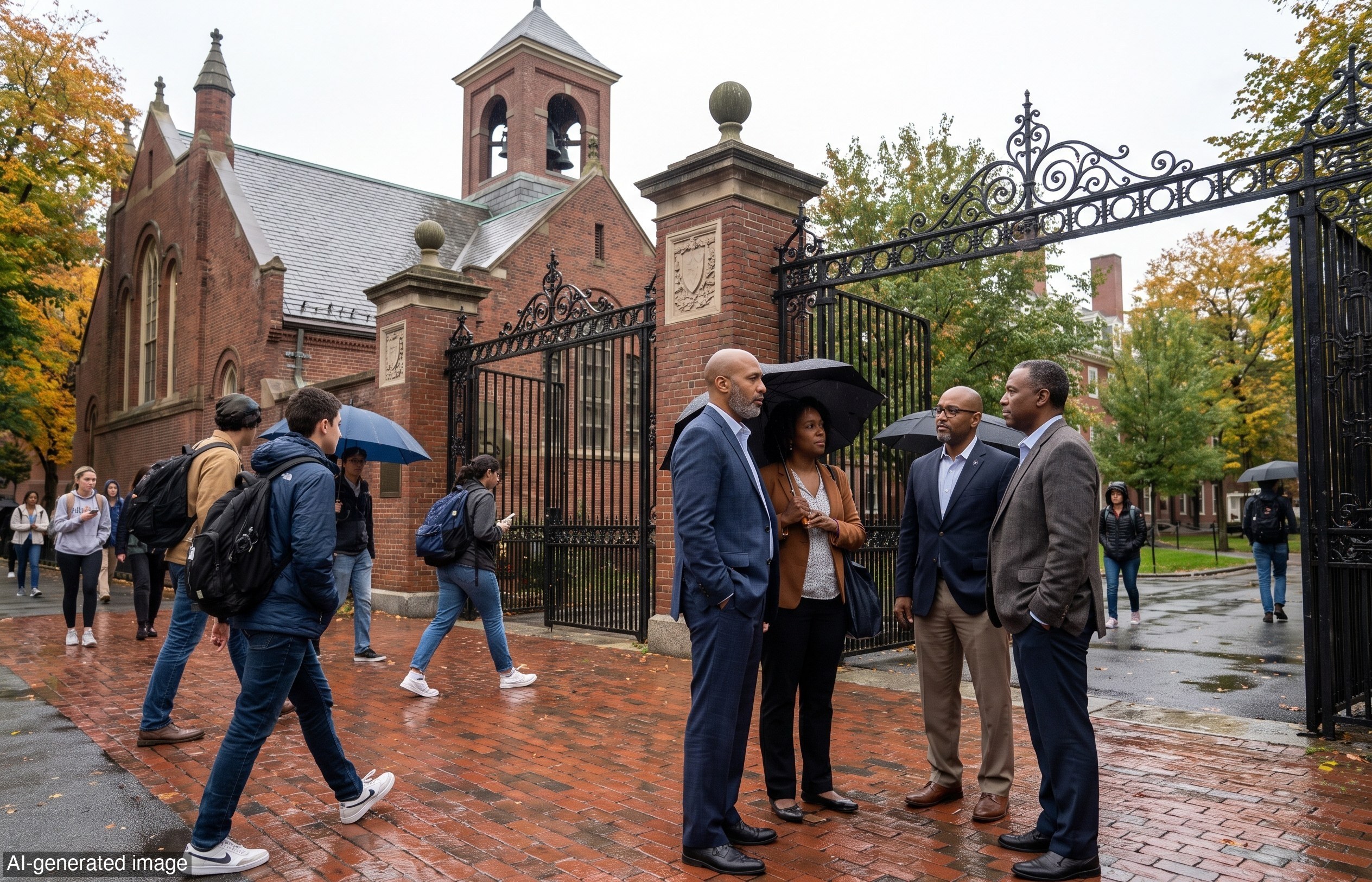
Harvard has a secret backdoor, and it is not hard to see who benefits.
The Z-List is a separate admissions pathway for applicants who are offered admission on the condition that they wait a year before matriculating. The list is not advertised on Harvard's admissions website and does not appear on the Common Application. Over the years, it has included children of uber-wealthy donors, connected alumni, and heads of state, according to Jayson Weingarten, a former University of Pennsylvania admissions officer and now a senior admissions consultant at Ivy Coach.
The issue sharpened after the Supreme Court struck down race-conscious admissions at Harvard and UNC in June 2023. Weingarten argues that legacy admissions should have gone next. Civil rights groups filed a federal complaint challenging Harvard's legacy and donor preferences, and the U.S. Department of Education opened a civil rights investigation. Only then did Harvard publicly say it was 'reviewing' aspects of its admissions practices.
Three years later, Weingarten says Harvard is still studying whether being born to the right parents should help an applicant get in. He cites data showing that from 2009 through 2015, roughly 34% of applicants whose parents attended Harvard were admitted, compared with about 6% of non-legacy applicants.
At many schools, legacy students make up roughly the same share of the class as first-generation college students, according to Weingarten. He says universities celebrate first-generation numbers in press releases while leaving out the share admitted with a legacy advantage.
There is also a donor angle. Weingarten says elite universities believe alumni loyalty translates into philanthropy, and that universities need philanthropy. Harvard provides extraordinary financial aid and conducts critical research, he writes, and there is no reason to pretend money does not matter. But he argues Harvard should be candid about when it should matter in admissions.
He points to Johns Hopkins, which eliminated its legacy preference years before the Supreme Court struck down affirmative action. In 2018, alumnus Michael Bloomberg gave Johns Hopkins $1.8 billion for undergraduate financial aid, allowing the university to become permanently need-blind, according to Weingarten. He presents that as philanthropy doing what philanthropy is supposed to do.
The larger question is whether Harvard and similar schools should keep using admissions as a reward system for inherited access. Weingarten says that if donor considerations are essential, they should be extraordinarily rare and reserved for truly transformational philanthropy, not garden-variety alumni status.
There is also a tax question hanging over the system. Harvard and its peers are tax-exempt charitable institutions. Weingarten notes that federal tax law addresses 'quid pro quo contributions,' where someone makes a charitable payment and receives something in return. That is the paper trail now drawing attention.
The market has already voted against inherited privilege in every other part of the economy. Harvard's admissions machine still looks like an old-world exception, one protected by prestige and taxpayer-friendly tax status. If the university wants to defend that model, it will have to explain why a tax-exempt institution should keep selling access by family name.