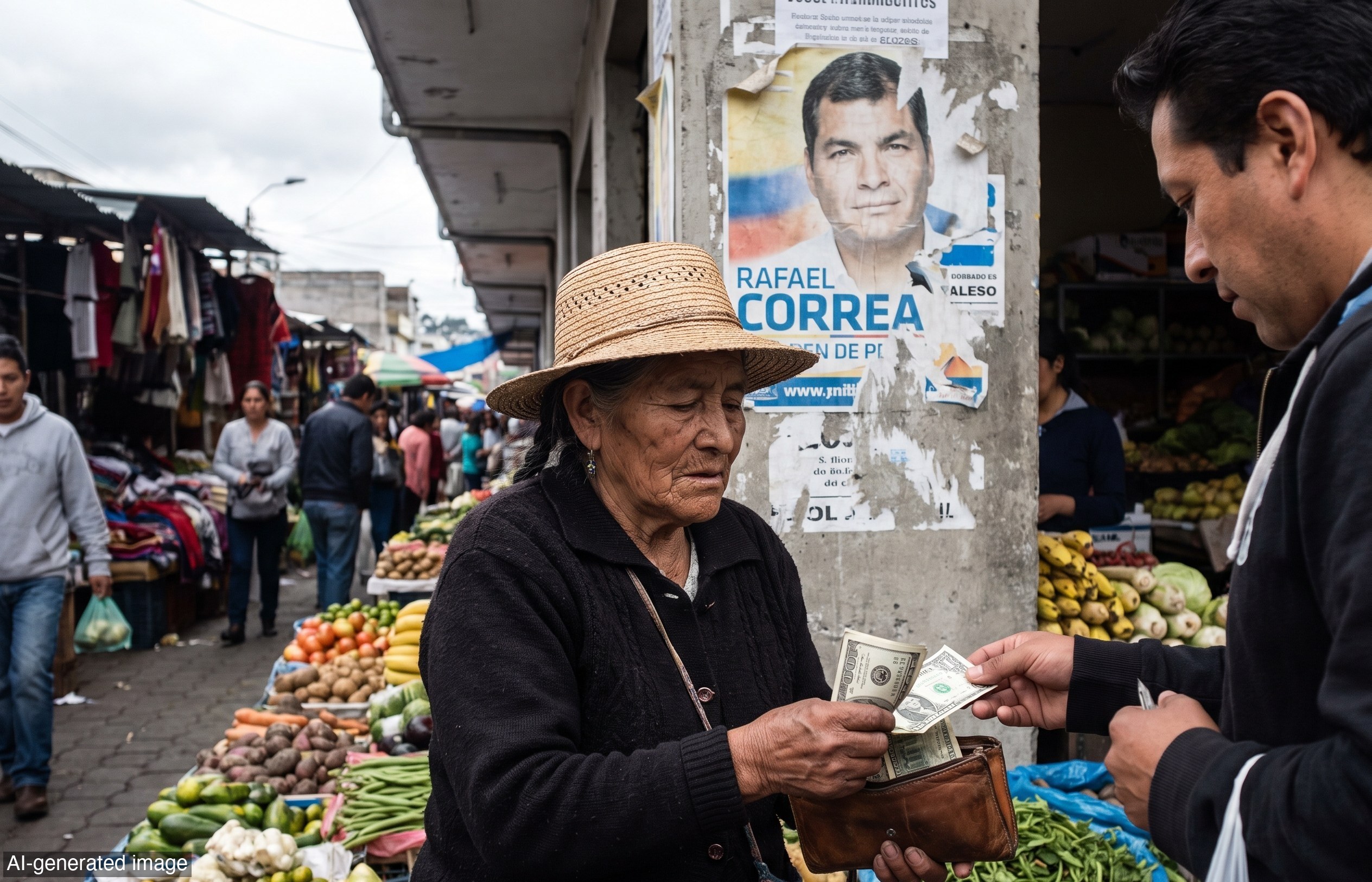
Ecuador's dollarized system has outlasted presidents, constitutions and political campaigns. It has also survived Rafael Correa, who denounced dollarization before taking office, called it 'an immense error' and 'monetary suicide,' and then spent years trying to weaken the system from within.
The numbers come first. In 1999, Ecuador's sucre fell from 6,825 per dollar at the end of 1998 to 20,243 by the end of 1999. In the first week of 2000, it slid again and hit 28,000 to the dollar. Faced with that collapse, President Jamil Mahuad announced on January 9, 2000, that Ecuador would replace the sucre with the dollar at 25,000 sucres to the dollar. President Bill Clinton and Treasury Secretary Lawrence Summers had encouraged the move.
The result was immediate and, by market standards, decisive. Inflation dropped sharply, deposits flowed back into the banking system, and the economy moved from negative to positive growth, with exports leading the way. Dollarization now enjoys roughly 90% approval, and it has lasted longer than any constitution in Ecuador's history.
Correa never openly reversed the decision, but the record shows a sustained attempt to erode it. In his first year in office, he scrapped an oil reserve fund that had worked alongside dollarization. He closed the economy to foreign capital, selectively defaulted on foreign debt despite record oil revenues, imposed an exit tax on every dollar leaving the country, raised import tariffs, and forced private banks to repatriate 45% of their liquidity and park it at the central bank.
He also introduced a central bank electronic money program that was presented as a financial inclusion tool. But because the balances were issued by the central bank, not private banks, the government could have used it to pay bills in digital credits not fully backed by dollars. The public rejected it, and the program was shut down.
The most serious breach came when the central bank began lending directly to the treasury. According to the IMF, central bank financing of the government peaked at about 10% of GDP, with the heaviest lending in 2009-2014. That amounted, in effect, to printing unbacked 'ecuadollars.'
Correa was later convicted of bribery in the Sobornos case and sentenced to eight years in prison. He lives in Belgium, outside the reach of that sentence. But his legacy is still visible: Ecuador has not realized the full benefits of dollarization because the central bank still sets interest rates and directs bank lending toward favored sectors, while remaining capital controls limit access to international dollar liquidity.
For Latin America, the lesson is not subtle. Capital rewards clear rules, and the dollar is a rule that markets understand immediately. When politicians try to bend money to political ends, stability disappears first, then trust, then growth. Ecuador shows the opposite too: when government gets out of the way, the currency can do its job.