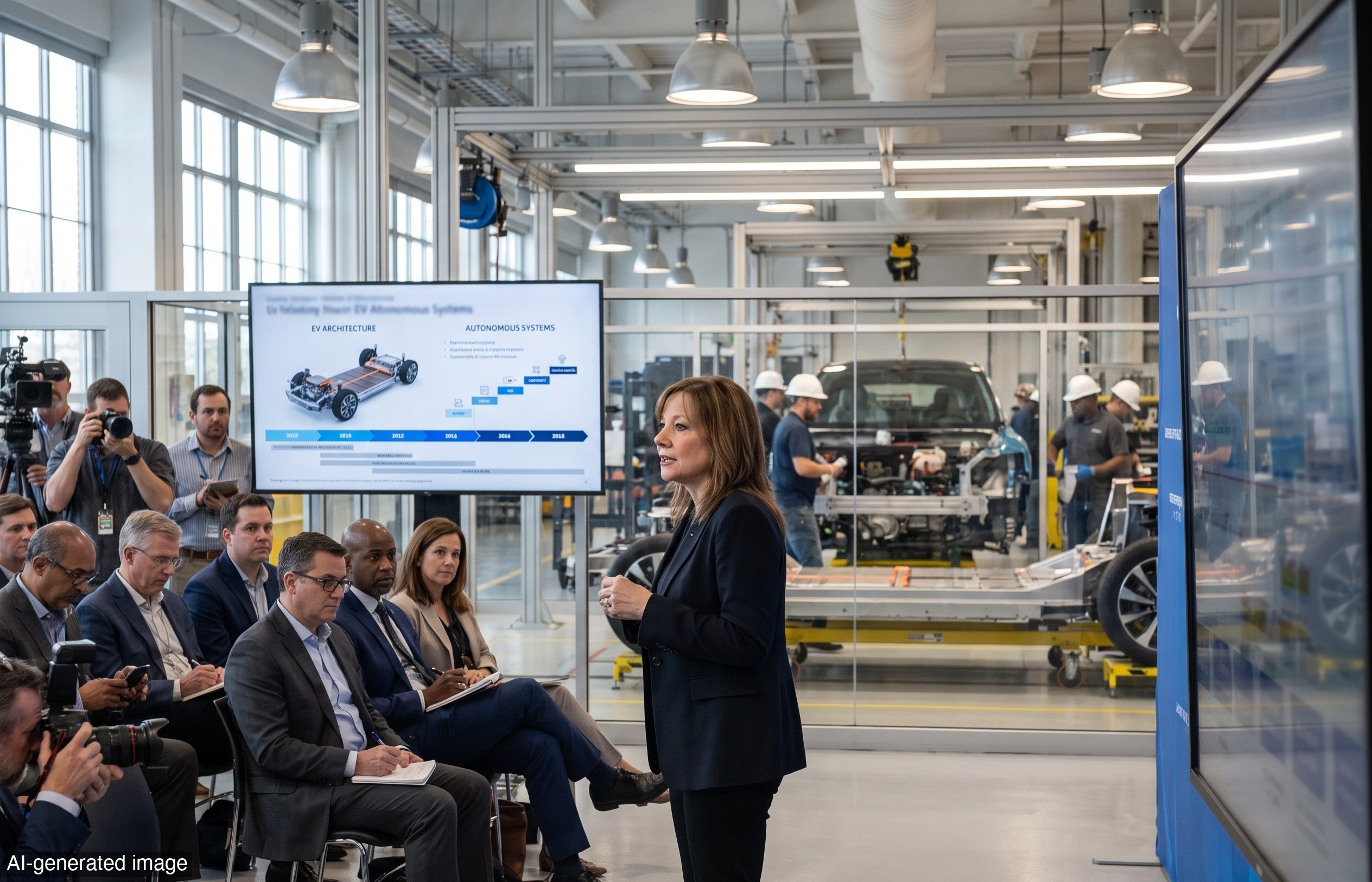
General Motors chief executive Mary Barra said the company still sees electric vehicles as the destination, even if the road is longer than automakers once expected.
'We still think EVs are the endgame,' Barra said in an interview for Fortune’s Titans podcast. She added that GM is focused on keeping a broad portfolio of vehicles, with more than a dozen EVs in its lineup alongside highly profitable internal-combustion models. GM, she said, can meet customers where they are: 'Wherever the customer is, we have a vehicle.'
The shift is a clear change from the pace many in Detroit and Washington once expected. A few years ago, automakers were preparing for a world in which 40% to 50% of vehicles would need to be electric by 2030. But the Trump administration unwound key incentives and rules that had encouraged EV adoption, and consumer habits proved more stubborn than projections suggested.
Barra described GM’s response as a management strategy built around flexibility. 'The minute we start to sense something might change, what are these no-risk decisions or these no-regret decisions we can make?' she said. 'Agility is a superpower now.'
Investors appear to have liked that balance. Fortune reported that GM’s stock is trading near its all-time high and is up nearly 6% year to date.
Barra is also looking beyond EVs to autonomous driving. She said GM expects to offer eyes-off-the-road highway driving in 2028 on the Cadillac Escalade IQ. That would build on Super Cruise, GM’s hands-free driver-assistance system, which already allows drivers to take their hands off the wheel and feet off the pedals on compatible roads.
'What we plan to do in 2028 is you’ll be able to not have to keep your eyes on the road,' Barra said. 'And that will be the start of then getting to full autonomy.'
She said safety will be the 'overriding priority' as GM rolls out the technology.
Barra’s caution reflects hard lessons from the ignition-switch crisis that engulfed GM before she became chief executive. She described the company at the time as mired in a 'deeply troubling' culture of bureaucratic inaction. The faulty switch later was found to have caused at least 124 deaths and 274 injuries, and GM ultimately recalled millions of vehicles and paid billions in penalties and settlements.
For capital markets, the message is straightforward: GM is not abandoning EVs, but it is not pretending the market moved as fast as the pitch decks promised. The market has already voted for a slower transition, and Barra is following it with a portfolio strategy built to protect margins while the technology matures.
That is the kind of discipline Wall Street tends to reward. It also shows how regulation, consumer demand and execution matter more than slogans. When Washington changes the rules, the taxpayer does not write the forecast. Companies do. And in Detroit, the winners will be the ones that can adapt without losing sight of safety, cash flow and free enterprise.



