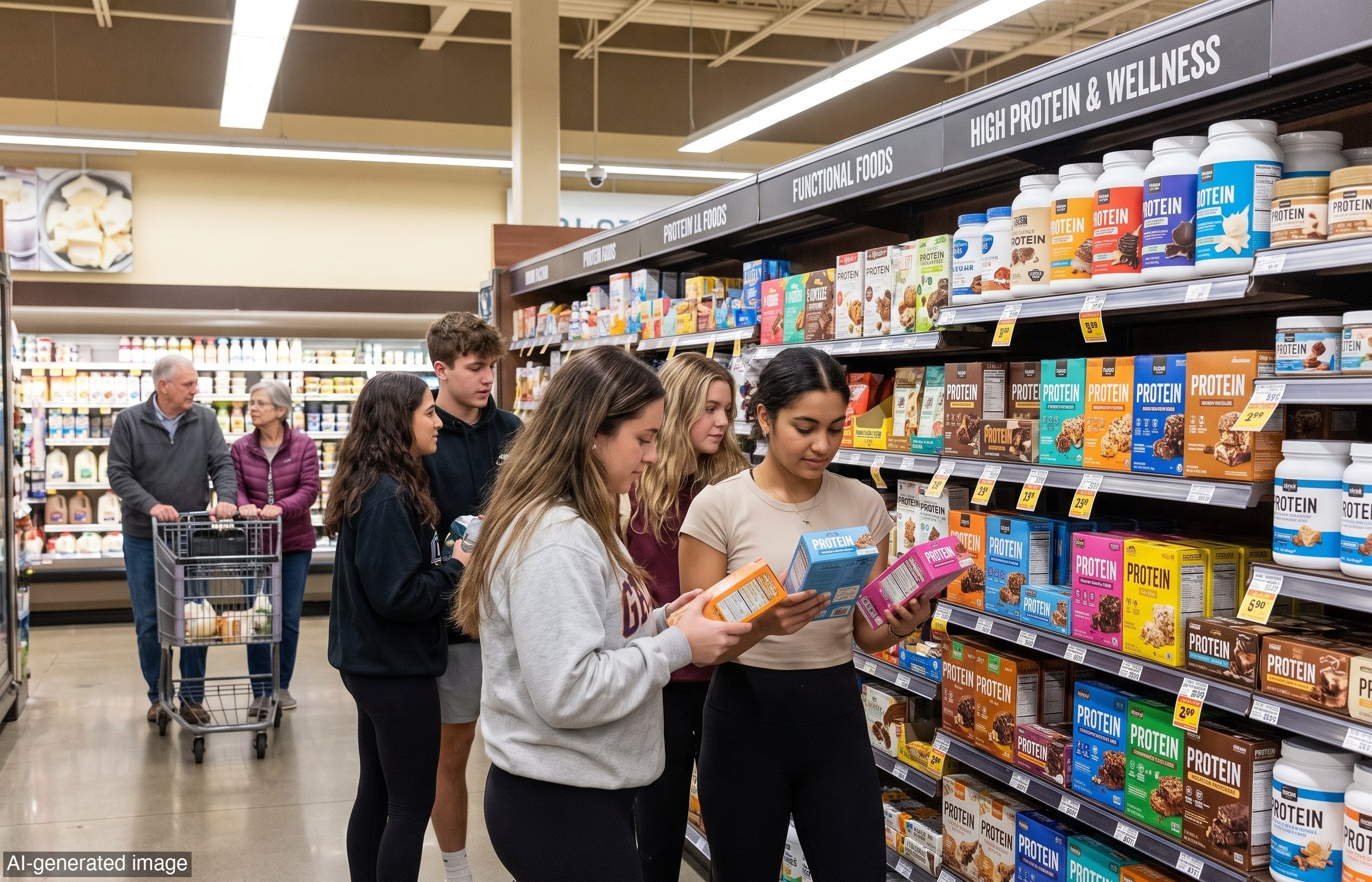
Protein is no longer confined to powders, bars, and the supplement aisle. It now shows up in cereal, coffee, chips, soda, and even mac and cheese, turning a niche category into a broad consumer trend.
A new Pew Research Center survey shows adults under 30 are less likely than other age groups to take supplements for their health. But protein is the exception. Thirty-seven percent of adults ages 18 to 29 take protein supplements such as powders, drinks, or bars, compared with 23% of Americans 65 and older.
That gap has turned protein into a different kind of product. It is not just a supplement anymore. For younger consumers, it is increasingly part of the foods and drinks they already use throughout the day.
'We’re seeing a meaningful shift in how younger consumers engage with wellness and functional ingredients,' Scott Dicker, senior director of market insights at consumer data firm SPINS, told Fortune. He said older generations have tended to prefer capsules, tablets, and powders, while younger consumers are more likely to look for the same benefits in foods and beverages.
'Rather than viewing supplements as a separate health regimen, younger consumers increasingly see function as something that can be incorporated into the products they’re already consuming throughout the day,' Dicker said.
The age divide is especially stark in vitamins and minerals. Pew found that 48% of adults under 30 take vitamins or minerals, compared with 81% of those 65 and older. Overall supplement use follows a similar pattern: 67% of the youngest adults take at least one, compared with 85% of seniors.
Protein runs in the opposite direction. A 2025 SPINS study of younger shoppers found that more than half of Gen Z and millennial shoppers surveyed said they follow a high-protein diet. Dicker said the core protein products still perform well even as companies add protein to cereal, pasta, and soda.
Older consumers tend to favor foods naturally high in protein, such as yogurt and cottage cheese. Younger consumers gravitate toward products with added protein in categories that traditionally had little of it, such as cereal, Dicker said.
Roger Clemens, a professor at USC’s Mann School of Pharmacy and Pharmaceutical Sciences, said the pattern is counterintuitive from a nutritional standpoint. He pointed to sarcopenia, the involuntary loss of muscle mass and strength that occurs with age, as one reason protein matters more as people get older.
'Protein is quite complicated,' Clemens told Fortune. He said the amount listed on a label does not tell consumers the full nutritional picture because absorption and use matter too.
For companies, the market has already voted. They are no longer selling only supplements; they are embedding functional benefits into the products shoppers already buy. That is where the margins are going, and that is where the grocery aisle is headed.



