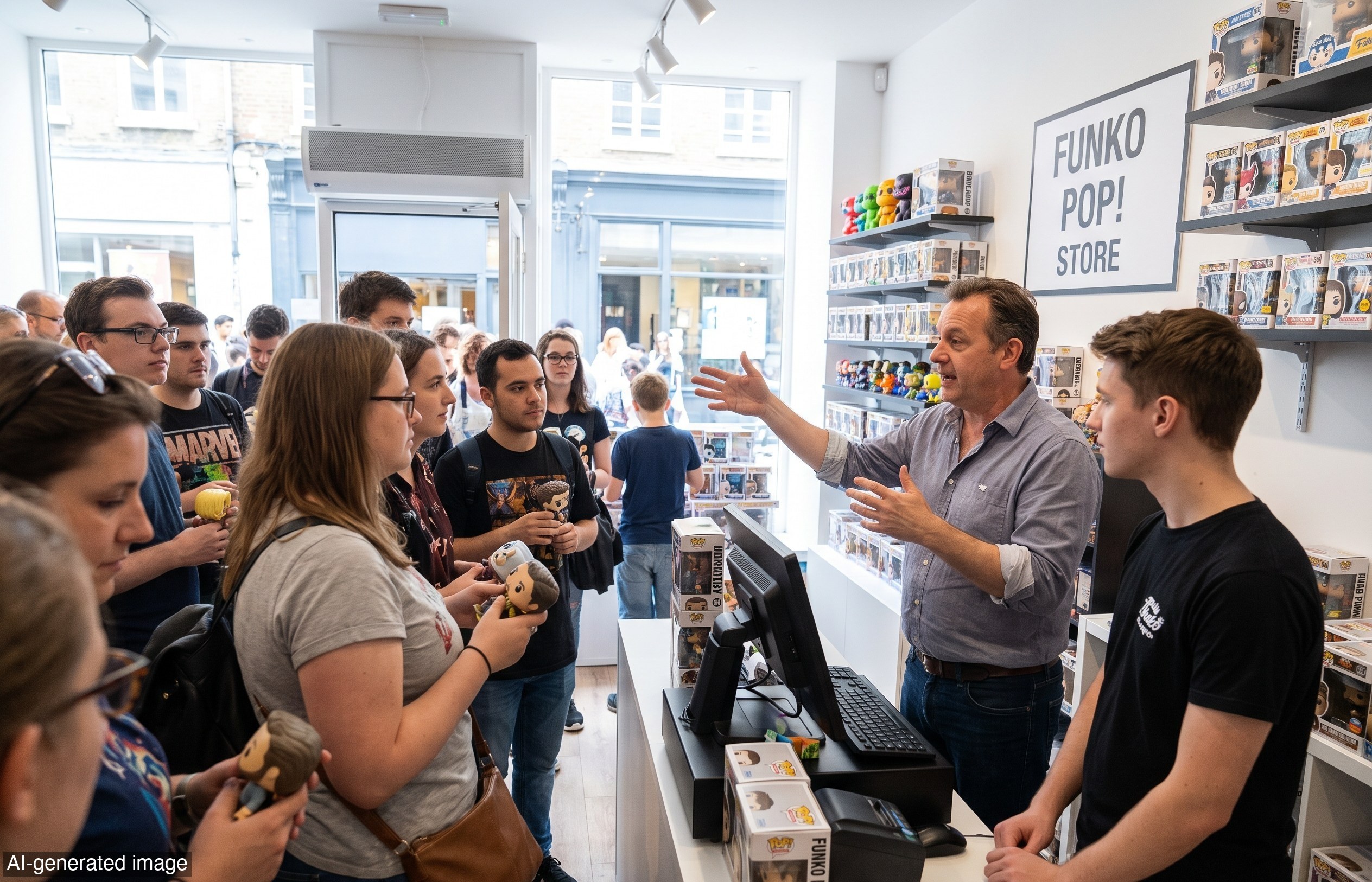
Josh Simon says a career lesson from Disney still drives how he leads Funko: 'don’t really ask for permission.' The 48-year-old CEO said he learned that approach when, as Disney’s most junior employee, he rewrote an op-ed for Michael Eisner and ended up building a relationship that 'continues to this day.'
Simon joined Disney in 2000 after Harvard and later worked in strategy, film production and development. His career then moved through Color Force, Function Drinks, Nike and Netflix before he was tapped last September to help Funko recover from a rough stretch marked by declining sales, excess inventory, tariffs and looming debt payments.
Funko, known for its vinyl figures and bobbleheads with oversized heads, had seen sales fall 22% year over year in the second quarter of 2025 before Simon joined. The company also ousted its previous CEO that summer.
Now Simon is trying to turn Funko into more than a licensed-products business. He wants it to be a 'canvas for fans to engage in pop culture' and to respond to cultural demand sooner. One example is 'KPop Demon Hunters,' for which Funko moved quickly enough that the product line accounted for 7% of Funko’s net sales in the first quarter of 2026.
There are early signs the market is responding. In its most recent earnings report, Funko said net sales rose 7% year over year, with Europe up nearly 20%. The company also reported net income of $15.4 million.
Simon said three CEOs shaped his view of leadership: Michael Eisner at Disney, Mark Parker at Nike and Ted Sarandos at Netflix. He said each had a deep passion for what their companies created and had spent time 'in the trenches' of their industries.
For shareholders, the appeal is obvious: execution, customer focus and less waiting around for permission. That is the kind of culture free enterprise rewards. Capital does not care for ceremony; it rewards companies that move, sell and adapt.
Funko still has to prove that the turnaround is durable. But the numbers first suggest the company has at least started to answer the market with real operating improvement, not just rhetoric.



