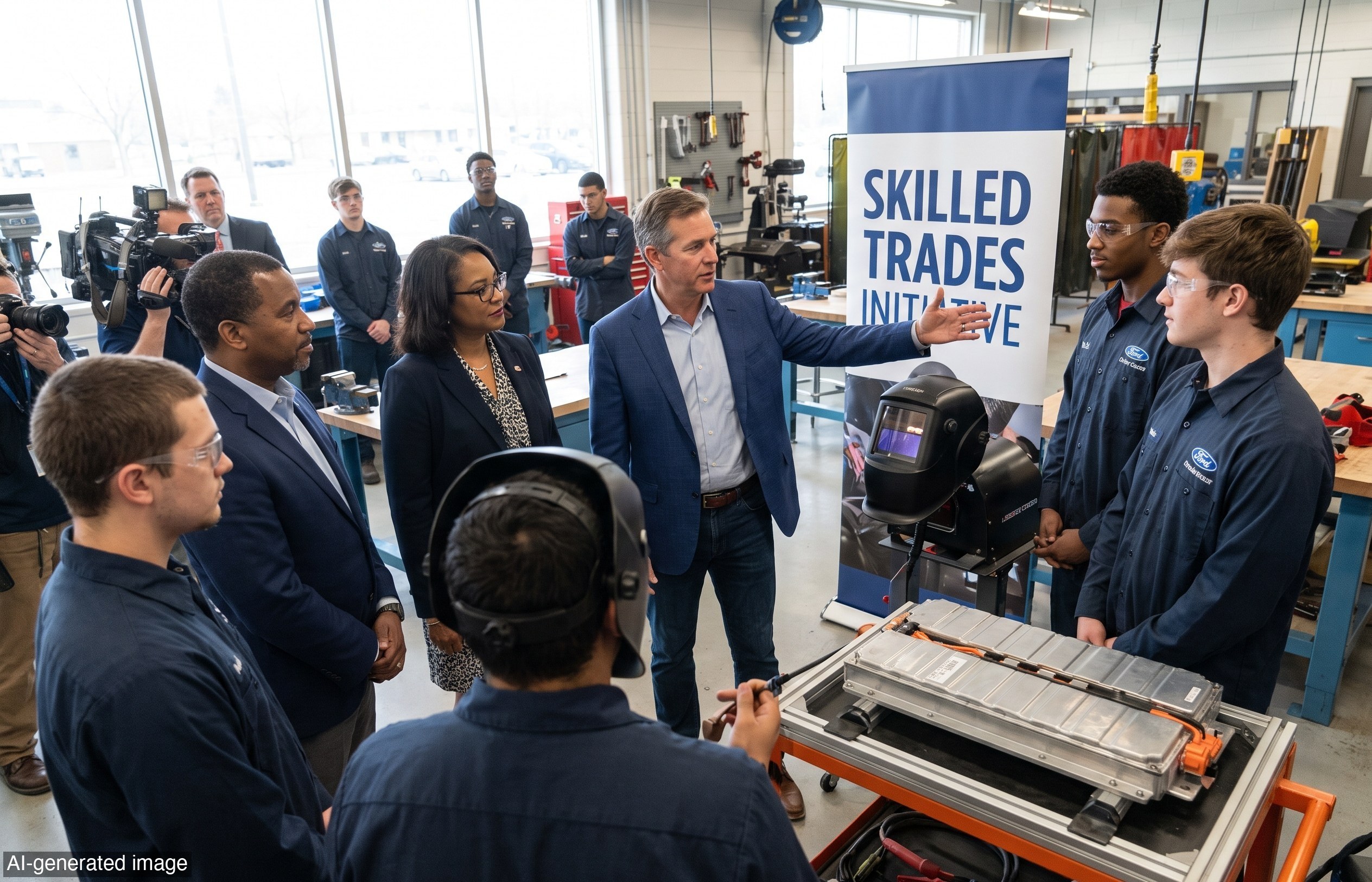
Ford is moving to help address a labor shortage that could reshape American industry. A new national report released by the Alliance for America’s Skilled Trades says the U.S. will likely have 1.7 million skilled trades job openings every year through 2035.
The report, titled 'The State of America’s Skilled Trades: A National Report,' was released in partnership with Jobs for the Future and Burning Glass Institute. It analyzed 124 skilled trades occupations nationwide and found that current training programs are producing just 55 workers for every 100 needed.
Ford formed the alliance in July with BlackRock, Google, and Carhartt. The company says the effort is part of a wider initiative aimed at the future of work. About 600,000 of the openings identified in the report will be net-new jobs in areas like AI, advanced manufacturing, and energy.
Ford CEO Jim Farley has been pushing the issue for more than a year. Last year’s summit focused on Ford Pro, the company’s commercial business arm, which sells trucks, vans, software subscriptions, and services to customers dealing with the skills shortage directly. This year, Ford says Accelerate is broader and aimed at tackling a critical challenge in the labor market.
The shortage is not just a numbers problem. The report says only half of those who enroll in training programs finish, with cost, transportation, and childcare among the obstacles. Ford has already partnered with Bloomberg Philanthropies to pilot a new auto tech program in Detroit Public Schools and teamed up with Lyft to help SkillsUSA students get to training and apprenticeship programs.
Ford has also commissioned research from the Ad Council on how students, parents, and teachers view skilled trades. On Monday, Farley joined Jamie Dimon of JPMorgan Chase, Michigan Gov. Gretchen Whitmer, and officials from Michigan Central and Newlab to launch Michigan LIFT, a public-private initiative to invest in innovation.
The company may be steering the discussion, but it is not doing it alone. The Alliance said it will announce new members today.
The numbers come first. A labor market that cannot produce enough technicians, welders, mechanics, and other skilled workers becomes a tax on growth, margins, and productivity. When current training systems deliver 55 workers for every 100 needed, capital does not wait politely; it goes where labor is available and rules are clear.
That is why the Ford effort matters beyond Detroit. The market has already voted for skilled labor, and the question now is whether education, training, and local policy will catch up before more opportunity is left on the table.



