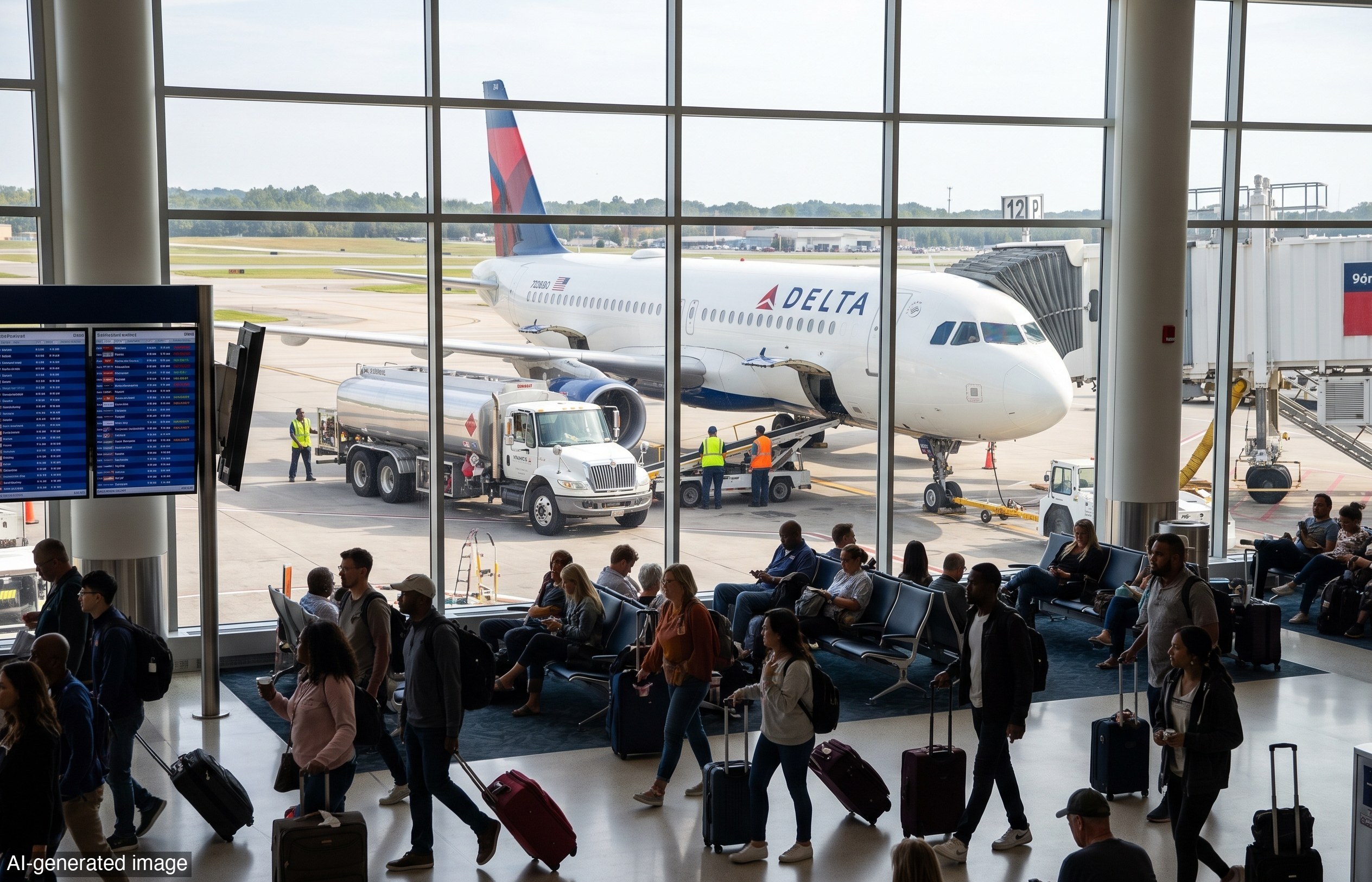
Delta is signaling that the fare shock may not fade quickly, even if fuel prices do. CEO Ed Bastian said higher ticket prices could remain in place as long as demand stays strong, after the carrier passed along part of a 60% jump in fuel costs.
Bastian said in an interview with CNBC that he was surprised Delta’s profits held up despite the surge in jet fuel prices. He called the increase a '$1.6 billion' hit in the third quarter. He also said that, in July, Delta expected to pass along 60% of its higher fuel costs to consumers and believed that share could rise close to 100% in the third quarter.
The company reported $17.6 billion in adjusted revenue for the third quarter, up 16% from a year earlier and just below analysts’ $17.67 billion estimate. Delta said adjusted spending on jet fuel rose 62% from the same period last year, but revenue per seat mile rose 15%, reflecting higher fares and strong demand.
On the earnings call, Bastian said consumers helped Delta maintain profits despite the price increases. He said the market had accepted these price points and described airfare as still reasonably affordable. He added that Delta’s position is 'very sustainable' under those conditions.
Bastian also said he expects the franchise’s earnings power to improve if fuel prices recede next year. In his words, that would amplify the company’s results.
The broader industry backdrop remains hot. The average price for domestic trips reached $445.26 in the second quarter, according to the Bureau of Transportation Statistics. The U.S. Travel Association said airline ticket prices rose about 23% year over year.
Oil prices have been a major driver. The report says oil surged this year because of the war in Iran, which has crippled transit through the Strait of Hormuz, through which 20% of the world’s oil flowed before the war. Brent crude stood at $108 on Monday, more than 70% above a year earlier.
Fuel is one of airlines’ biggest costs after labor, making up about 21% of operating costs earlier this year, according to Airlines for America. Jet fuel prices have risen more than 100% from a year ago, according to the International Air Transport Association. U.S. Gulf Coast jet fuel cost $4.34 a gallon on Thursday, nearly double the $2.19 from a year earlier, according to CNBC.
U.S.-based airlines generally do not hedge against rising oil prices, which means increases often flow through to customers. Delta does have an oil refinery through a subsidiary, which helps offset fuel costs.
Delta was the first major U.S. airline to report third-quarter earnings. Southwest CEO Bob Jordan said the carrier is seeing 'really strong demand,' while American CEO Robert Isom said consumer spending remains resilient.



