Hans Tung, managing partner at Notable Capital, says the AI race will be won by infrastructure.
In a conversation about 19th-century shipping and the Industrial Revolution, Tung drew a line from steel ships and steam engines to today's data centers. He said the British became stronger by adopting steel technology and scaling it, and argued that the same logic now applies to AI infrastructure.
'If you don’t have enough compute to meet demand, it doesn’t matter if you have a better model,' Tung told Fortune. 'The models that win are the ones that are available.'
He compared data centers to railroads in the 21st century. Tung said that during the Civil War, the North won in part because railroad infrastructure was more developed than the South's. 'It doesn’t matter if you have the resources if you don’t have the [means] to move them,' he said.
The numbers come first. Tung also pointed to China's buildout in transportation and shipbuilding, saying China has more high-speed rail than the rest of the world combined and that more than 80% of new shipbuilding orders worldwide go through China. He said one state-owned Chinese conglomerate, the China State Shipbuilding Corporation, builds more commercial ships each year than the aggregate U.S. shipbuilding industry has built since World War II ended.
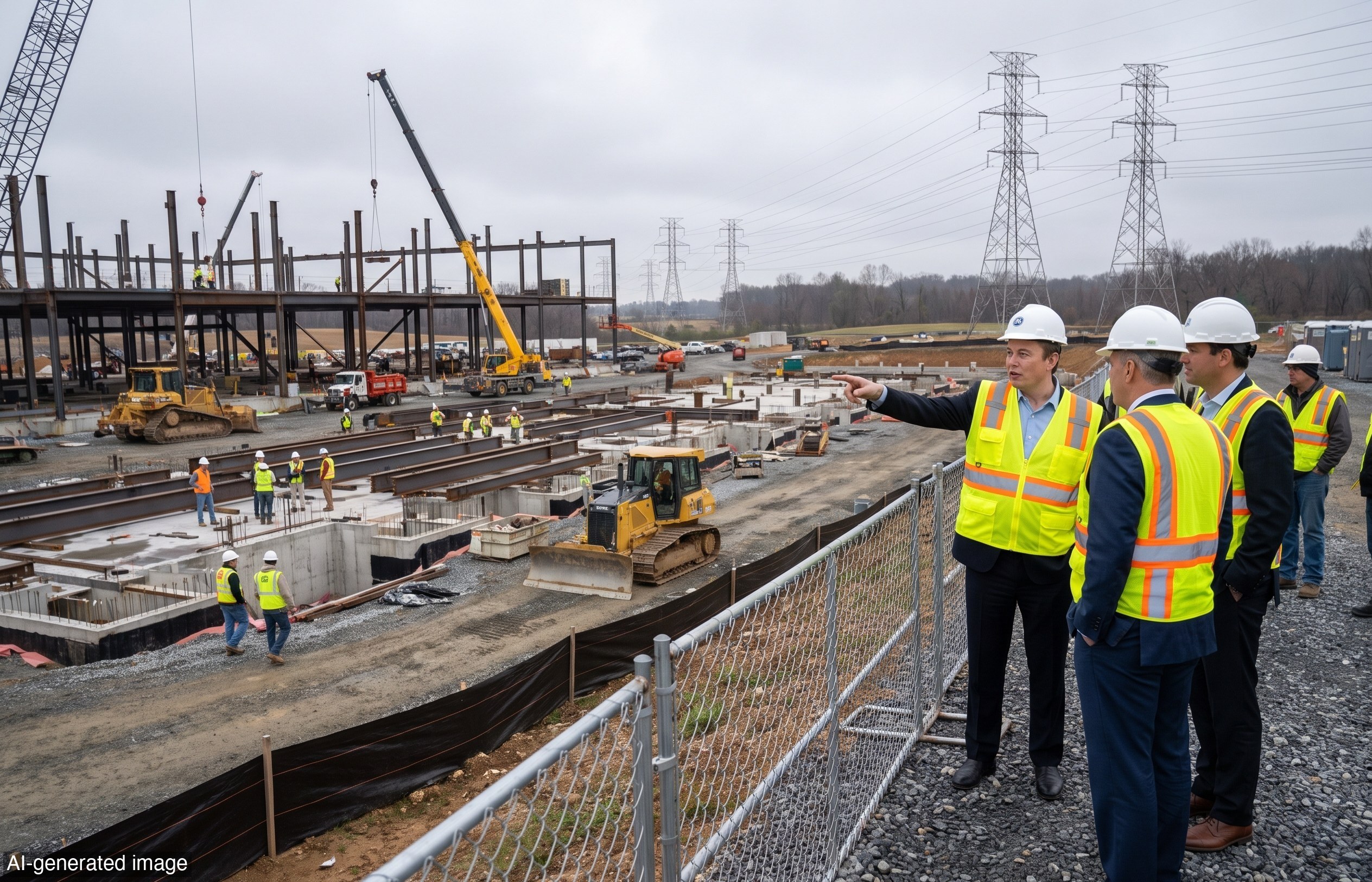
On data centers, Tung said China controls about 24 gigawatts of working data center compute capacity, while the U.S. has at minimum 47 gigawatts by conservative estimates. But he said the U.S. now faces the bigger challenge: executing a historic building boom.
A Columbia Business School professor has estimated that the AI infrastructure buildout could account for an average of 3.6% of U.S. GDP every year until 2032. The story also notes that the buildout brings concerns over community pushback and the electric grid's capacity.
For capital, the lesson is blunt. Technology alone is not enough if the infrastructure is not there to support it at scale. Tung's argument is that free enterprise does not run on slogans or hype cycles; it runs on capacity, logistics, and the ability to deliver.
The market has already voted on the importance of that reality. If AI is going to reshape productivity and margins, the firms and countries that can build first will set the pace. The rest will be left talking about the future while someone else wires it up.



