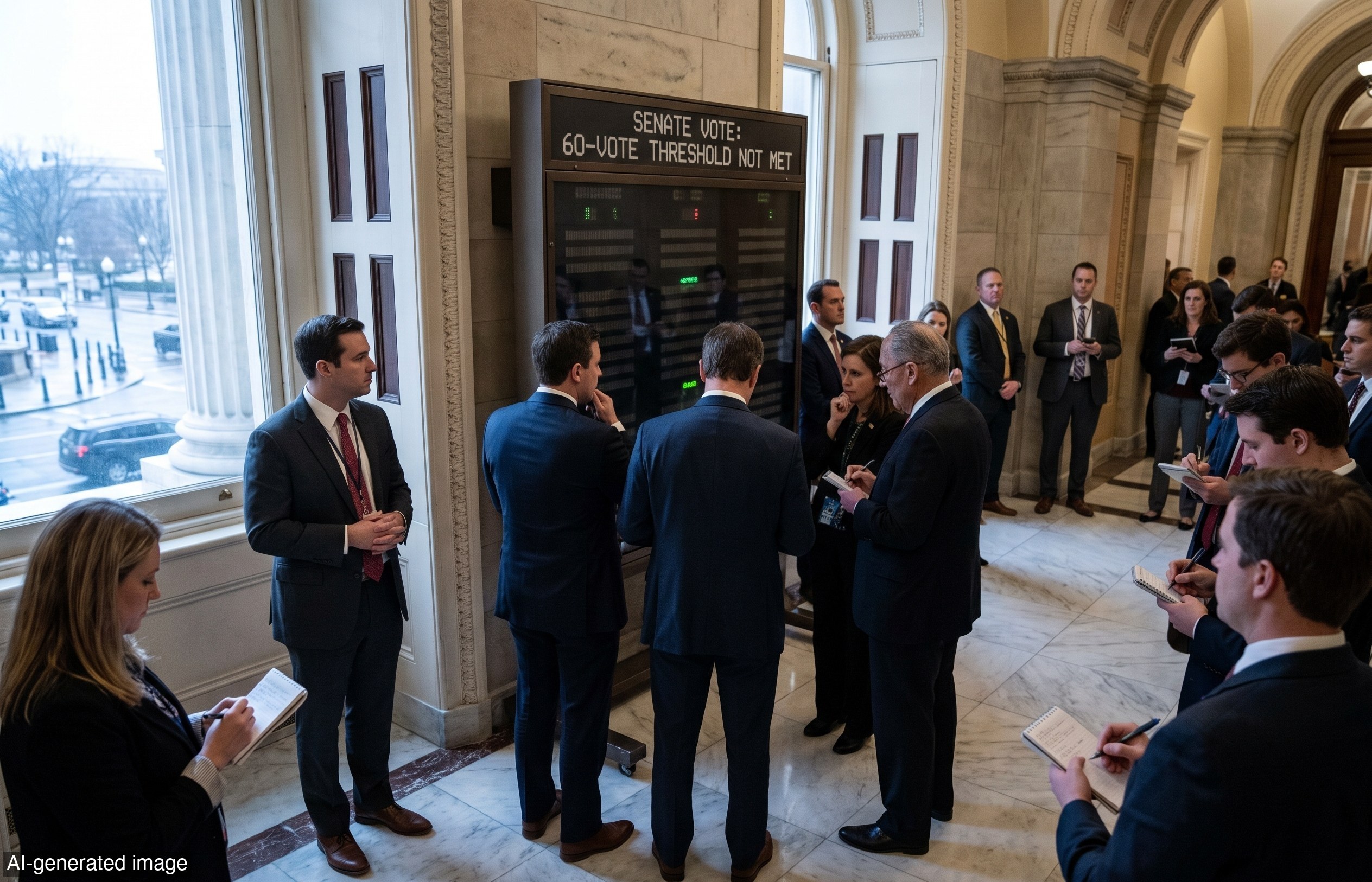
The Senate failed on Tuesday to secure the 60 votes needed for a procedural motion advancing the Digital Asset Market Clarity Act. That came after a 294-134 House victory and years of bipartisan work on the issue.
For Kris Marszalek, the founder and chief executive of Crypto.com, the vote was frustrating but not decisive. He wrote that the industry had 'already won' because hundreds of millions of people around the world have compared the traditional system with digital assets and chosen the latter with their own money.
Marszalek said a construction worker in Texas can send wages home for a steep fee and wait days, or use a stablecoin that arrives in seconds for a fraction of a cent. He added that a shopkeeper in Turkey can hold digital dollars on her phone, while a software engineer in Vietnam can use a digital wallet to connect to the global economy.
He also pointed to signs of institutional adoption. According to Marszalek, JPMorgan’s deposit token runs on a public blockchain, Citi moves tokenized dollars around the clock, and the four largest U.S. banks confirmed a shared tokenized deposit network in June. He wrote that Visa and Mastercard settle transactions in stablecoins, while Morgan Stanley opened crypto trading to E*Trade customers.
Marszalek said capital is moving both ways. He cited Intercontinental Exchange's stake in OKX and said Citadel Securities invested $400 million in Crypto.com at a $20 billion valuation in July.
He argued that stablecoins are not a sideshow. Marszalek said stablecoin transfers totaled roughly $33 trillion last year, up 72%, and compared blockchain settlement with correspondent banking, saying the former moves in seconds at negligible cost while the latter can take days and stop for weekends.
He also made a broader case about market structure. In his view, public blockchains make fees visible, allow reserves to be verified in real time, and remove the asymmetry that enriches incumbents. He said the traditional system reserves its best terms for those who already have wealth and hides costs in exchange-rate markups and spreads.
Marszalek did not ignore the industry's failures. He said real people lost money to fraud and excessive leverage, and he argued that crypto companies should face bank-grade standards for custody, capital and disclosure.
He credited the president with reversing the government's prior hostility and said the Democrats who crossed party lines on the GENIUS Act, the House vote on the CLARITY Act and Senate Banking Committee market-structure legislation also deserve credit. He said the remaining disputes now center on ethics rules, illicit-finance safeguards, stablecoin yield and protections for software developers.
The market has already voted, even if the Senate has not. That is the real signal here: capital is choosing speed, transparency and lower transaction costs, while Washington remains stuck in procedural drag.
For taxpayers and investors, the question is no longer whether digital assets exist. It is whether lawmakers will let a more efficient financial infrastructure compete on even terms, or keep stretching the old system's advantage through regulation and delay. Capital rewards clear rules. Bureaucracy rewards confusion.



