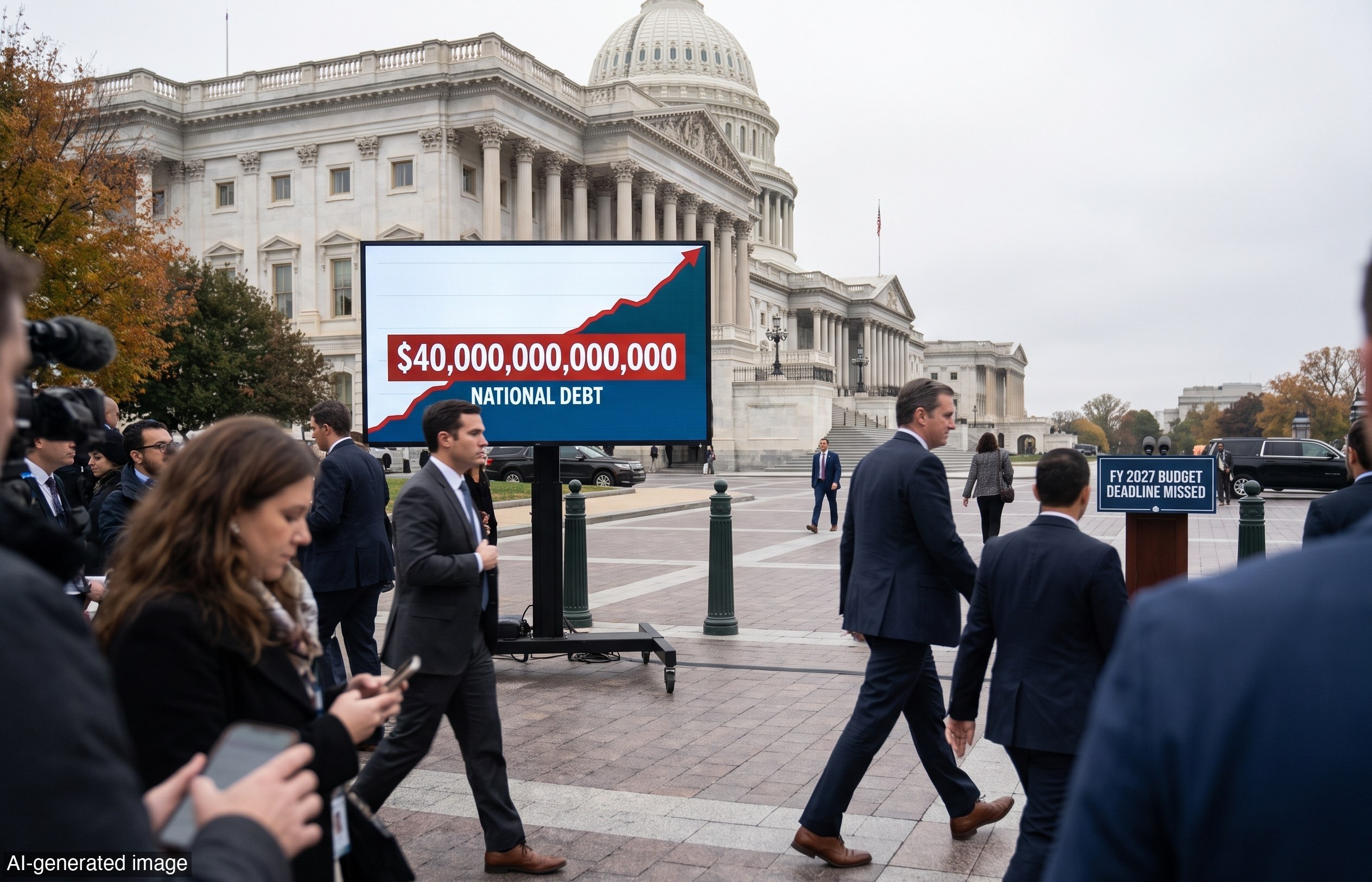
Congress has failed to pass all of its annual appropriations bills before the start of the next fiscal year for the 30th year in a row, according to Steve H. Hanke and David M. Walker.
They argue that Congress has become 'dysfunctional' and 'irresponsible,' and say it has done its job only four times since World War II. The two blame the recurring delays on a broken budget process that forces lawmakers to rely on temporary continuing resolutions, or CRs, to keep the federal government funded.
The fiscal backdrop is getting worse. The federal government posted a record '$432 billion deficit' in July and crossed the '$40 trillion total federal debt threshold' in August, the piece says. Hanke and Walker also project that total liabilities and unfunded obligations will exceed '$147 trillion' when the federal financial statements for the year ended September 30, 2026, are released. They say that figure would be up '$11 trillion in one year' and far above the roughly '$20 trillion in 2000.'
Their proposed fix is blunt: a 'No Budget, No Pay Rule.' Under that approach, members of Congress would not be paid until all appropriations bills are passed, with no retroactive pay. They point to California, which passed similar legislation in 2010, as an example of a state budget process that gets done on time.
The authors also want automatic CRs to kick in if Congress misses the deadline, but at prior-year spending levels, with no inflation adjustment and no 'one-year-only' funding. That, they say, would eliminate the recurring drama around shutdown threats and debt-ceiling fights.
More broadly, they say Washington has lost control of federal spending. More than '75% of direct annual spending is on autopilot,' up from '3% in 1913,' and they call for an annual cap on all spending except Social Security and interest on the debt. They also call the debt ceiling a 'proverbial bad joke' and want it replaced with a constitutional limit tied to debt held by the public as a percentage of GDP.
Their recommended range is '110–120% of GDP,' with a longer-term goal of reducing debt to '90%' over the next '10–15 years.' They note that debt held by the public is 'about 100% of GDP' now, while the Congressional Budget Office projects it could reach '175%' in 30 years if the course does not change.
The numbers come first. Washington is treating the taxpayer like a bottomless financing source while the debt load climbs and the budget process breaks down.
Capital rewards clear rules, not ritual dysfunction. If Congress cannot do the basic work of funding the government on time, the market will keep pricing the consequences anyway, and the bill lands on the public balance sheet.