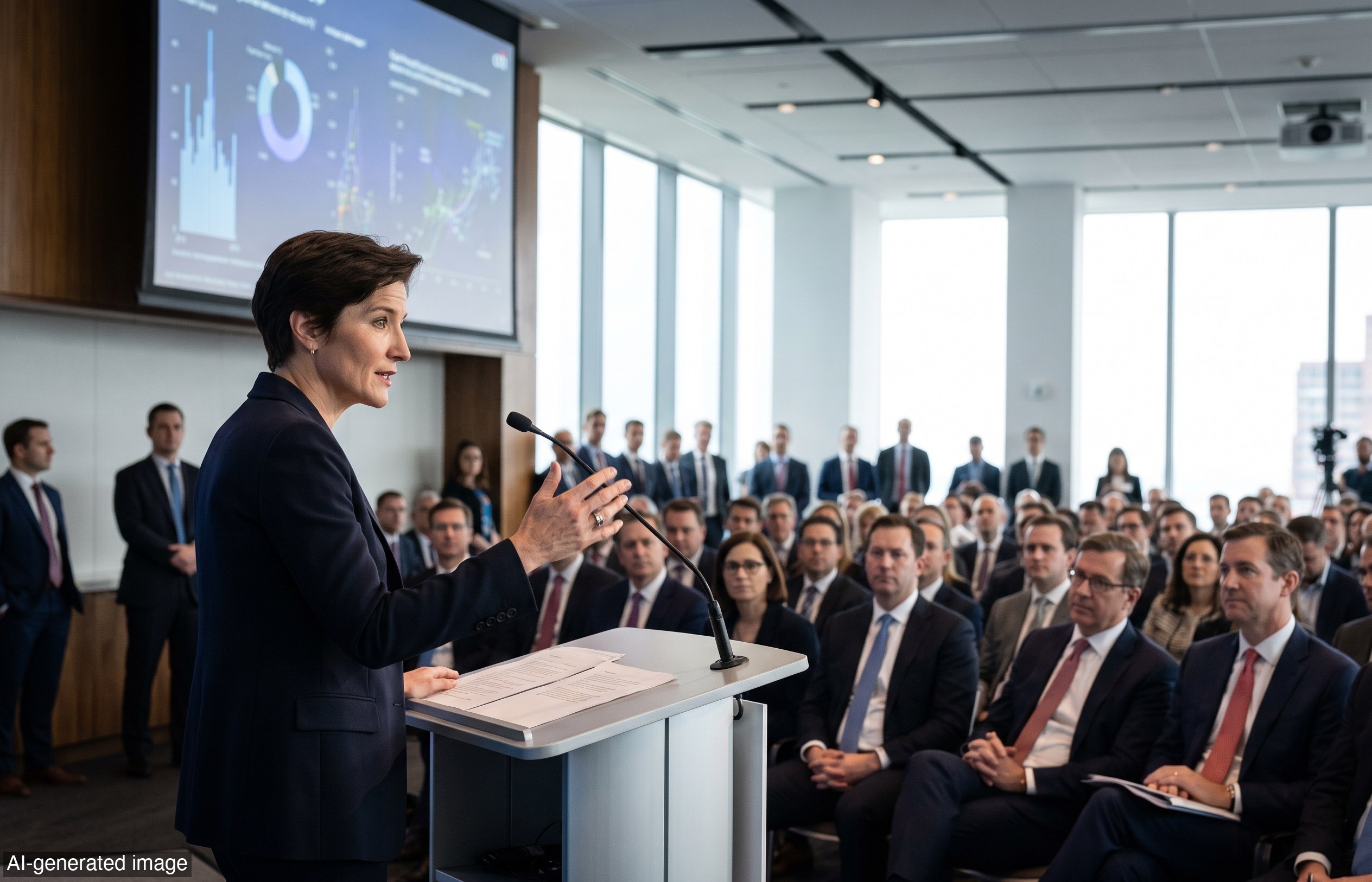
Citigroup posted its best third-quarter revenue in a decade, a fresh milestone in Jane Fraser's turnaround at the Wall Street giant.
Fraser, who became CEO in 2021, said the bank has moved past much of the hard restructuring and is now focused on the next phase. That phase includes a simpler operating structure, more automation, and a sharper push to compete with top rivals.
'We’re definitely in the more fun part of everything that’s going on. We’ve got a lot of the heavy lifting behind us,' Fraser said at Fortune’s Most Powerful Women Summit. 'Now what I’ve said to the firm is, if we are going to be the best in the businesses we’re in, we have to beat the best.'
Since taking over, Fraser has reorganized Citi into five core businesses, cut layers of management, and started exiting consumer banking in 14 markets outside the U.S. The overhaul also includes 20,000 job cuts slated to wrap up before 2027.
AI is now central to the bank's next step. Fraser said artificial intelligence can help Citi earn money, save money, and secure the bank. One example is an AI avatar agent for Citi's wealth business, developed with help from Google DeepMind's team, that can talk with clients at any hour.
Fraser said the tool is not a replacement for bankers. Still, she acknowledged the question of whether AI will shrink Citi's headcount remains open.
'Honestly, we don’t know yet,' she said, describing 'puts and takes' as some jobs are created and others are automated by the technology.
She also said Citi now requires AI training for 175,000 employees, with a focus on writing prompts. On risk, Fraser said the banks are working together on cyber vulnerabilities.
The market has already voted on the turnaround: better revenue, fewer layers, and a strategy built around productivity, capital, and speed. That is the logic of free enterprise. The firms that simplify, execute, and adapt keep their margins. The ones that do not get left behind.
For the taxpayer and the broader market, the lesson is simpler still. Large institutions do not earn resilience by bloating bureaucracy. They earn it by cutting waste, managing risk, and letting technology do what it can do better and faster than human process.



