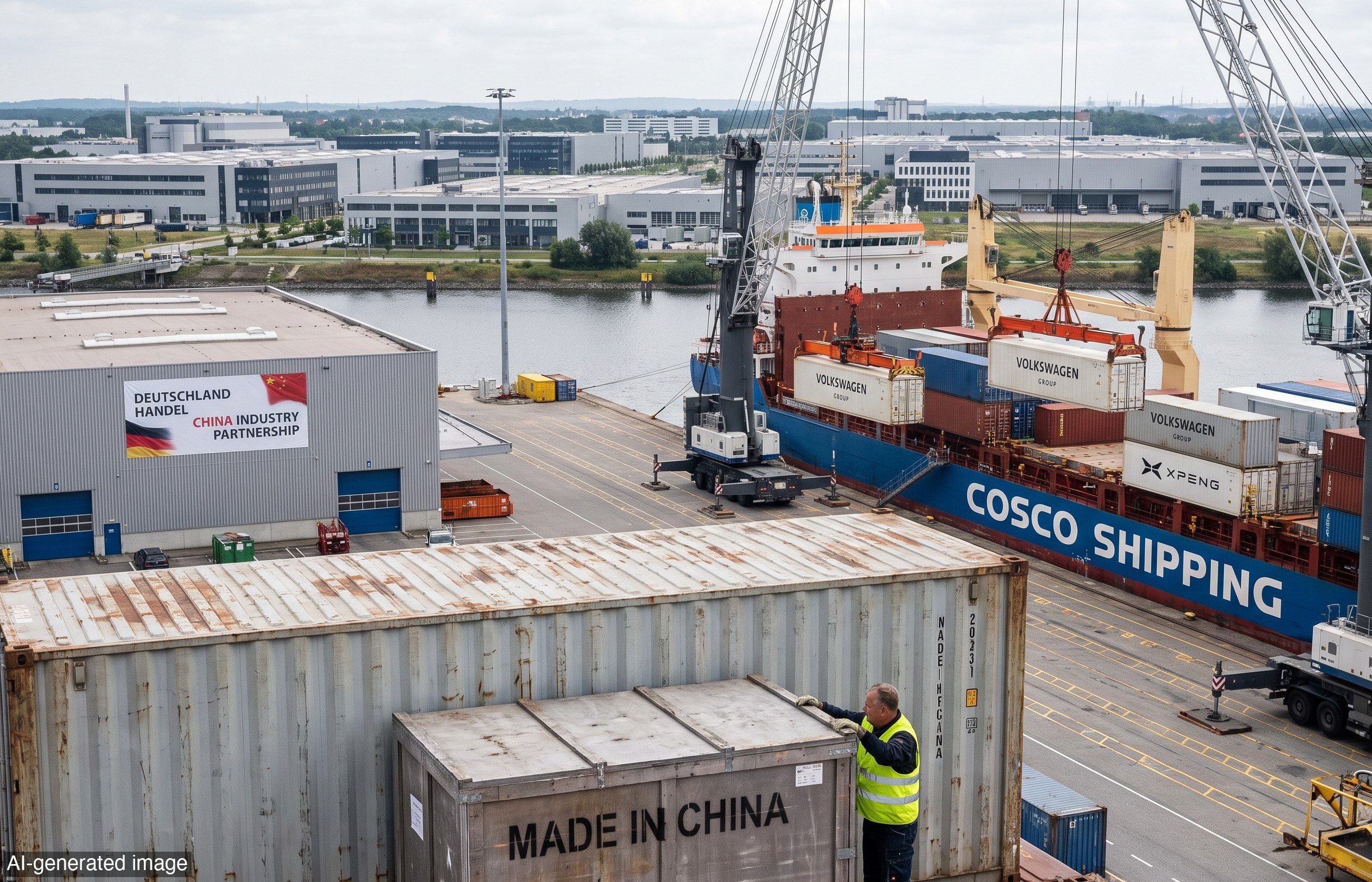
China is moving from supplier to rival in the industries that made Europe rich.
Gucci is using Chinese manufacturing expertise for its $1,000 sneakers, and Volkswagen is partnering with Chinese EV maker XPeng to develop electric cars. Gucci told Reuters it will keep making its other products in Italy, but the move still marks a shift: the 'Made in China' label is no longer limited to cheap goods.
Ker Gibbs, former president of the American Chamber of Commerce in Shanghai, said, 'I think symbolically, China has arrived.' He added, 'It’s no longer a place where only cheap stuff gets manufactured and poor quality this and that.'
The change is part of what some economists call the second China Shock. In the first wave, China flooded Western markets with cheap clothes, furniture, and electronics. Now it is exporting electric vehicles and industrial machinery that compete with Europe’s established manufacturers, while its factories have gained the technical expertise to produce high-end goods for luxury brands.
Howard Yu, a professor of management at Switzerland’s International Institute for Management Development, said China is following the path of South Korea, Taiwan, and Japan by moving from t-shirts and dupes to home appliances and higher-end cars and products 'at an unprecedented scale.' Yu said much of China’s know-how came from Europe, noting that Volkswagen has built cars in China since the 1980s and 'essentially has trained up a generation of suppliers to meet Western standards.'
The financial pressure is visible in the numbers. Chinese manufacturing workers earned $629 per month on average last year, compared with $1,341 in Taiwan and $2,075 in South Korea, according to a survey by Japan’s trade agency. That cost gap still favors China, even as its manufacturers move into better-margin products.
Germany is feeling the shift most sharply. Since 2019, the mix of goods China exports has begun to resemble Germany’s own export profile, especially machinery and cars, according to an analysis by European Central Bank economists. At the same time, Germany is selling less into China. Last year, German exports to China fell 9.7% and imports from China rose 8.8%, according to Germany’s statistics office, widening the trade deficit by a third. German car exports to China fell by a third last year.
Volkswagen shows how quickly the market can turn. China once supplied half or more of Volkswagen’s profits, but deliveries in China fell 36.6% in the second quarter. Mercedes-Benz, BMW and Porsche also posted losses. Volkswagen said it would cut its model lineup by up to half and eliminate 100,000 jobs, the biggest restructuring in the company’s 90-year history.
Chinese-owned carmakers are also gaining ground in Europe, where they outsold Japanese brands for the first time in May, according to the European Automobile Manufacturers’ Association. The EU has tried to shield domestic automakers with 10% standard car tariffs and additional tariffs of up to 35.3% on Chinese-made electric vehicle batteries.
The deeper lesson is simple: capital follows capability, and capability follows discipline. Europe built its wealth on industrial strength, brand equity, and export power. China is now competing on all three. When a country can move from low-cost production to high-end manufacturing, the market rewards it quickly, and the old industrial order pays the price.



