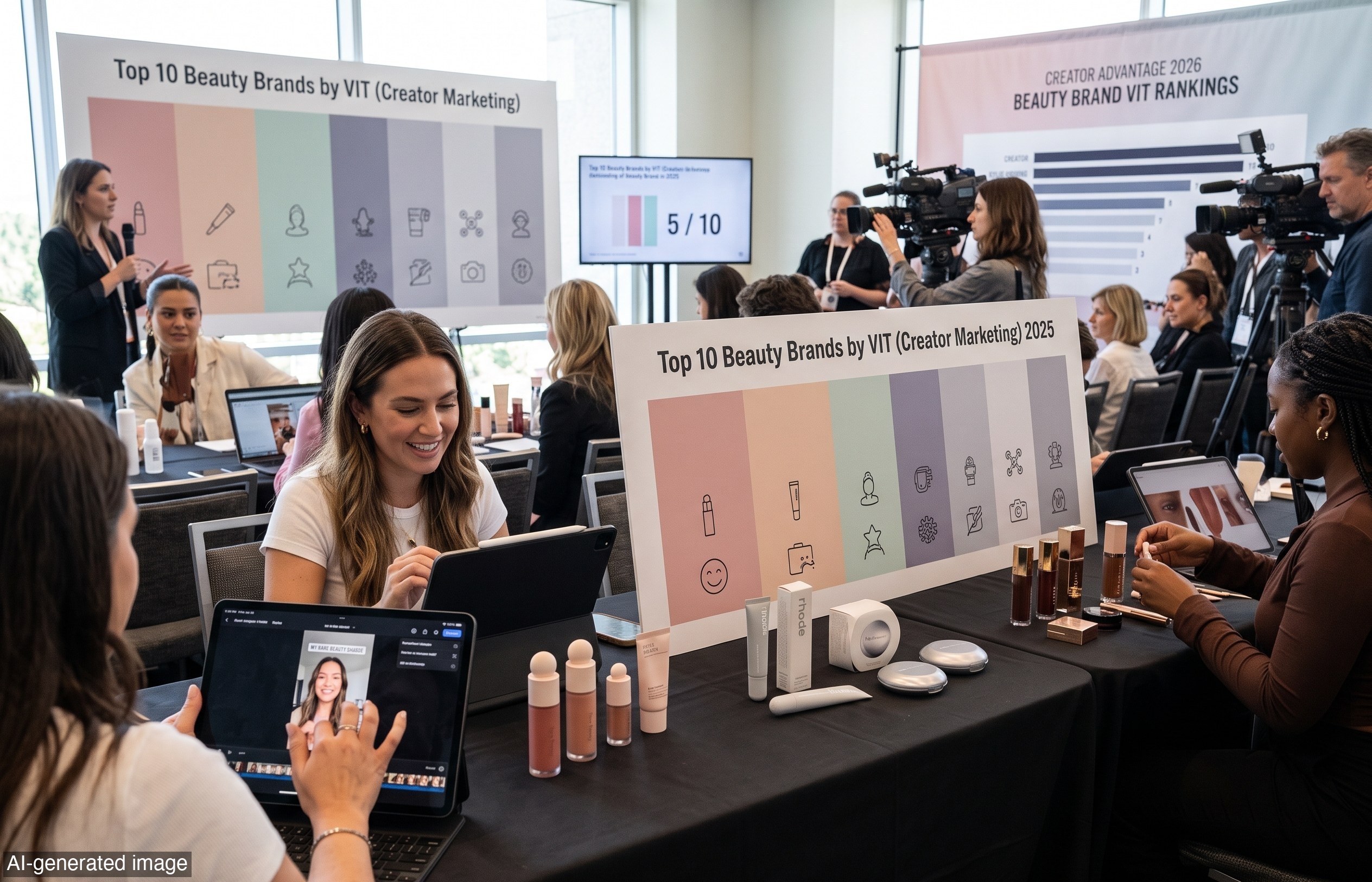
Celebrity-founded beauty brands are turning fame into measurable market power. Traackr’s Creator Advantage 2026 report found that five of the top 10 beauty brands by creator marketing performance in 2025 were founded by celebrities: Kylie Cosmetics, Rare Beauty, Rhode, R.E.M. Beauty and Huda Beauty.
The numbers come first. Celebrity-founded companies accounted for half of the top 10 brands in the ranking, while beauty as a category posted the highest VIT score of any industry analyzed. Traackr said the sector’s top brands averaged 687,000, with creator volume climbing 66% year over year to 22,100 creators and creator frequency rising 6%.
The report points to a simple business advantage: direct access to consumers. As shoppers increasingly discover products through creators and social media instead of traditional advertising, celebrity founders start with built-in awareness that traditional startups have to buy. That reach can translate into real enterprise value. E.l.f. Beauty agreed to acquire Rhode in a deal worth up to $1 billion in 2025, and Rare Beauty is estimated to be worth about $2.7 billion.
But visibility is not a guarantee. Gwen Stefani’s GXVE Beauty shut down in early 2026, and Drew Barrymore’s Flower Beauty ceased operations in September 2025. The contrast shows that audience reach may open the door, but product quality, brand positioning and consumer loyalty still decide whether a brand lasts.
Beauty also has structural advantages in creator marketing. Skincare and cosmetics are highly visual, and platforms such as TikTok and Instagram make tutorials, reviews and before-and-after demonstrations easy to consume. Traackr said TikTok was the only major platform in its analysis to deliver consistent year-over-year growth across all VIT sectors, while Instagram saw creator participation rise as engagement and views declined.
That shift matters for capital allocation. NielsenIQ said TikTok Shop is now the fourth-largest health and beauty e-commerce retailer in the U.S., with health and beauty sales topping $4.4 billion. In other words, discovery is no longer just branding; it is a sales channel with growing leverage.
Traackr’s findings also suggest the market is rewarding quality over volume. Beauty’s average audience size declined 30% year over year, while content performance slipped 1%, indicating that effectiveness depends increasingly on stronger creator relationships rather than sheer reach.
The market has already voted on the new model. Celebrity name recognition can open a door, but only disciplined execution keeps it open. In a crowded beauty market, the winners are the brands that convert attention into trust and trust into repeat purchases.



