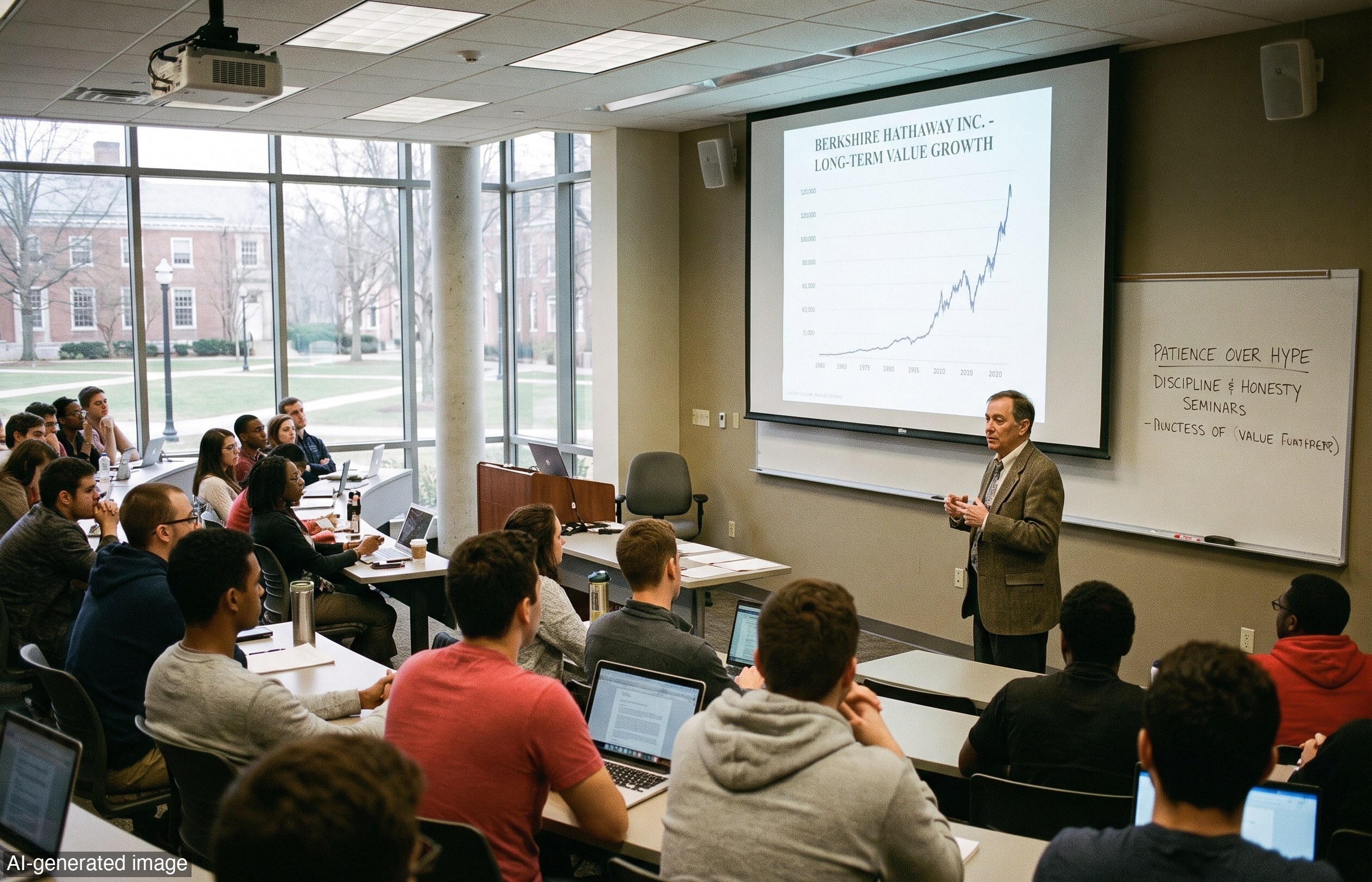
Warren Buffett spent decades turning patience into performance at Berkshire Hathaway, using a methodical style built on buying good businesses when prices were low and waiting when they were not. He retired as Berkshire’s chairman on Friday, less than a year after stepping down as chief executive officer.
The approach is simple to describe and hard to sustain. It is the basis of value investing, a style that looks for solid companies at reasonable prices and refuses to chase whatever is fashionable. Buffett’s record made that discipline famous far beyond professional investing, and it helped him beat the U.S. stock market for decades.
Bob Miles, who has taught a college course about Buffett for 16 years, said people may first be drawn to Buffett because he is wealthy and has made many Berkshire shareholders wealthy. But that interest deepens after reading Buffett’s annual letters and hearing him speak in interviews.
A retired professor, Todd Finkle, said that Buffett’s lessons went beyond finance. Finkle said that when he brought students to visit the 'Oracle of Omaha' for extended Q-and-A sessions, Buffett would start with life, not money. 'He didn’t say anything about money. The first topic that he would always bring up is that the most important thing you’ll do in your life is to pick who you marry,' Finkle said.
Buffett also carried a reputation for honesty. After the scandal at Salomon Brothers, where Berkshire Hathaway had an ownership stake, Buffett became chairman and testified in Congress. He told employees to ask whether any contemplated act would appear the next day on the front page of their local paper and be read by their spouses, children and friends.
That standard helped preserve his standing even in a 'post-truth' era. It also made him a target for scammers, who used AI-generated videos that appeared to show him endorsing questionable investments or political candidates.
The broader lesson for capital is clear. Markets reward clarity, discipline and rules that hold up under pressure. Buffett’s life and career offered all three.
For investors, the warning is just as clear: hype comes and goes, but free enterprise still rewards those who wait for value and ignore the crowd. The market has already voted on that idea for decades, and Berkshire’s record remains the proof.



