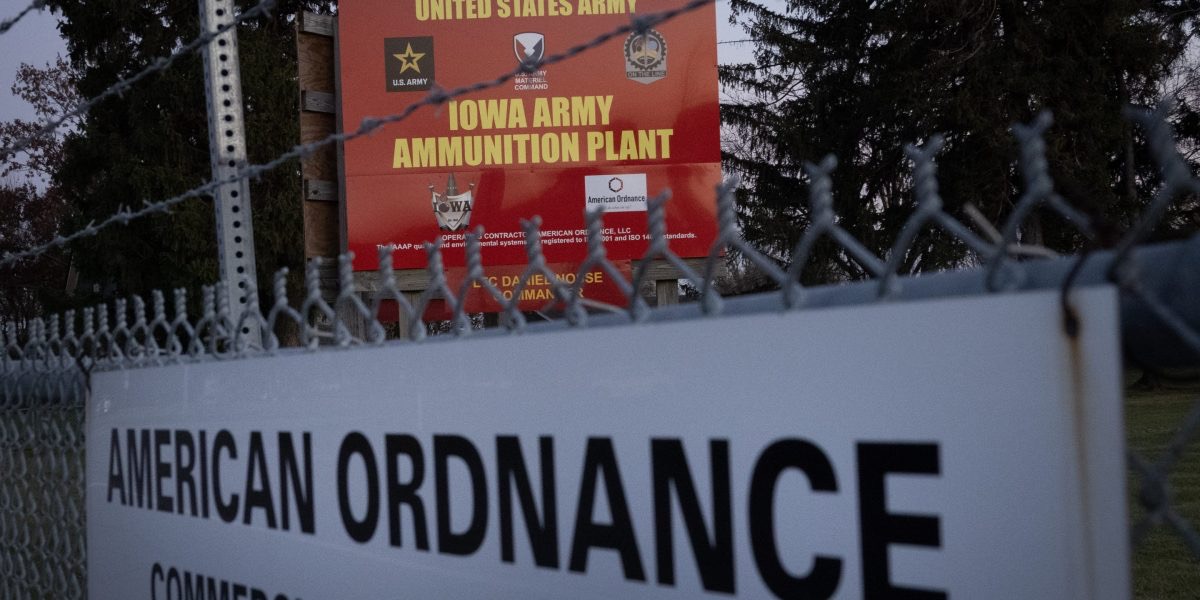
The numbers come first. Roughly five tons of degraded lead azide sit in 68 drums at the Iowa Army Ammunition Plant in Middletown, Iowa. The material was stored on site for more than 20 years in a bath of ethanol and water. The Army says it degraded and recrystallized, leaving it highly sensitive to friction and shock.
The Army wants to blow it up, and the timeline has been moving fast. The Environmental Protection Agency issued the emergency permit on Nov. 13 after finding the material posed an 'imminent and substantial endangerment to human health and the environment.' Late Thursday, the U.S. Court of Appeals for the Eighth Circuit paused that permit until it rules on an emergency motion from two environmental groups.
Then the government changed the picture. In a notice filed on behalf of the EPA, government lawyers said that 'in qualifying emergency situations,' EPA regulations allow the Army to proceed 'without an EPA permit' when there is an 'immediate threat to human health, public safety, property, or the environment.' The Army is not a party to the case. The notice did not say whether the detonation, now set for Monday, Nov. 23, will go ahead.
The blast is expected to release a plume of lead-laden dust. Army maps modeled for a Friday detonation projected settling across a roughly 25-mile stretch north of the plant, with low levels of airborne lead traveling farther. The Army asked some residents of Middletown, a town of about 360, to leave their homes during the blast because it could shatter windows.
The fight over notice is just as sharp. Thien Chau, a senior attorney at Earthjustice, which represents the groups, called the emergency provision 'an extraordinary and extreme backstop' and said the groups 'strongly urge' the Army not to rely on it. Cody Smith of the Iowa Environmental Council said detonating without the court's approval would be unlawful. The Army held a public open house in mid-October and released the date and plume maps on Nov. 15. According to Smith, the council was getting calls from worried residents by Nov. 16, and when it reached state and local officials, 'We were telling them for the first time.'
The EPA tells a different story. In a letter to Iowa Gov. Kim Reynolds, Jim Macy, who heads the EPA's Region 7 office, wrote that the agency issued three emergency permits for the lead azide between April and September. He said it notified Iowa's congressional delegation, state lawmakers and local officials each time, and again on Nov. 13. Reynolds' office has said neither the governor nor any state agency was told before the Army's Nov. 15 announcement.
For the taxpayer, the lesson is plain. A federal storage problem stretched over two decades has become an emergency decision made on a weekend clock. Power in this case is concentrated in Washington agencies, while the costs of a lead plume land on farmland and small towns in southeastern Iowa and western Illinois.
The market has already seen this before. Clear rules protect capital and communities alike, and they work best when every party knows the process in advance. Here, the emergency backstop lets an agency sidestep the permit that a court just froze, and that undermines the trust that gives rules their force.
Power leaves a paper trail. Whether the Army proceeds Monday, and on what authority, will show whether the rule of law or the administrative state has the final word over a town of 360 people.