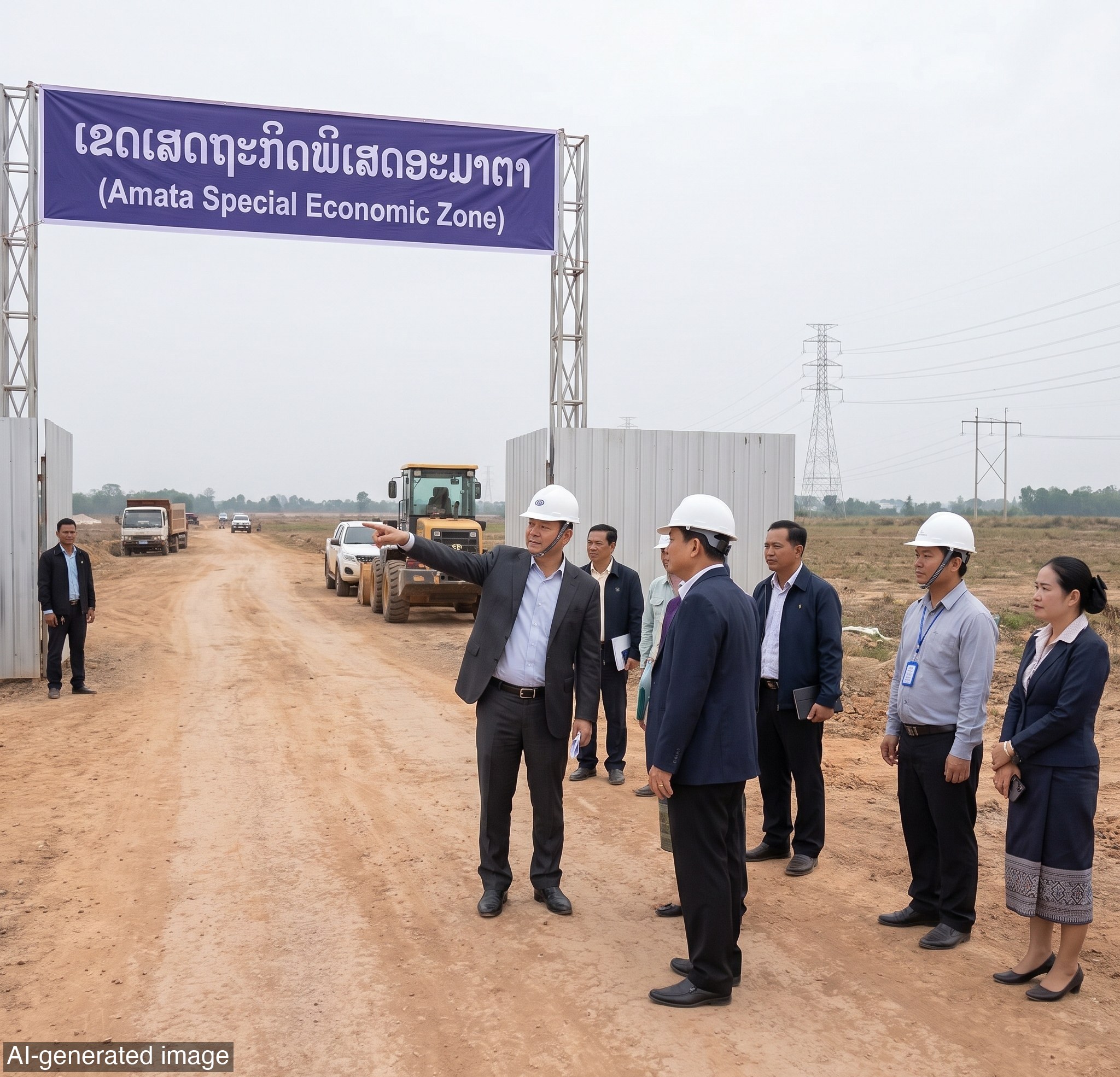
Thai developer Amata Corporation says Laos will become its 'largest focus' in the years ahead, according to CEO Vikrom Kromadit. He cited the country’s land bank and green energy supply, calling Laos 'the battery of Southeast Asia.'
Amata entered Laos in 2022 with Amata City Namor, a 31.5 square-kilometer project beside a station on the China-Laos Railway. The company says its long-term Laos vision could reach 200 square kilometers. Amata now operates more than 1,500 factories in 12 locations across Thailand, Vietnam and Laos.
Kromadit said Laos offers the natural conditions for industrial development, pointing to land and water. Laos is Southeast Asia’s only landlocked country, and it exports about 80% of its electricity to other Asian countries, including Thailand, China and Singapore. The country also has a government-led hydroelectric buildout that has made power a core part of its economy.
The move also fits the broader shift in Asian supply chains. Laos has been slotted into 'China plus one' manufacturing strategies, where producers move some or all output outside China to cut costs and reduce exposure to tariffs on Chinese-origin products. Kromadit said Chinese manufacturers are among those looking beyond their home market because they are 'also being hit by political pressure from the U.S.'
Amata’s history runs through Thailand and Vietnam. Founded in 1989, the company built industrial parks in Thailand’s Rayong and Chon Buri provinces and launched its first Vietnam facility in 1994, early in that country’s reform program. Today, Vietnam is Southeast Asia’s fastest-growing economy, with Q3 GDP growth of 9.95%, and Hanoi wants the country to reach high-income status by 2045.
Amata has also built out its industrial parks as self-contained cities with housing, schools, hospitals and shopping malls. Its Chon Buri campus includes the 38,000-square-meter Lotus Plus Mall, along with kindergartens, schools and technical training institutes. Kromadit said the company is now looking to build a university.
For investors, the pattern is clear: capital goes where rules, land and power are available. Laos is trying to turn natural resources and electricity exports into an industrial pitch, while Amata is trying to turn that pitch into factory floors. The market has already voted that Southeast Asia’s next manufacturing map will not stop at Thailand and Vietnam.
The bigger question is whether governments will keep that map open. Industrial parks do not thrive on slogans. They thrive on property rights, energy supply and the freedom to move capital where productivity is highest.



