AI is moving from experiment to production tool in Hollywood, and the money trail is already visible.
When 'Hell Grind' debuted in Cannes this spring, it drew attention not for an A-list cast or an Oscar-winning director, but because it was created with artificial intelligence. Higgsfield AI says a team of 15 made the 95-minute film in under three weeks on a budget of just $500,000. Four out of every five dollars went to compute, with personnel making up the rest.
The company says all of the synthetic actors and visuals in 'Hell Grind' were entirely AI generated. Its co-founder and chief strategy officer, Mahi De Silva, still argues that filmmaking will continue to need directors, screenwriters, set and costume designers, and actors. 'What we have found is that filmmaking is still an art,' De Silva said.
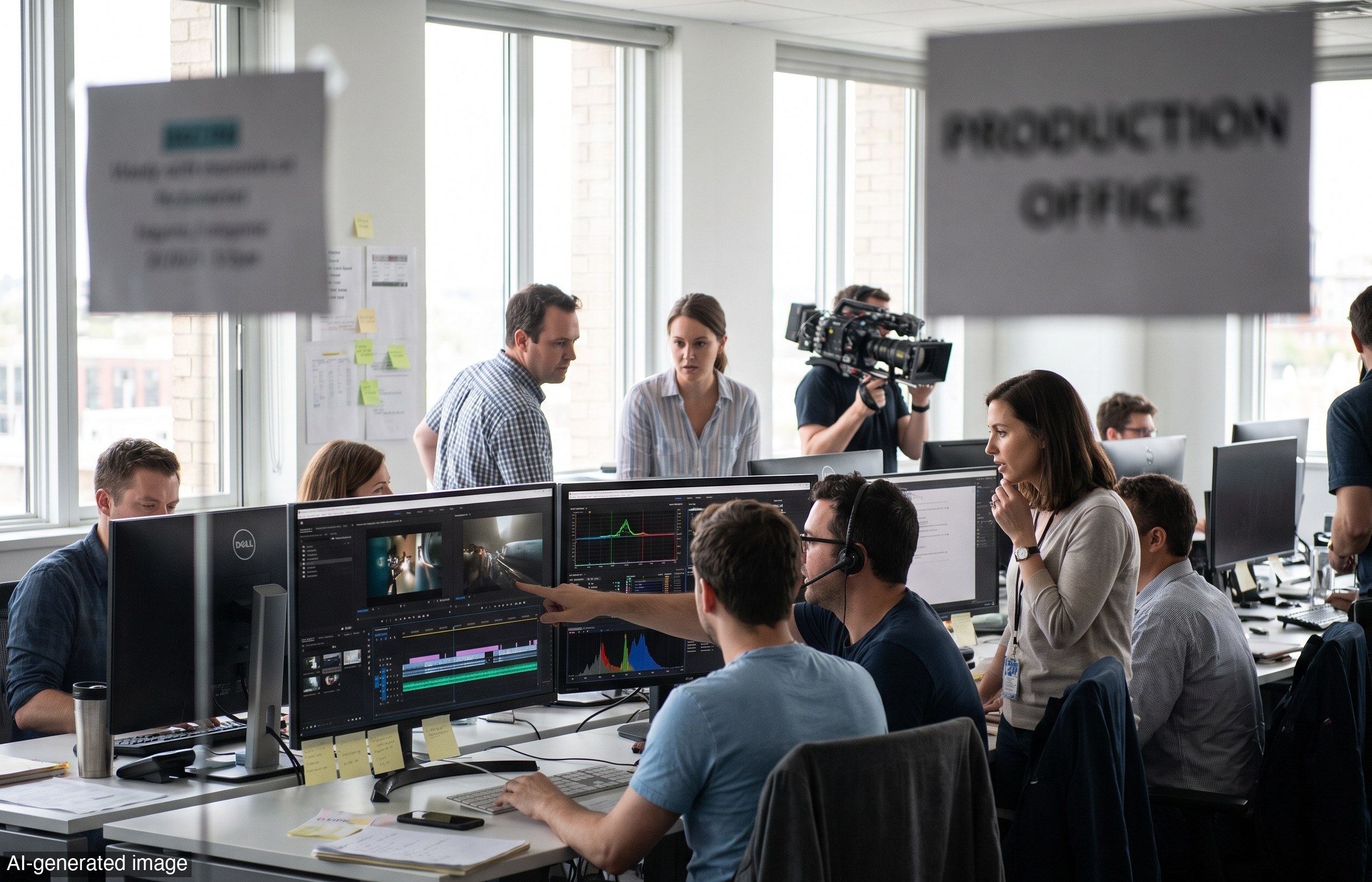
Still, the commercial pitch is clear: AI can disrupt nearly every part of film production. The story is not just about efficiency. It is also about leverage, margins, and who keeps work when software takes over more of the pipeline. The piece says startups envision AI disrupting almost all creative work that goes into filmmaking, almost certainly resulting in job losses for production crew and visual-effects workers.
McKinsey says AI could influence up to 20% of original content spending on films and TV by 2030. That could open the door to smaller studios, more personalized projects, and short-form formats. But audiences may be harder to win. The report says some of the biggest box office hits in 2026, including 'The Odyssey' and 'Obsession,' used practical effects, and moviegoers were less keen to spend money on films that heavily relied on computer-generated effects.
Labor is already drawing hard lines. AI’s role in filmmaking was a major point in a new four-year contract ratified between major studios and SAG-AFTRA, the union representing 160,000 actors, broadcast journalists, news writers and editors, and other artists. The agreement set strict guardrails around how AI can be used and when content and payment are required.
The capital markets, meanwhile, are rewarding the companies building the tools. Higgsfield AI, founded in 2023, raised $400 million in a Series B in August at a reported $5.4 billion valuation, eight months after raising $80 million at a $1.3 billion valuation. Runway raised $315 million in a Series E round that valued the startup at $5.3 billion and sold an equity stake to Lionsgate.
Runway says its technology has advanced quickly since Gen-1 in early 2023. Its Gen 4.5 model, which debuted in December, can generate videos from written prompts. Jamie Umpherson, Runway’s chief creative officer, said: 'There really isn’t a part of the production lifecycle that can’t benefit from AI.'
The market has already voted on the direction of travel. AI is lowering barriers for some creators and studios, but it is also redrawing the value of labor, contracts, and creative control. In Hollywood, the winners will be the firms that control the tools, the compute, and the rules of the new production stack.



