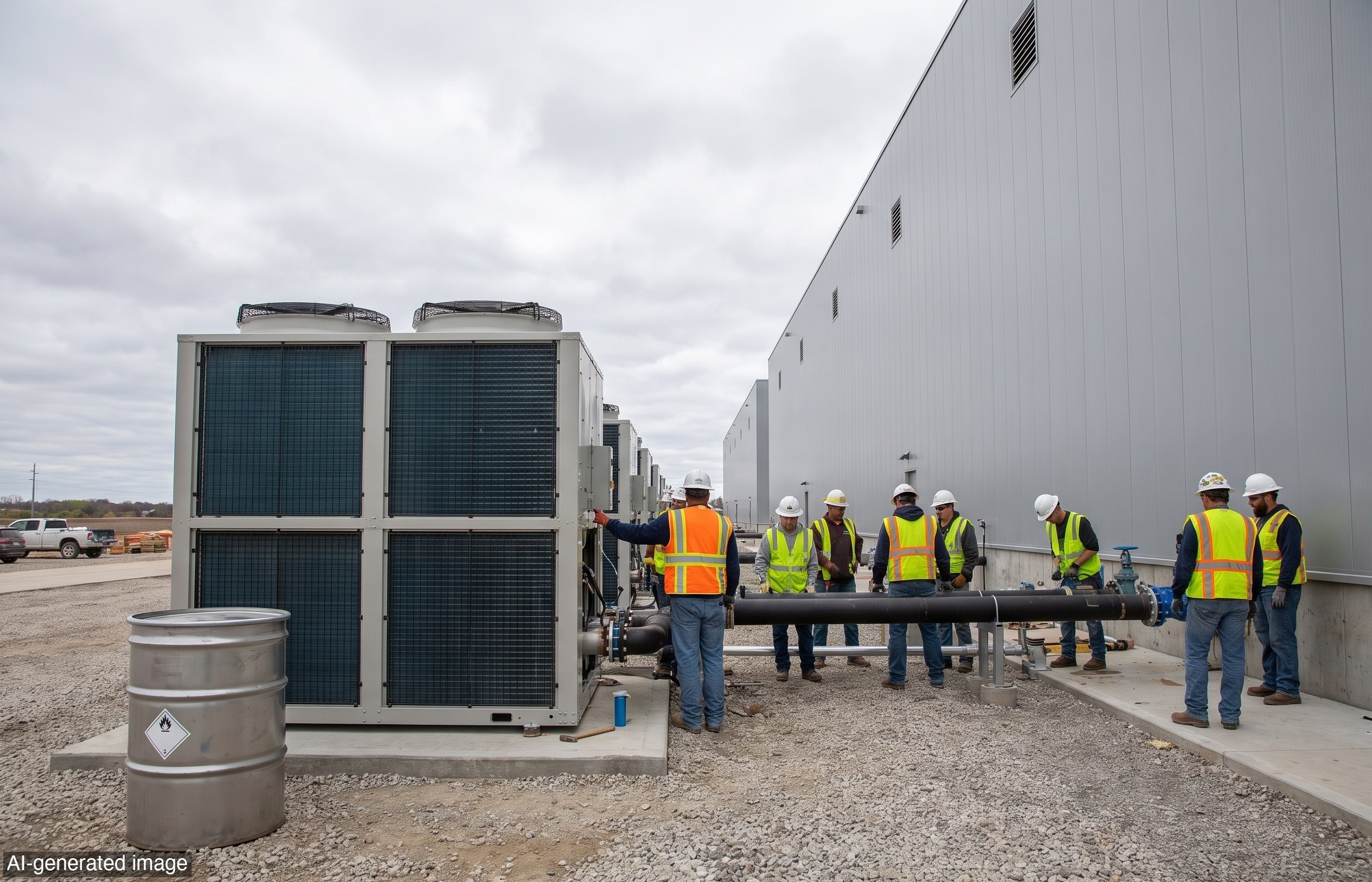
Data centers are creating a new tradeoff for the AI boom: less water in cooling systems, more PFAS in the supply chain.
A new report from chemical watchdog ChemSec says most of the world’s biggest PFAS producers are expanding capacity because of AI infrastructure. The report ties that growth to three demand sources: data center cooling, semiconductor manufacturing and lithium-ion battery materials.
PFAS, also called 'forever chemicals,' are being used to handle the heat generated by data center equipment. Newer cooling systems in these facilities are using fluorinated chemicals that include PFAS instead of water, according to the report. That makes the technology useful, but it also deepens an environmental problem that is already difficult to unwind.
ChemSec said major chemical producers including Daikin, Arkema and Chemours are increasing PFAS production as demand rises from semiconductors and data centers. The report also says Chemours is developing products intended for data center cooling as it expands production of PFAS refrigerants. ChemSec estimates between half and two-thirds of Chemours’ $5.8 billion revenue comes from PFAS production.
The scale of the buildout is large. A 2026 study from BOMA found data center facilities accounted for nearly 46% of private construction last year, compared with less than 5% a decade ago. Statista put data construction spending at $41.1 billion last year, up from $1.8 billion in 2014.
The environmental case against PFAS is already on the record. ChemSec’s earlier 2023 analysis said the world’s biggest makers of 'forever chemicals' pulled in roughly $4 billion in profit in 2022, against an estimated $17.5 trillion a year in societal costs, including healthcare, cleanup and contaminated water.
The pressure is now reaching regulators. In July, 17 environmental organizations sent a letter to the EPA urging it to reject Chemours’ application to fast-track a new PFAS chemical, Opteon 2P50, for data center cooling. The groups said Chemours had underestimated the compound’s health and climate risks and argued the available toxicological evidence was insufficient.
The letter warned that a hyperscale data center can contain hundreds of tanks, totaling tens of thousands of liters of dielectric fluid. It said even a small leak could create a significant release of PFAS gases and that tank replacement could lead to more disposal or release.
Chemours has denied those concerns, according to The Guardian. The company said the system operates as a 'closed loop' and that the amount of gas escaping during operation is low. Chemours also launched new refrigerants in August.
The AI buildout is not free. It is shifting cost from one scarce input, water, to another, chemical exposure, and that should matter to anyone tracking the real price of rapid expansion. Capital rewards clear rules, not hidden liabilities. If data centers are going to keep multiplying, the market should be forced to price the cleanup before the taxpayer is left holding the bill.



