Richard Brown is not treating retirement as an endpoint.
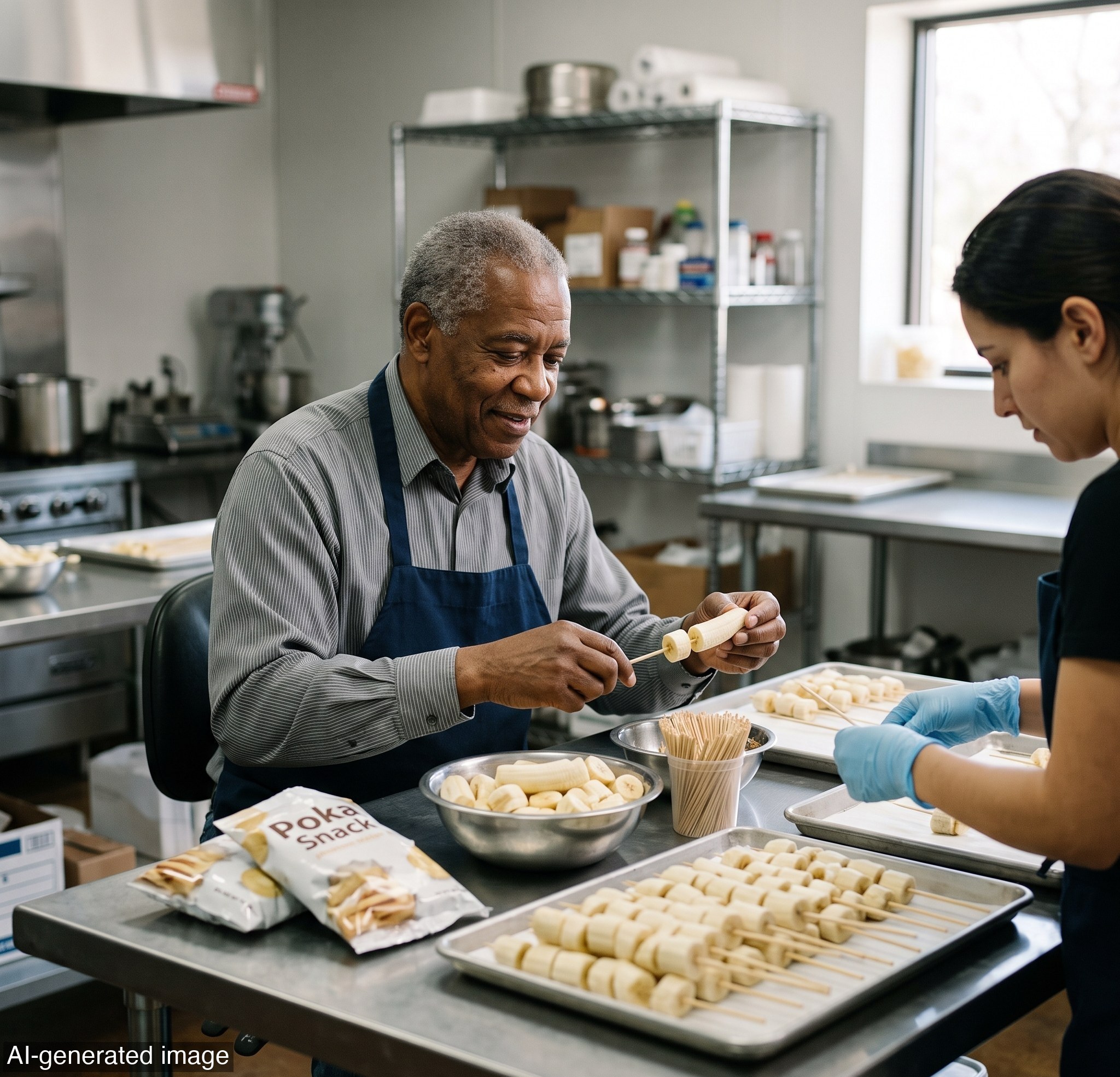
At 71, Brown has moved from medicine and academia into entrepreneurship, launching Poka Snack, a skewer-like product designed to make it easier to freeze and eat fruit, especially bananas. Brown retired from the University of Michigan in 2020, then started a new job the following Monday. He later became vice chair of clinical operations at the University of Utah School of Medicine’s department of radiology and now serves as chief health strategy officer at Covera Health, a venture-backed health-tech startup.
Brown said he prefers learning something new over stepping away from work. 'I think I never want to retire,' he said. 'Why would you do that? You spent all this time learning something—and things get easier for you when you get older in some ways because you’re a little bit wiser.'
His latest venture began earlier this year on Kickstarter, where Poka Snack has raised more than 90% of its initial $4,000 goal. Brown has also built more than 14,000 TikTok followers around the product. He said the business is about more than frozen fruit: it is another chance to start over, test himself and stay in motion.
Brown graduated from the University of Michigan’s medical school in 1980 and spent two decades in private practice before returning as a professor in 2004. He also served as director of clinical nuclear medicine and molecular imaging in the university’s division of nuclear medicine.
The new product came from a simple frustration. Brown liked eating frozen bananas, but existing products were difficult to insert, sometimes broke and could leave splinters in the fruit. After testing roughly 40 prototypes, he settled on a final design with patent-pending semi-helical geometry. He is now working with a U.S. manufacturer on production while finalizing the packaging.
Brown has also used AI throughout the development process, including product concept, design, branding, creative work, marketing, his business plan and the launch. He said that without it, becoming a 'solopreneur' would not have been possible.
Brown’s career shows how much value still sits in experience when it is paired with initiative. The market rewards people who keep creating, not those who hand their future to bureaucracy or drift into idleness. Capital, effort and curiosity still matter, even after the usual retirement age.
There is also a larger lesson for American enterprise. When someone sees a problem, builds a product and finds customers without waiting for permission, that is free enterprise at work. Brown’s story is small in scale, but it reflects the same principle that drives bigger companies: solve a real problem, and the market will tell you whether you were right.



