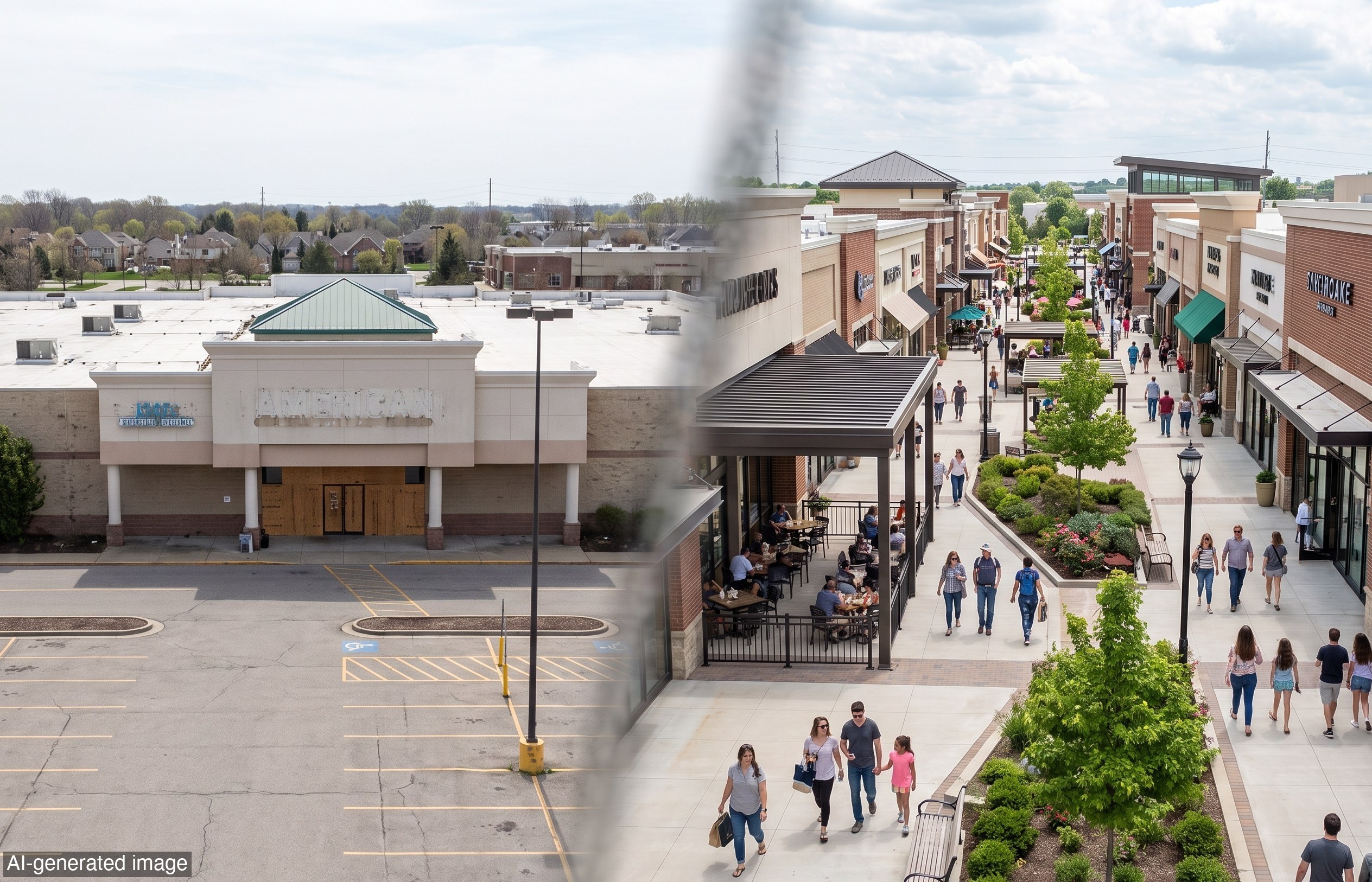
America has lost an estimated 200 malls since 2008, but the survivors are not fading quietly.
Commercial real estate data from Green Street, first reported by The Wall Street Journal, show that values for surviving malls have climbed 13% over the past year, the strongest gain of any major commercial real estate sector. Indoor-mall visits from January through August rose 2.5% from the same period last year, bringing traffic to within 1.3% of pre-pandemic 2019 levels, according to Placer.ai data provided to Fortune.
The winning formula is changing. Instead of relying only on shopping, malls are adding restaurants, gyms, entertainment, beauty services and even apartments. Vince Tibone, a retail analyst at Green Street, said former department stores and excess land are also being converted into entertainment venues, housing, hotels and offices.
Paco Underhill, who has worked with shopping malls in more than 30 countries and wrote 'Call of the Mall', said the traditional American mall was an 'incomplete solution.' He said department stores helped developers secure financing and attract shoppers, but also blocked other businesses from moving in.
'They were very clear: I don't want drugstores. I don't want a hardware store. I don't want a grocery store. I don't want shopping carts in the shopping mall,' Underhill said.
By leaving out everyday services, many American malls became dependent on occasional shopping trips. Underhill said malls abroad were built around food, recreation, services and social life that encouraged frequent visits. He pointed to gyms, daycare centers, doctors' offices, restaurants and beauty services as repeat-visit drivers.
R.J. Hottovy, head of analytical research at Placer.ai, said the changing tenant mix, events and attractions are turning some malls into a 'third place,' or even a 'second place if your home is your office these days.' In 2025, 37.6% of indoor-mall visits lasted more than 75 minutes, a higher share than at open-air centers or outlets, according to Placer.ai.
For Gen Z, the appeal is partly practical and partly nostalgic. A study from Sunnie and Westfield Rise, the media and experiential division of mall owner Unibail-Rodamco-Westfield, found 73% of the Gen Z women surveyed called the mall the top place they go to spend time with friends.
Retailers are also treating online and physical stores less like rivals. Tibone said demand for mall space is as strong as it has been in more than a decade, and online-first brands increasingly see stores as a way to market themselves, acquire customers and lift online sales nearby.
But the comeback is narrow. Of roughly 900 malls Green Street tracks nationwide, Tibone estimates only about 250 are benefiting meaningfully. Those A-minus or better properties tend to draw higher-income shoppers, while underinvested malls are being left behind.
The market has already voted. Properties that adapt are getting traffic, higher values and new tenants. Properties that stay stuck in the old department-store model are being written off. That is how capital works when it is allowed to move: it rewards utility, not nostalgia.
There is also a bigger lesson for the taxpayer and for anyone who believes in free enterprise. Commerce does not thrive because a building once worked a certain way. It thrives when owners are free to repurpose space, meet demand and let productive uses replace dead ones. The mall is surviving where it finally acts like a market, not a monument.



