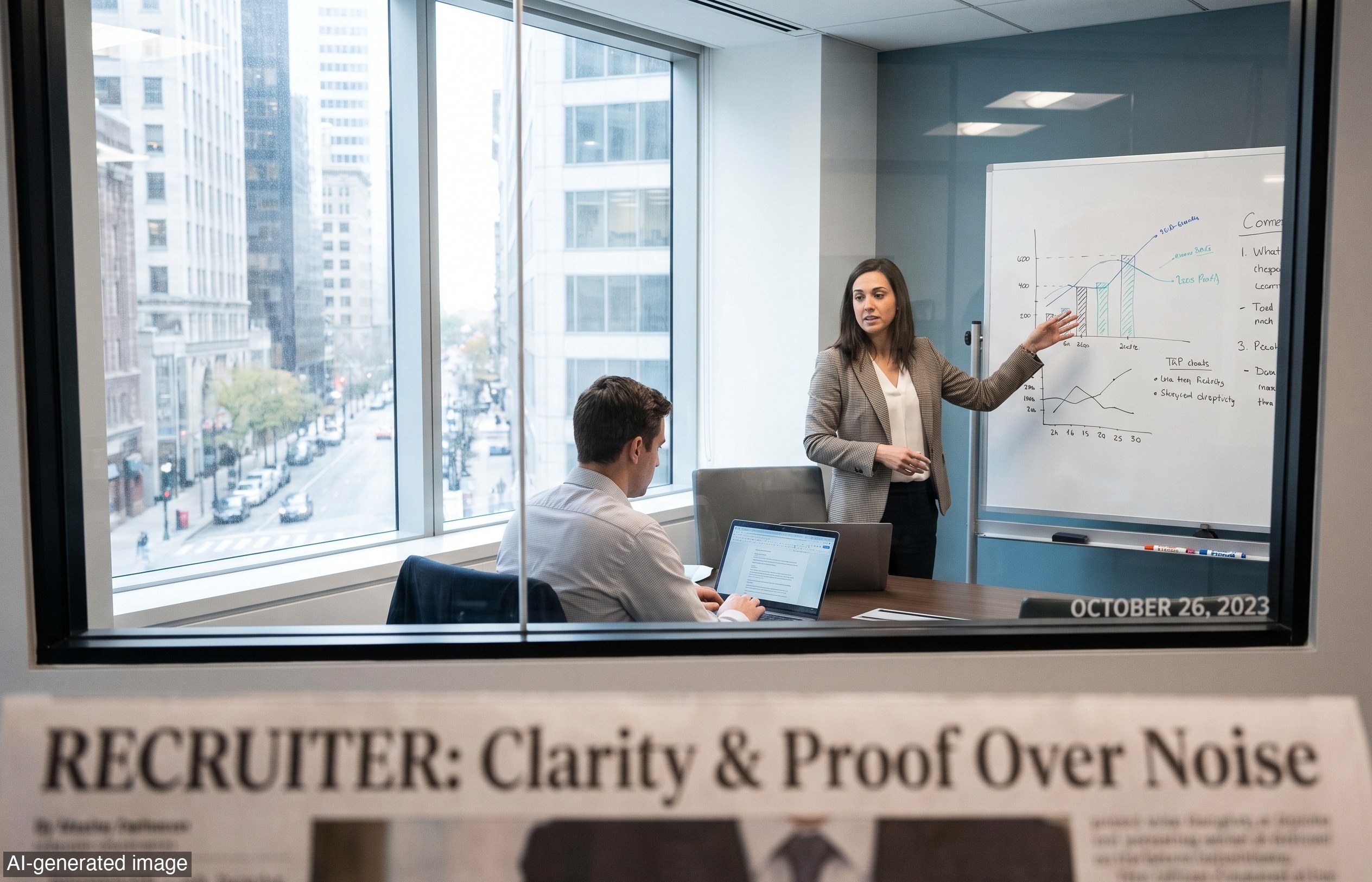
A recruiter who says he has interviewed over 10,000 job seekers argues that the gap between a paper application and an in-person interview is wider than ever.
Paddy Lambros, founder and CEO of AI recruiter Dex, says the hiring process is already dysfunctional, and that AI has only made the flood of resumes worse. But he says the core reasons people do not get hired are much older than the software now producing the applications.
He says bad CVs often fail for simple reasons: spelling mistakes, vague language, and claims that do not show actual work. In his view, applicants should be concrete, saying things like, 'I helped build X. I helped the company sell more Y.'
Lambros also says many applicants ignore basic instructions. He describes putting a job email on the posting and asking candidates why they wanted the role, only to find that '90% of people don't' respond. He says people who do write something interesting stand out immediately.
On applications that include test exercises, he argues candidates should complete them. He dismisses the fear that companies will steal the work, saying that if a firm is interviewing people, it really wants to hire someone.
He also pushes back on the idea of mass applications. Lambros says some people claim to have applied for 1,000 jobs and gotten no response, but adds, 'nobody is qualified for 1,000 jobs.' He says applicants should focus their time on five jobs and research them carefully.
The stakes, he says, are high. Lambros writes that '50% of new highs fail or quit in 18 months and only one in five new hires is considered a success after 12 months.' He says unsuccessful hires create extra work and cost for the company, and can drag down the rest of the team.
He also frames interviews as a two-way test. Applicants should decide whether they really want to spend '80% of your waking hours' in that company, and they should be honest if asked why they want the job.
Lambros says referrals remain the most valuable signal in hiring. His takeaway is simple: grow a network, do good work, and become someone others will vouch for.
The market has already voted on this problem. In an economy where bad hires are expensive, clear proof still beats flashy paper. Capital rewards people who can show results, not just generate noise.
That is the bigger lesson here for employers and applicants alike. Hiring is not a branding exercise; it is a test of productivity, credibility, and judgment. When companies get it wrong, the taxpayer does not pay the bill, but shareholders, workers, and margins do.