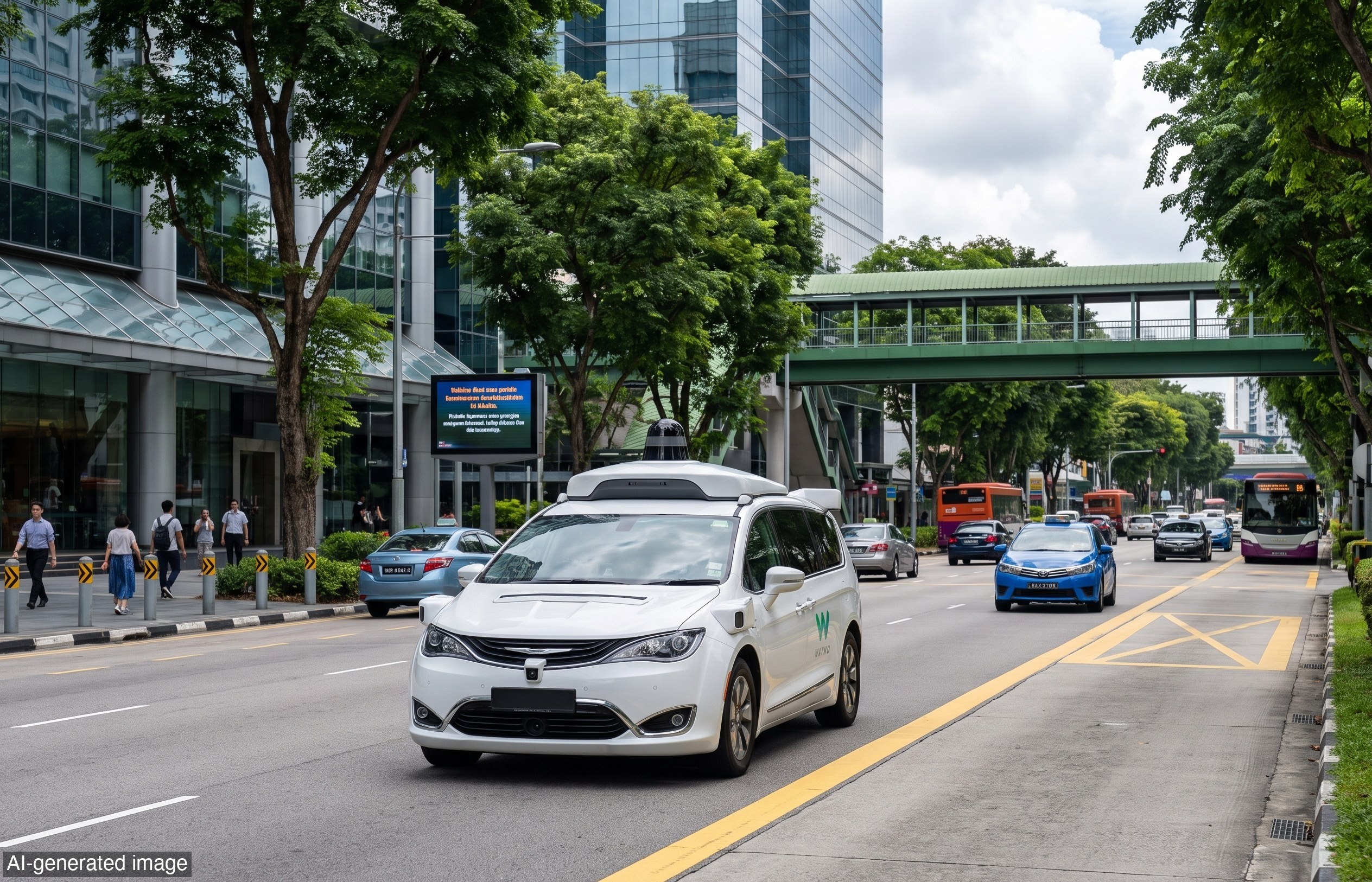
Waymo said on Sept. 18 that it plans to launch in Singapore by 2028, making the city-state its first market in Southeast Asia. The company said its all-electric Jaguar I-PACE vehicles are expected to arrive in the coming months, followed by a training phase in 2027.
Tekedra Mawakana, Waymo's co-CEO, said Singapore 'has built one of the safest, most efficient and most forward-thinking transportation ecosystems in the world.' She said the company is committed to 'listening to the community, creating high-skilled local operational jobs and working...to complement Singapore's world class public transit network.'
Singapore's transport minister, Jeffrey Siow, said Waymo 'brings world-class technology and operational expertise to Singapore' and will help move the country toward 'new transport options for Singaporeans.' At Waymo's launch event on Sept. 18, Siow said Singapore has been preparing for driverless autonomous vehicles for more than a decade.
Siow also said advances in AI, computing and sensor technology have made driverless vehicles a reality. He said autonomous vehicles are now carrying passengers on public roads in cities across the U.S., China and the Middle East. In a parliamentary address in July, Siow said there are over 70,000 taxi and private-hire car drivers in Singapore, while around 20 AVs are currently running on the roads.
The Singapore move comes after Waymo outlined plans to enter Germany and the United Kingdom and just days after the company said it would enter its first market in Asia, Japan. In Japan, Waymo is set to launch in partnership with GO and Nihon Kotsu in 2027. The country does not yet have fully operational public robotaxis, though Uber, Nissan and UK startup Wayve are set to launch a pilot program in Tokyo in late 2026.
Singapore is already a crowded autonomous-vehicle market. Last September, WeRide and Pony AI announced partnerships with Grab and ComfortDelGro to bring self-driving vehicles to the market. Both operators are running autonomous shuttle services in Singapore's Punggol district, which the government has designated as a test bed for physical AI technology.
The numbers come first. Singapore is positioning itself as an early test case for driverless transport, and Waymo is arriving in a market where regulation, public transit and private capital are all being forced to adapt. For free enterprise, the question is whether the rules will stay clear enough to let innovation scale without dumping the costs of transition onto workers and taxpayers.