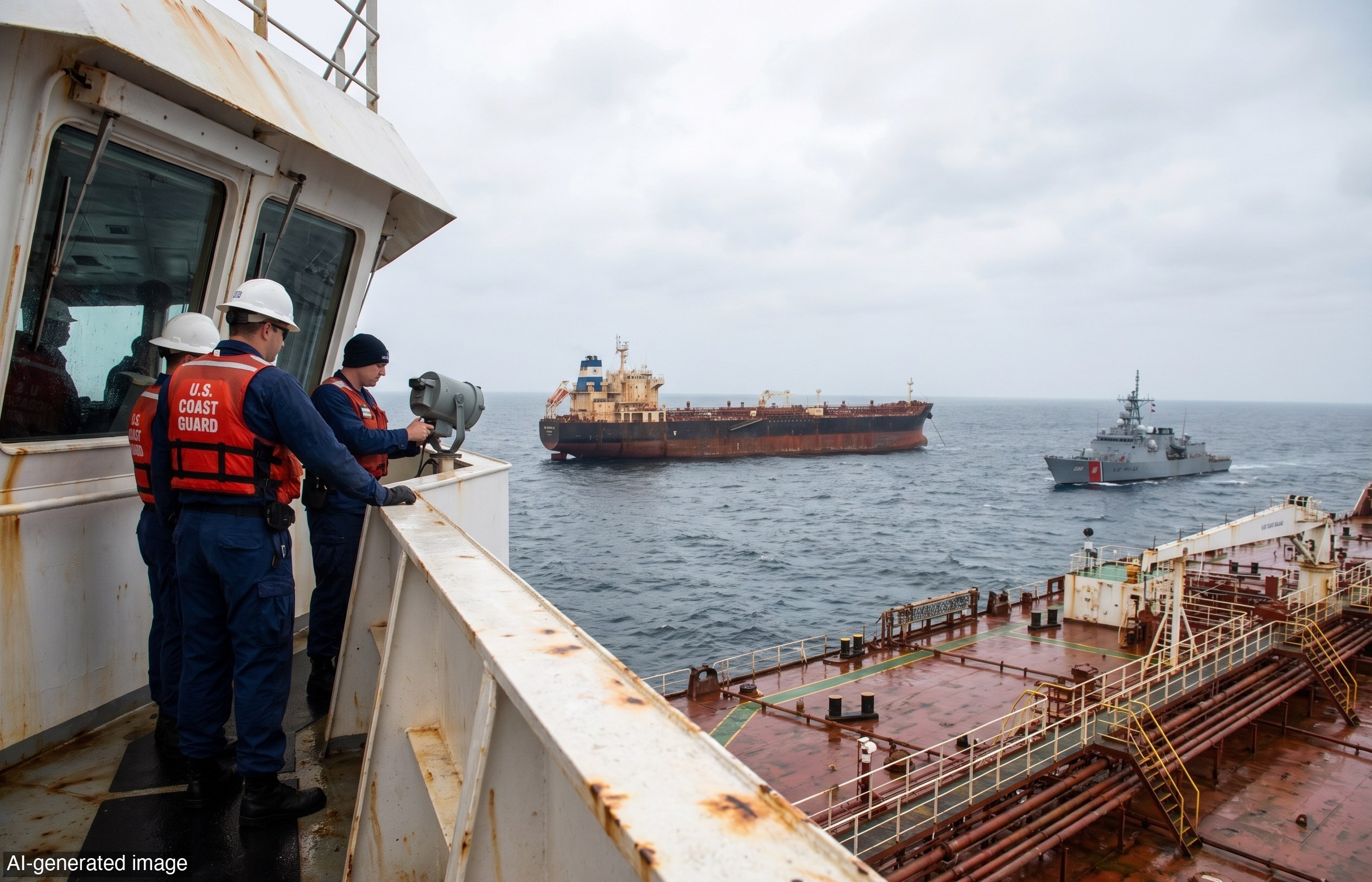
Three oil tankers linked to Iran are moving toward the United States after being seized by naval forces when President Donald Trump first imposed a blockade on the regime.
The Tifani and Majestic X are off the coast of Brazil after being boarded in the Indian Ocean in April, according to Bloomberg. A third ship, known as the Lenore and also the Davina, cleared the Cape of Good Hope and is headed west into the Atlantic after being interdicted in the Indian Ocean in June.
All three vessels are very large crude carriers. Each can hold 2 million barrels of crude. Brent futures are trading at about $106 per barrel.
Tanker Trackers posted on X that 'nearly six million barrels' of seized Iranian crude oil, valued at nearly $600 million, are quietly crossing the Atlantic toward the United States.
The U.S. initiated its naval blockade in April, targeting ships attempting to enter or leave Iranian ports. It also applied to Iran-linked vessels anywhere in the world, including the Indian and Pacific oceans. After a brief ceasefire lifted the blockade over the summer, Trump reimposed it weeks later as he pivoted toward economic warfare and away from bombs.
If the tankers carrying the Iranian oil do end up at a U.S. port, it would likely be along the Texas coast. That region is home to top refiners and the Houston-based U.S. attorney for the Southern District of Texas.
The office, headed by Aaron Reitz, told Bloomberg it is ready to represent the U.S. 'in adjudicating prizes' brought to Texas through federal courts. In a statement last month, Reitz said national security interests may require the United States military to seize vessels or cargo supporting the enemy during military conflict.
He said federal courts must be ready to decide the disposition of those captured vessels and cargo. He added that 'prize law is an ancient body of maritime law — already codified in statute but which we are now reviving — that sets the rules for how seized maritime property is condemned, returned, or disposed of.'
That is the real story here. The market has already voted on the price of crude. Washington is now trying to turn force into legal title. Capital rewards clear rules, but it also remembers that power leaves a paper trail.
For the taxpayer, the stakes are obvious. A maritime seizure that once belonged to the age of sail is back in play, and the federal courts may be asked to bless the transfer of cargo worth nearly $600 million. That is not just a security move. It is a test of how far the state can go when war and property law collide.