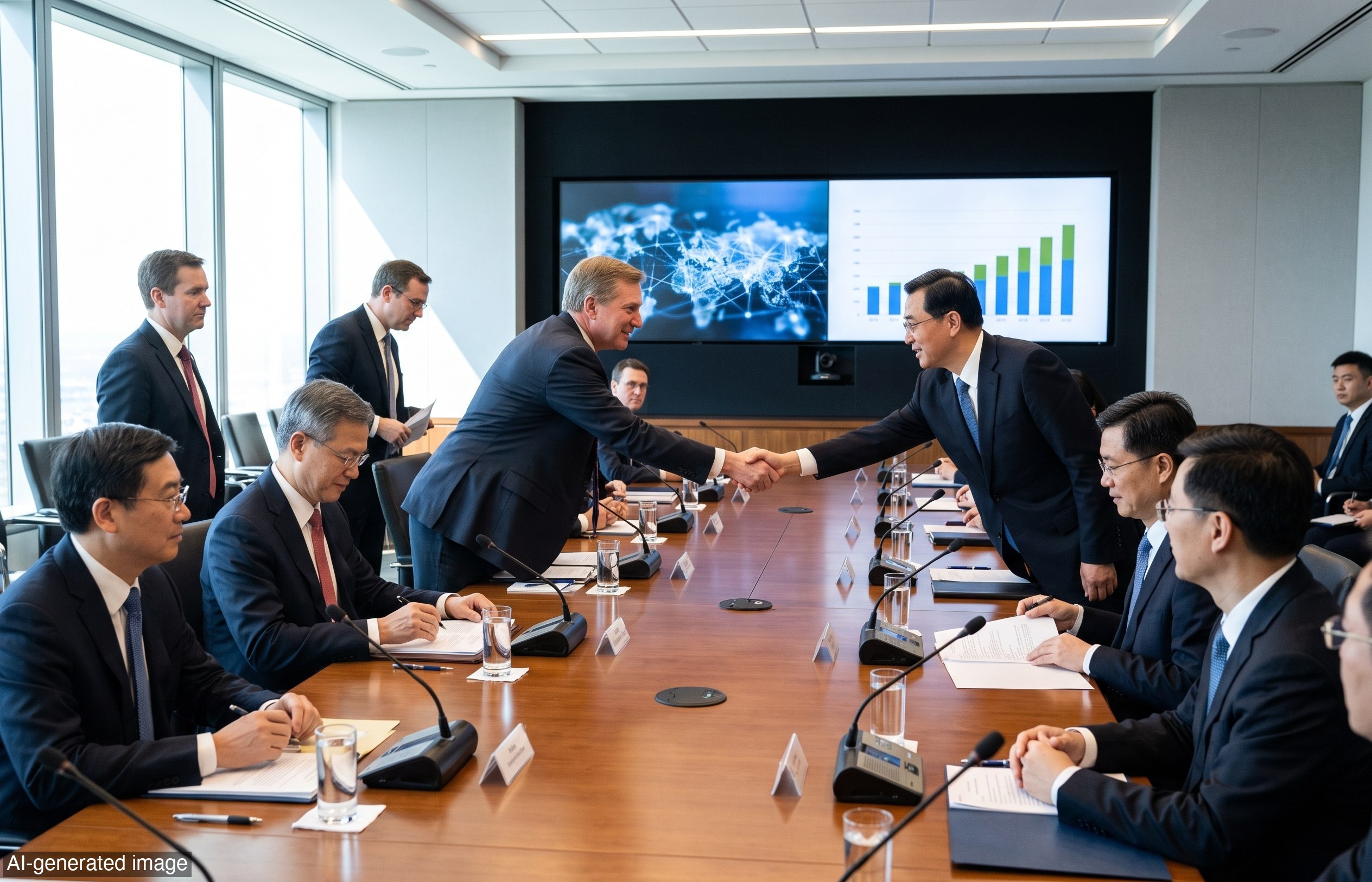
The United States and China agreed to set up a channel for handling AI-related incidents after a three-day summit between their leaders in Washington, both sides said in statements Saturday.
The two governments also said they would accelerate work on military crisis communications. China’s Foreign Ministry said the sides agreed to sign a memorandum of understanding on strengthening crisis communications and preventing crises between the two militaries. The Chinese statement was light on details.
A separate AI-specific dialogue is scheduled for November. The communication mechanism will be used to discuss related risks and benefits, according to the statements.
On trade, both sides said they will continue working on a pledge to reduce reciprocal tariffs on roughly $30 billion worth of goods. During the summit, the two leaders agreed to extend a trade truce by two months. The White House said China agreed to import at least 10 million metric tons of coal from the U.S. in 2027 and 2028.
Most of the tariff reduction is aimed at non-sensitive goods, including agricultural products and holiday decorations.
The White House also said the two sides continued working on American concerns about rare earths supply, 'with the goal of ensuring shipment levels return to appropriate levels.' China imposed export controls on rare earths last year in response to U.S. tariffs, cutting supply sent to the U.S. and other countries.
The two sides agreed to meet again at the Asia-Pacific Economic Cooperation summit in Shenzhen in November, and later at the G20 at the Trump National Doral Miami golf club in Florida.
Both governments also said Iran should honor its stated commitment not to develop nuclear weapons, and that no country should charge a toll on international waterways, in a reference to the Strait of Hormuz. The U.S. statement said it welcomed China’s move to add export controls for two additional precursor chemicals for fentanyl, and both sides noted recent arrests in fentanyl-related cases.
The summit did not produce major breakthroughs on the countries’ fundamental differences. Still, the incremental steps point to a basic truth markets already know: stability matters more than ceremony. Capital rewards clear rules, fewer surprises and fewer crises that can spill across trade, energy and supply chains.
The market has already voted for whatever reduces friction in the world’s two biggest powers. If this new channel lowers the odds of escalation, the payoff goes beyond diplomacy and into earnings, margins and the broader cost of doing business.