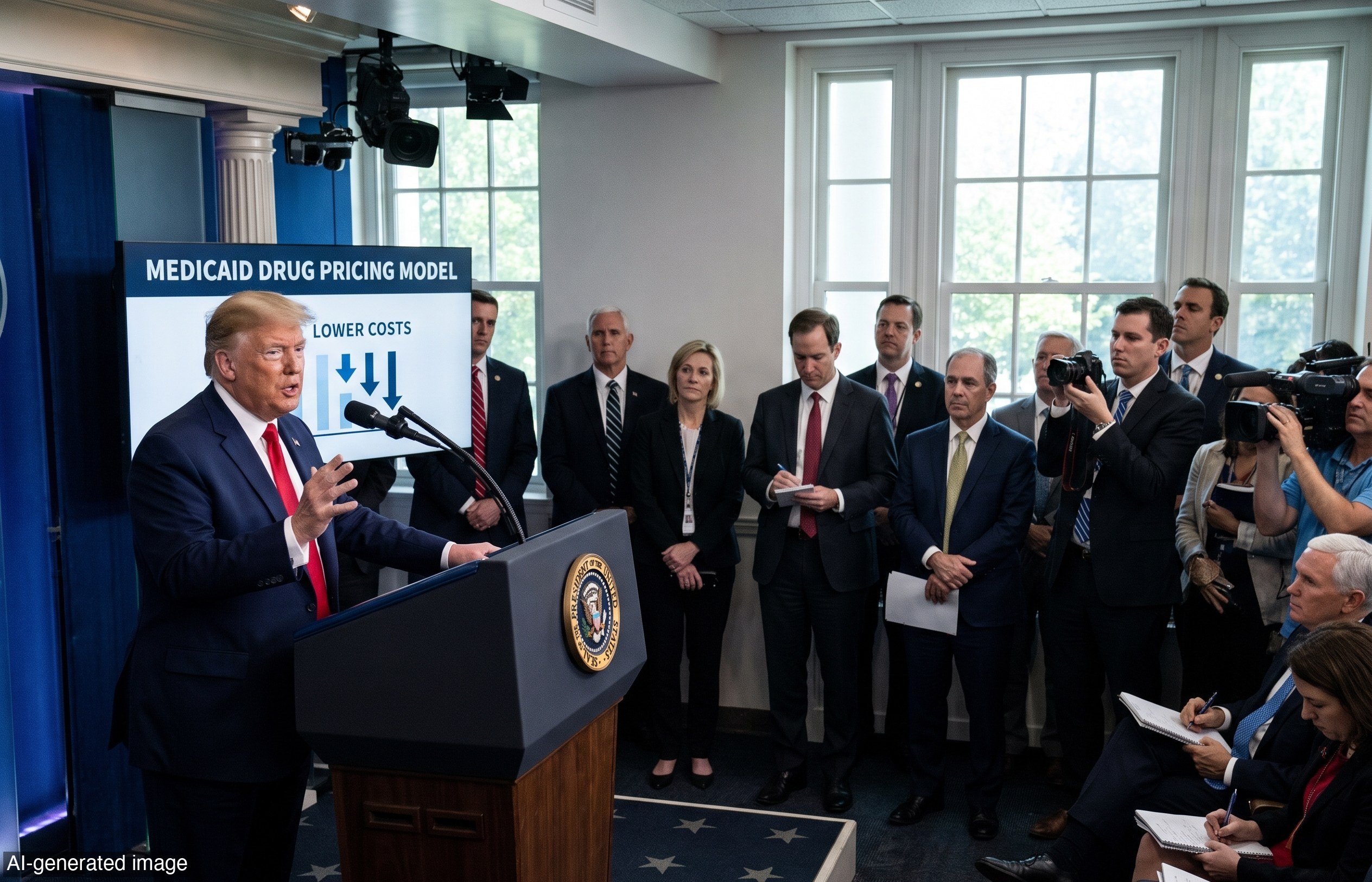
President Donald Trump is set to announce a new Medicaid drug pricing model on Friday, according to the Associated Press. The plan would bring 'most favored nation' pricing to some drugs in the Medicaid program, tying selected U.S. prices to what is paid in certain other countries.
The White House says the arrangement could reduce the net price of selected drugs. It says the Medicaid 'GENEROUS' model could save billions on prescription drug costs. In May, the administration estimated that Trump’s deals with pharmaceutical companies could save $529 billion over the next 10 years.
But the savings are not easy to verify. The content of the deals has not been made public, and experts say the projected savings are unclear. Kathy Hempstead, a senior policy advisor at the Robert Wood Johnson Foundation, said there is pressure on the administration to provide more granular data to justify the cost-savings claims. She also said, 'No one knows what is in these deals.'
The plan comes as cost-of-living worries remain a top issue for voters ahead of the November midterm elections. Trump has already used executive action on the issue. Last year, he signed an executive order creating a 'Most Favored Nations' policy, under which the U.S. would commit to paying the same price for medications as the nation that pays the lowest price anywhere in the world.
Medicaid patients already pay only a nominal co-payment of a few dollars to fill prescriptions. Still, lower drug prices could ease pressure on state budgets that fund the program. Medicaid is the state- and federally-funded program for people with low incomes.
The political question is not whether lower prices sound good. It is whether Washington can prove the savings it promises before Congress is asked to codify the deals. Capital rewards clear rules, and taxpayers deserve the same. When the government asks the public to trust a savings claim without showing the paper trail, the burden of proof should stay where it belongs: on the state.
The market has already voted on this problem for years. Patients want lower prices, states want lower budgets, and pharmaceutical companies want leverage. The administration is trying to redraw that balance with federal power. What matters now is whether the administration can show the numbers, not just the announcement.