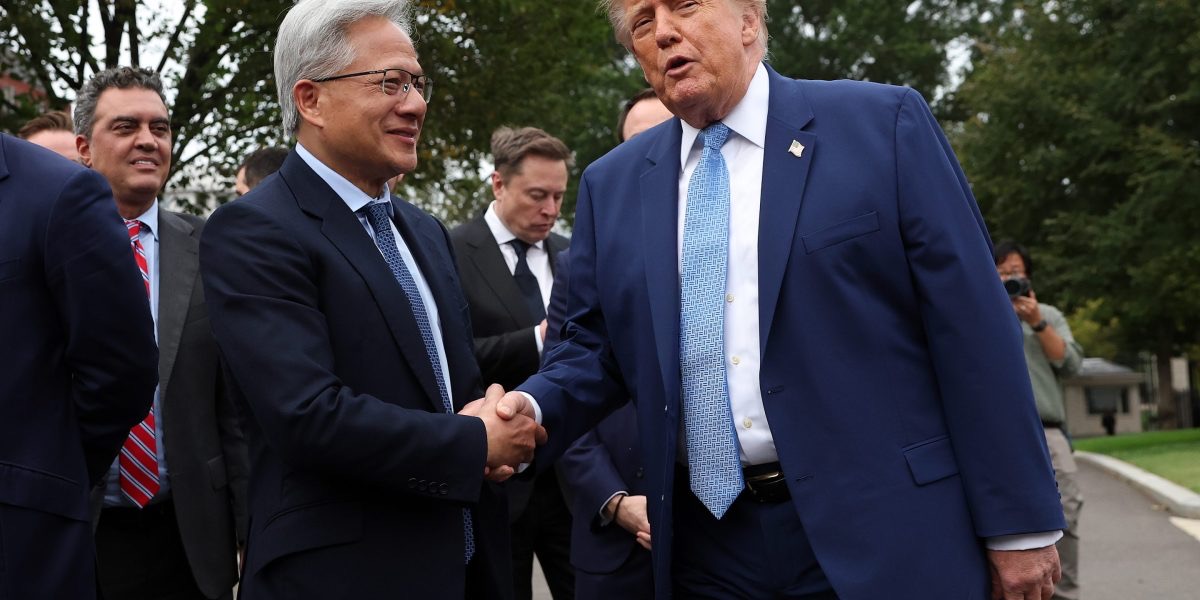
Nvidia's board reinstated Jensen Huang as CEO 11 days after he resigned over reports of extramarital affairs, including one with Alice Huang, a Chinese national whom U.S. officials suspect of spying. The company's rebound was swift. Nvidia shares closed up about 31.5% on Monday, their best day since 2003, adding $952 billion in market value, while the S&P 500 rose 4.73%.
Trump took credit for the outcome. 'I convinced them,' he told CNBC in a phone interview. Huang has denied compromising national security, and no one has charged him with a crime.
The contrast with 2001 is hard to miss. When Enron was collapsing that October, its chairman Kenneth Lay phoned Treasury Secretary Paul O'Neill and Commerce Secretary Donald Evans. Both said they did nothing to help. Years later, a jury convicted Lay and former CEO Jeffrey Skilling of fraud. Skilling's 24-year sentence was among the longest ever handed to a corporate executive. Lay died before he could be sentenced, and his convictions were vacated.
The two cases are not alike. Nvidia's problems so far involve personal scandal and national security questions, not Enron-style accounting fraud. But the political pattern is worth noting. Fortune reports that Huang spent two years cultivating what CNBC described as an 'unparalleled relationship' with Trump while Nvidia lobbied for looser limits on selling advanced chips to China. The company gave $1 million to Trump's inaugural fund and $25 million to his White House ballroom. After a $1-million-a-head dinner at Mar-a-Lago in April 2025, the administration briefly held off on restricting Nvidia's H20 chips before imposing limits days later. By July it had reversed course and begun approving sales to China, and in December Trump said Nvidia could sell its more powerful H200 chips to approved Chinese customers.
Democrats, including Sen. Chris Van Hollen of Maryland, have tied the donations to those decisions. Fortune notes there is no known hard evidence of a specific quid pro quo. Trump held between $13 million and $58 million in Nvidia stock at the end of 2025, according to his Office of Government Ethics filings.
Nvidia ranks No. 16 on the 2026 Fortune 500 and was the first company on that list to top $4 trillion in market value. That scale is exactly why the line between market and government matters.
The market has already voted on Huang's return, and the verdict was enormous. But capital rewards clear rules, and clear rules are what Washington has been eroding. When a president decides which chip sales proceed and which executives keep their jobs, the taxpayer and the small competitor pay the bill, not the donor class. Enron's lesson was that a company too close to power eventually answers to it. Nvidia's rally suggests that lesson has been forgotten, and free enterprise depends on remembering it.