Europe has committed $15.9 billion to quantum technologies in the five years to 2025, according to the figures cited by Fortune. That is a large public bet, and it arrives at a moment when the continent is looking for a way back into a technology race it has already lost in artificial intelligence.
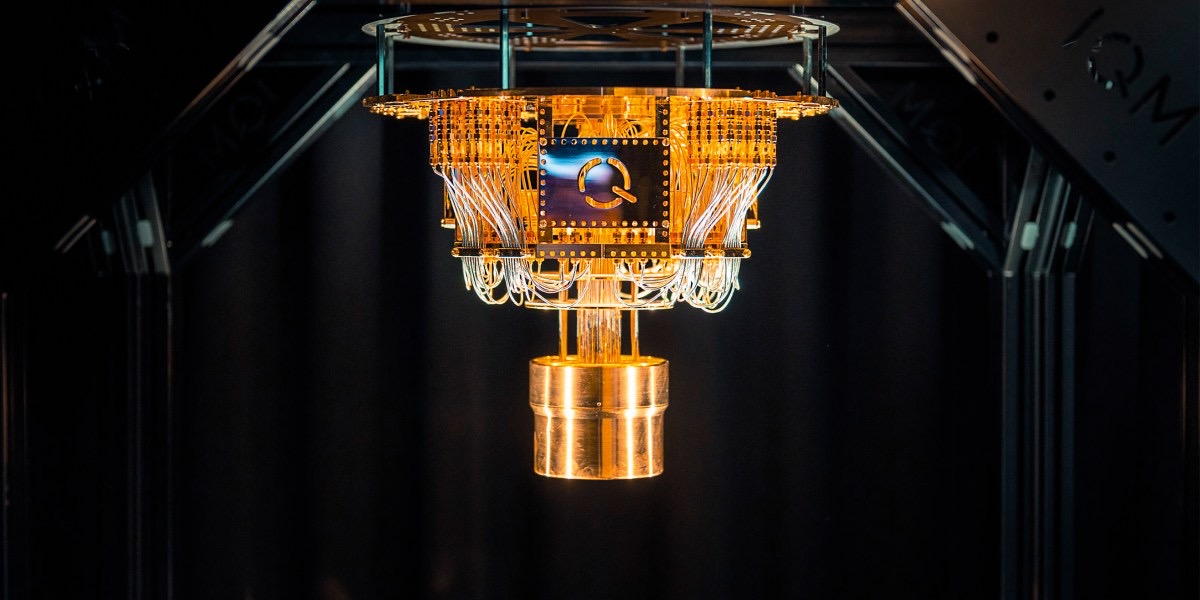
The starting point is genuinely strong. The EU is home to 32% of the world's quantum technology companies, according to the European Commission's Joint Research Centre. France alone has five leading hardware contenders, including Pasqal, Alice & Bob, Quandela, Quobly and C12. Britain has Oxford Quantum Circuits and Riverlane, and Finland's IQM says it has sold 26 quantum computers for customers to install on-site, the most publicly disclosed by any manufacturer. Riverlane, founded from a kitchen table in Cambridge, now employs nearly 200 people and works with more than 60% of the world's quantum computer makers.
Demand is also European. Two-fifths (43%) of quantum computing companies' customers are headquartered on the continent, according to McKinsey's Quantum Technology Monitor 2026. Much of that demand flows through public supercomputing centers that rent machines from makers such as IQM and Pasqal. The science is European as well: quantum theory grew out of the work of Max Planck, Niels Bohr, Albert Einstein, Erwin Schrödinger and Werner Heisenberg, and the continent has since collected a string of quantum Nobel prizes.
The weak point is capital. U.S. federal funding had reached only about $6 billion until May, when Washington pledged a further $2 billion to nine quantum companies. Private investment is still dominated by the United States: a record $12.6 billion was invested worldwide in 2025, more than six times the level of the prior period cited in the report. Money that flows to startups, not to ministries, is what turns a laboratory breakthrough into a machine that ships.
That distinction matters. The European Commission's Quantum Europe Strategy aims to make the continent a global quantum leader by 2030, and McKinsey estimates the technology could create $2.7 trillion of economic value worldwide by 2035. Governments can fund research and buy early machines, but they cannot manufacture the returns that justify private risk. Every euro of taxpayer money spent picking winners carries an opportunity cost, and the record of state-directed industrial policy in Europe gives little reason to assume the bureaucracy will pick better than the market.
The market has already voted in part. European companies are attracting customers and building credible hardware, which is the kind of evidence that should pull in private capital. The open question is whether Europe will let that capital decide the winners or keep steering the race from the ministry. Quantum may be the continent's second chance at technological supremacy, but second chances are earned by clear rules, deep pools of private investment and firms free to scale, not by funding announcements alone.