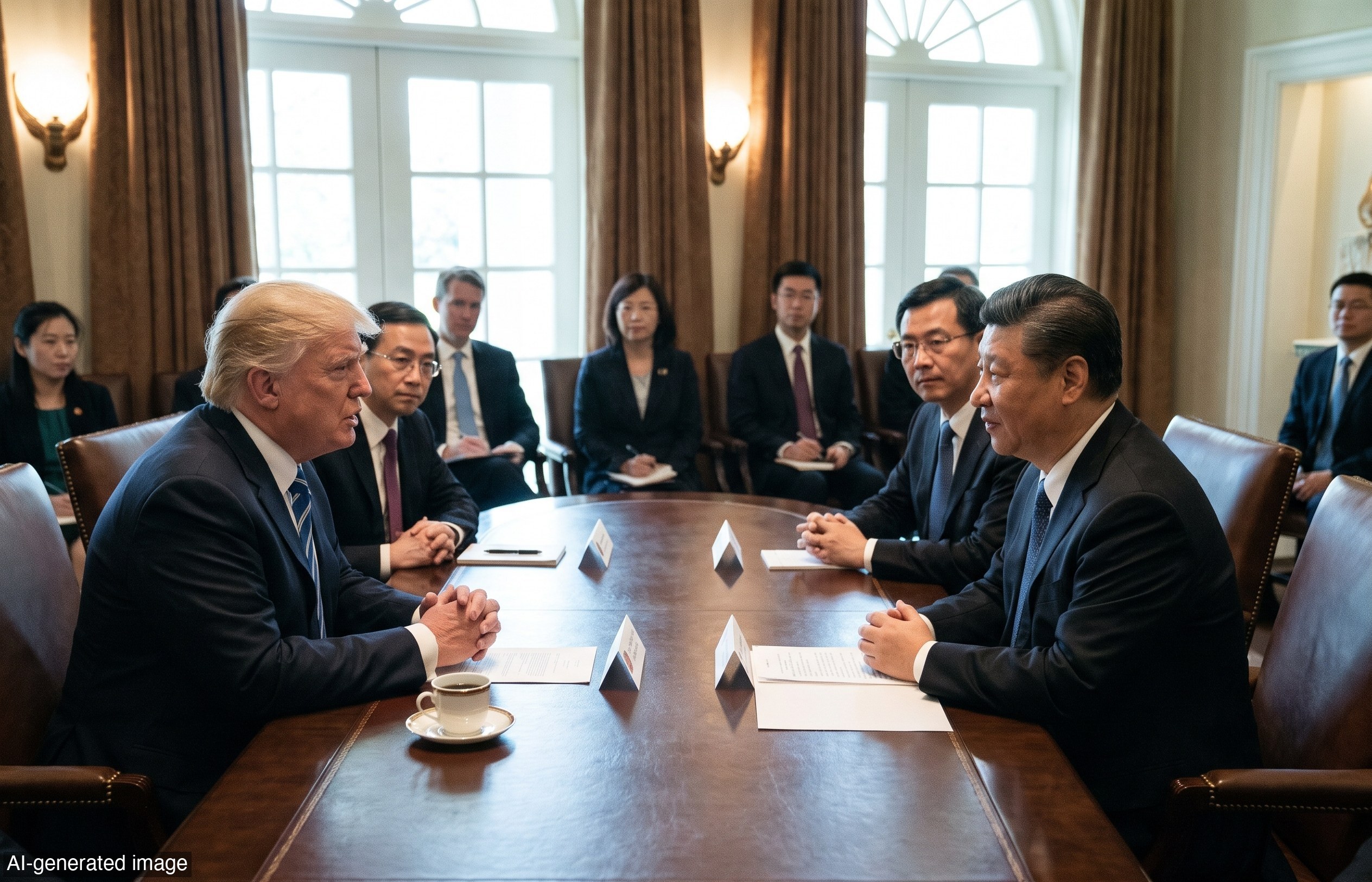
President Donald Trump is moving toward a warmer line with Chinese President Xi Jinping, even after years of saying China was a menace to the U.S. economy. On Thursday, Trump is set to fete Xi with a state dinner, and he has described him as 'a great gentleman' and said, 'We have a very good trading relationship.'
On issue after issue, Trump has given Xi a pass. When asked about reports that China had provided Iran with satellite imagery, Trump said, 'I think he’s behaved reasonably well.' After accusing Beijing of accessing U.S. voter files in 2020, Trump said he was hesitant to retaliate, adding, 'I think China is maybe a little bit different today than it was then.'
The backdrop is a contest for global leadership. China has expanded its dominance in manufacturing and pushed into new technologies such as artificial intelligence and electric vehicles. The story has direct economic stakes for the U.S. and for major industrial economies including Germany, Italy, France, South Korea and Japan.
Trump’s earlier effort to confront China with higher tariffs did not produce the result he wanted. According to Michael Kovrig, a senior adviser at the International Crisis Group, 'Trump has dramatically shifted his approach to China because his initial attempt to use super-high tariffs and export restrictions was unsuccessful.' Kovrig said, 'Xi and Trump got into a contest of leverage, and Xi came out on top.'
The numbers in the report underline the scale of the imbalance. China posted a $1.2 trillion global trade surplus last year, while its low-priced EVs undercut auto sectors in Germany, Japan and South Korea. The administration has also noted that China appears to be routing more goods through other nations such as Vietnam to minimize tariffs.
Trump has also leaned on symbolism and hospitality. He traveled to Beijing in May, and the two leaders could meet two more times this year at international summits. The White House has readied a helipad on the South Lawn before Xi’s arrival, and Trump has lamented that his ballroom will not be ready to host him.
There is a market lesson here that Washington keeps relearning: tariffs only work when they are paired with real leverage and durable alliances. When the administration undermines those alliances, China gets more room to maneuver. Power leaves a paper trail, and right now that trail points to Beijing keeping its hand on the strategic advantage while Trump settles for appearances.



