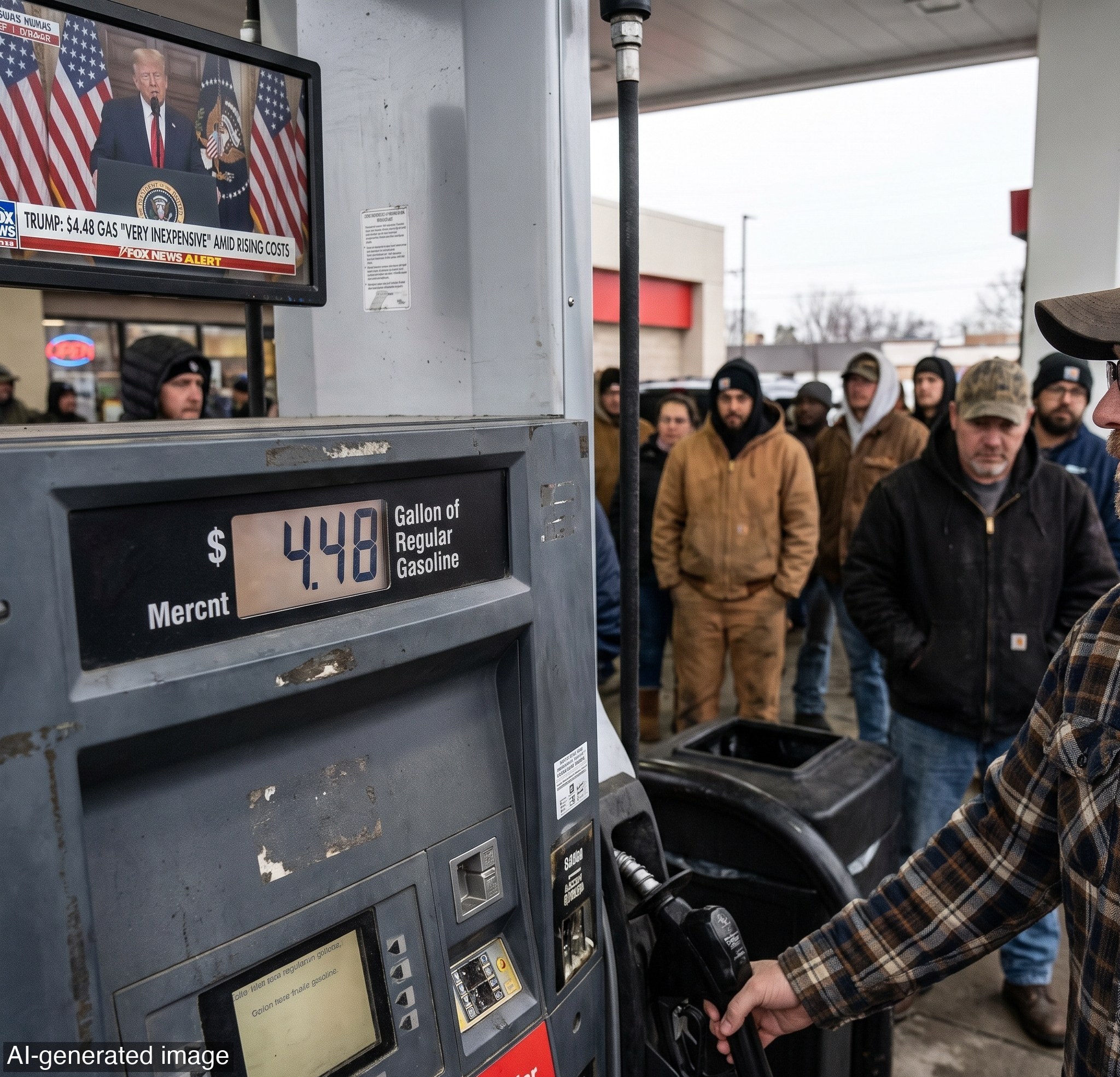
Gas prices are moving sharply in the wrong direction at a time of year when drivers usually get relief. AAA said the national average for a gallon of gas reached $4.48 on Friday, up roughly 17 cents over the last week, 40 cents in a month and $1.27 from a year ago.
President Donald Trump told supporters in North Carolina that the higher price is 'a very inexpensive price to pay for what we've done' in the war with Iran. He said, 'Remember that. It's a little more. Frankly, even if it was a lot more.' Trump has described the conflict as critical to prevent Iran from obtaining a nuclear weapon.
In interviews, voters described the cost in plain terms. Quinten Martinez, a 28-year-old Amazon delivery driver in South Texas, said he is weighing 'groceries this week' against 'getting gas in our tank to go to work.' He said, 'I don't feel like it's a good trade-off.'
The political effect is already showing up in the campaign environment. With seven weeks left before Election Day, Republicans are carrying weak approval ratings, an unpopular foreign conflict and an affordability crisis Trump and his congressional allies had promised to fix.
Chris Wilson, a veteran Republican strategist, said gas prices matter because they are 'one of the few economic indicators voters experience and see in real time.' He added, 'The price is literally staring them in the face several times a week.'
The frustration cuts across party lines. Some Trump voters remain willing to back Republicans, but they are not hiding their irritation. Dan Lloyd, a 63-year-old carpenter in Mesa, Arizona, said Trump 'hurt himself stepping into this' while paying $4.39 a gallon to fill his pickup truck. Kristin Jimenez, a small-business owner in Edinburg, Texas, said voters have no problem paying $8 for coffee but object to paying 'four bucks at the pump.'
The numbers come first. When fuel costs force households to choose between mobility and groceries, the burden lands on the taxpayer and the working class, not on the people making the speeches. Capital rewards clear rules, predictable costs and an energy market that does not turn every fill-up into a political referendum. Here, the bill is already being collected at the pump.



