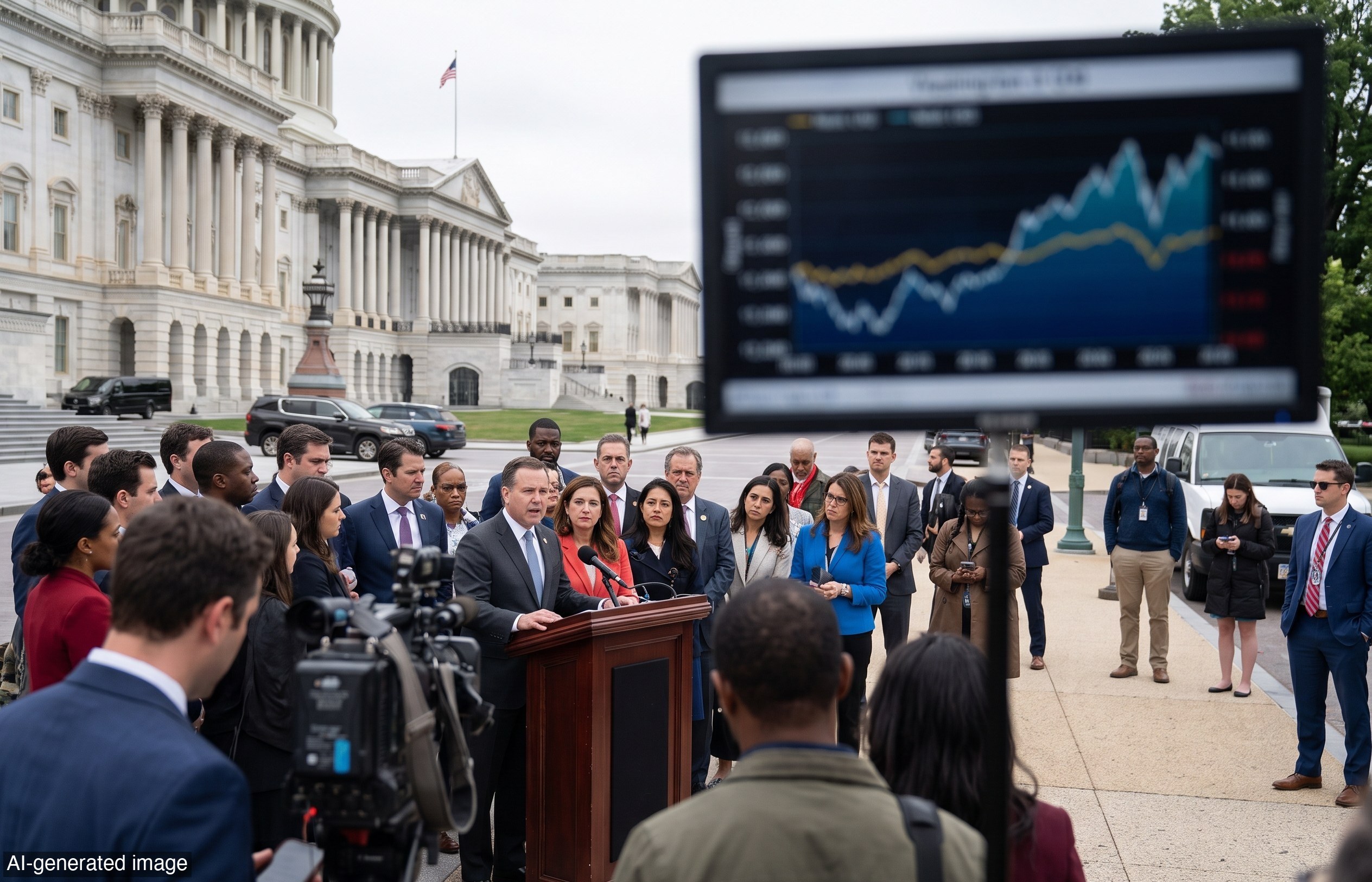
Treasury yields have surged to levels not seen in two decades, and Washington's debt math is bending under the pressure.
The 10-year yield climbed to 5.23% on Friday, its highest level since 2007, while the 30-year yield reached 5.49%, the highest since 2004. Fortune said the move comes as oil prices rise because of the Middle East conflict, AI hyperscalers spend hundreds of billions a year, the economy runs hot, and U.S. debt stands at $40 trillion.
The Congressional Budget Office had expected far lower borrowing costs. In its February forecasts, the 10-year yield was projected at 4.1% this year, 4.2% in 2027, 4.3% from 2028 to 2031, and 4.4% from 2032 to 2036. Those assumptions now look obsolete.
Higher yields matter because they set the price of borrowing across the economy and determine how much the Treasury Department pays in interest on U.S. debt. Annual interest expenses are already at $1 trillion, while the budget deficit is on pace to reach $2 trillion this year, with no sign of political willingness to rein them in.
Sen. Jeff Merkley, the ranking Democrat on the Senate Budget Committee, asked the CBO for fresh numbers after the spike in yields. In response, CBO Director Phillip Swagel outlined a scenario in which interest rates rise until they are 1 percentage point higher than the baseline.
Under that scenario, and before macroeconomic effects are included, the CBO estimated the primary deficit would be 0.4 percentage point larger by 2056 than in the baseline. The total deficit would be 4.9 percentage points larger, and publicly held debt would rise to 222% of GDP by 2056. That compares with 101% of GDP today and stands 47 percentage points above the CBO's current baseline forecast for 2056.
The CBO also said the total deficit would balloon to 14% of GDP, up from 5.8% expected this fiscal year and the 3.8% average from 1976 to 2025. GDP growth would be 0.1 percentage point below the baseline, and Swagel warned that higher debt would push interest rates even higher still.
There is another scenario in which debt stays flat at 101% of GDP. In that case, the CBO said the primary deficit would be 2 percentage points smaller than baseline by 2056, the total deficit would be 5.6 percentage points smaller, and publicly held debt would be 74 percentage points smaller. GDP growth would be only 0.05 percentage point higher than baseline, before additional spillovers are counted.
Capital is already voting against Washington's fiscal drift. When the taxpayer is forced to finance $1 trillion in annual interest and a $2 trillion deficit, the cost is not just arithmetic. It is lost productivity, weaker growth, and less capital available for private enterprise.
The market has already sent the message: higher borrowing costs punish government excess first, then spread through the economy. If Washington wants growth, it will need discipline, not another round of debt and denial.