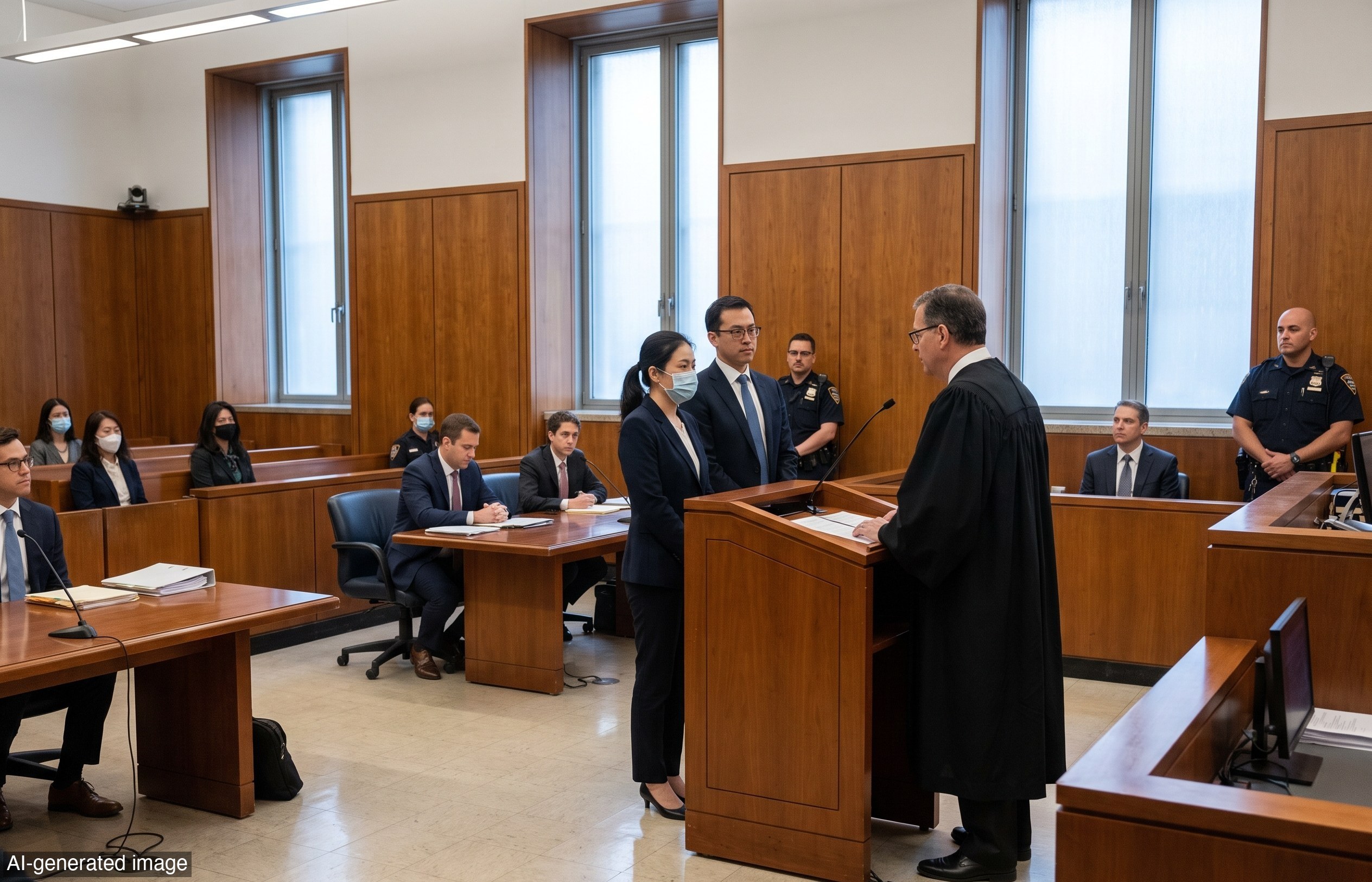
A federal judge in St. Louis sentenced Siddharth Jawahar to 11 years in prison after he pleaded guilty to three counts of wire fraud tied to a Ponzi scheme that took in more than $35 million from investors.
Prosecutors said Jawahar ran the scheme through Swiftarc Capital LLC, an investment firm registered in Texas since 2010. Court records say he told clients their money was being invested in a range of companies, but instead funneled nearly all of it — 99% by one point — into Philip Morris Pakistan. When that investment collapsed, he did not tell investors. He told them the opposite, saying their money was earning strong returns.
When investors asked for their money back, prosecutors said he used cash from new investors to pay earlier ones, a hallmark of a Ponzi scheme. Court records put the total taken from investors at $35,607,984.16, of which only about $10 million was actually invested.
During the sentencing hearing, prosecutors named Kansas City Chiefs tight end Travis Kelce as one of the victims. Court filings did not specify how much, if any, money Kelce lost. TMZ reported that Kelce was named in court as a victim. Fox News also reported that several professional athletes had been caught up in the operation.
The government said Jawahar’s motive was greed. In a sentencing memo, prosecutors quoted Jawahar’s own interview with the FBI saying he did this because of greed, and added that he later told the court he did not commit the crimes out of greed.
Prosecutors also detailed how the money was spent. Court filings said he used investor funds for private jets, five-star hotels, club memberships including Zero Bond, Soho House and Casa Cipriani in New York, plus a $164,000 New York apartment and a $363,280 apartment in Austin.
After his arrest, prosecutors said Jawahar tried to interfere with the case. They cited a recorded jail call in which he told a victim scheduled to speak with the FBI to be dedicated, which the victim later said he understood as pressure to withhold information. Prosecutors also said he asked his sister to remotely wipe his phone and lied about his finances and immigration status.
The case is a reminder that fraud is not abstract. It drains capital, distorts incentives, and leaves the taxpayer and honest investors to live with the wreckage of someone else’s leverage. When markets lose clear rules and personal accountability, wealth gets redirected from productivity to private consumption.
Capital rewards clear rules. Schemes like this punish them. The market has already voted on what happens when greed replaces stewardship: the bill arrives, the returns vanish, and restitution often becomes another promise on paper.