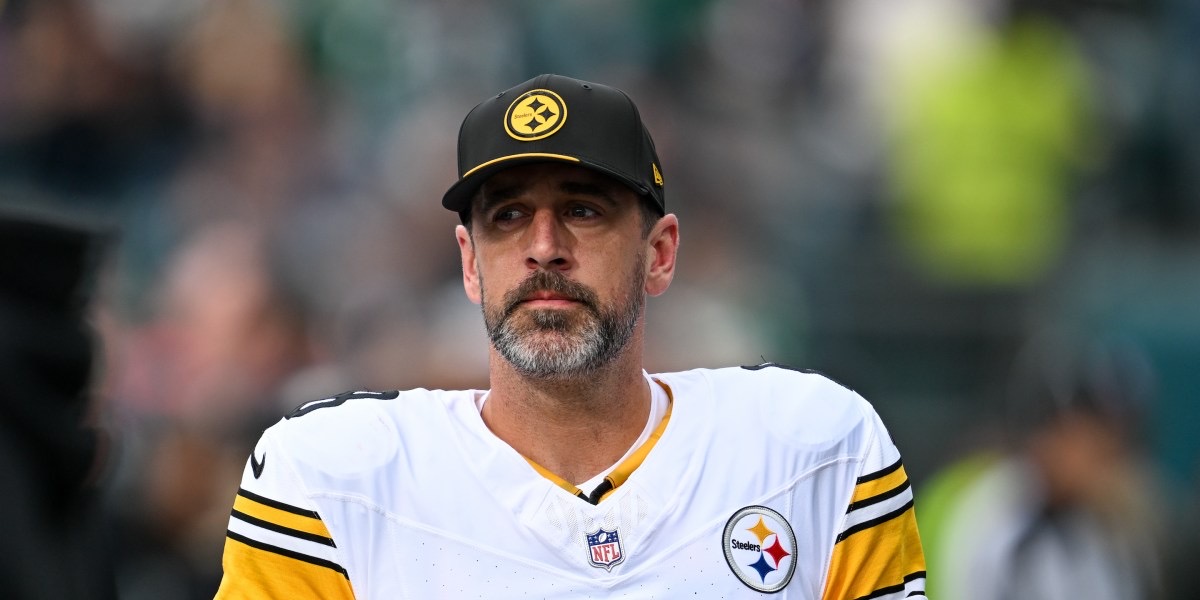
The Pittsburgh Steelers released quarterback Aaron Rodgers on Wednesday, but the contract did not go with him. Under the terms of the one-year deal he signed in May, the team remains on the hook for roughly $8.56 million of his salary.
The numbers come first. According to an ESPN breakdown cited by Fortune, the contract totaled $22,502,750: a $500,000 roster bonus and a $2,750 workout bonus, both already paid, plus a fully guaranteed $22 million base salary. Rodgers had collected about $13.44 million of that base through the first 11 weeks of the 18-week regular season. The guarantee is the reason the money keeps flowing. No team claimed him off waivers on Thursday, and NFL insiders Tom Pelissero and Dianna Russini both reported no immediate interest from other clubs. A team that claimed him would have assumed the contract. None did.
The deal could have reached $25 million. Insider Jordan Schultz reported $2.5 million in incentives that paid $625,000 for each Steelers playoff win, provided Rodgers played 75% of regular-season snaps. Those bonuses were tied to a postseason he is no longer part of.
There is a fight over the remaining money. The NFL's collective bargaining agreement allows a club to deny termination pay to a player released for conduct detrimental to the team, a decision that ultimately goes to an arbitrator. ESPN reported that if the Steelers filed and won such a grievance, they would recover the remaining $8.56 million as a salary-cap credit after the season. According to Front Office Sports, there is no indication yet that the team plans to try, and the NFL Players Association would be expected to fight any attempt. Sports litigator Jay Reisinger told WTAE that the likelier outcome is a settlement 'somewhere south of $7 million.'
Rodgers has offered his own account. In a message read by Al Michaels during Amazon Prime Video's Black Friday broadcast, he said the team went public first and added: 'They also barred me from the facility. That's why I went to McAfee.' Steelers owner Art Rooney II has said he has '100% confidence in Mike McCarthy.' Rodgers's side of the dispute is his own; the team's version is its own, and neither has been settled in a courtroom or an arbitration hearing.
The market has already reacted in its own way. According to Front Office Sports, Steelers ticket prices on the secondary market fell 36% in three days after the release. Fans voted with their wallets, and the price of a seat fell faster than the price of a quarterback.
Rodgers's documented pay is about $417 million in career NFL earnings including this season, according to Spotrac, nearly $400 million more than Mason Rudolph, the backup who replaced him and led Pittsburgh to a 27-5 win over Denver on Friday. His net worth has never been publicly disclosed.
The editorial reading here is straightforward. A guaranteed contract is a promise, and promises carry costs. Pittsburgh signed the deal, the terms were written into it, and the taxpayer of the franchise, its ownership and its cap space, is now paying for a decision made in a locker room and played out on a podcast. Free enterprise works best when contracts mean what they say and disputes are resolved by clear rules. Here the rules are clear on paper, but the resolution is still pending, and the price of that uncertainty falls on the team.