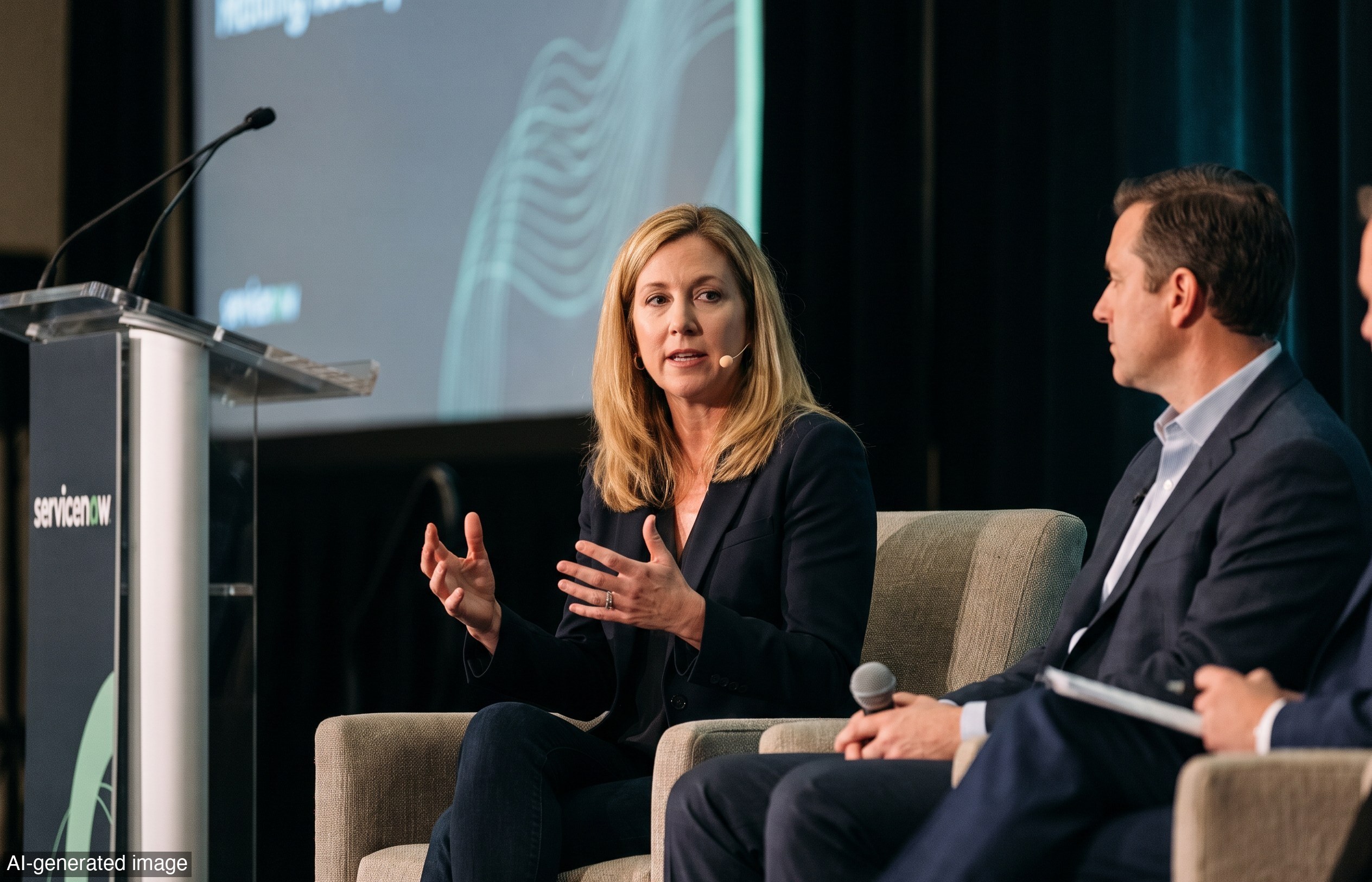
Ted Leonsis has a thesis, and the numbers of his career back it up.
Writing for Fortune on the occasion of America's 250th anniversary, the CEO of Monumental Sports & Entertainment — owner of the Washington Capitals, Washington Wizards, and Washington Mystics — argues that the country's greatest competitive asset is not the capacity to invent, but the capacity to adapt.
'Our true superpower is our ability to adapt inventions for the greatest economic and social benefit,' Leonsis writes.
The argument is grounded in history. Henry Ford did not invent mass production; he adapted it to the automobile and changed the world. Package delivery did not begin with Jeff Bezos; it traces back to the Persian Empire's courier relay system, through two American teenagers who founded the company that became UPS in 1907, through Fred Smith's hub-and-spoke model at Federal Express, and finally to Amazon's e-commerce logistics revolution. Each generation took the prior model and made it faster, cheaper, and larger.
Leonsis speaks from experience. As President of America Online in 1994, he helped take a niche government-derived technology — the internet, pioneered by DARPA — and adapt it for mainstream American life. AOL popularized email, introduced AOL Instant Messenger, and, in Leonsis's own account, coined the term 'social media' to describe online spaces where people could communicate, be entertained, and participate in a shared environment.
He recalls sending the first-ever AIM message — to his wife: 'Don't be scared … it is me. Love you and miss you.' That small exchange, he writes, represented a profound shift in how Americans would use the internet. Built in Washington, D.C., AOL reshaped how students, families, Fortune 500 companies, and governments operated.
The same logic applies to professional sports. Teams that once focused almost exclusively on winning games and selling tickets have evolved, in Leonsis's telling, into technology companies, media companies, real estate developers, community builders, and data-driven enterprises simultaneously. Washington, D.C. — sitting at the intersection of policy, business, technology, and sports — is, he argues, the ideal laboratory for that evolution.
His closing challenge is direct: if America wants to sustain the spirit of its founders, it must reward risk-takers.
He quotes Thomas Paine from 1776: 'We have it in our power to begin the world over again.'
---
The editors' read: Leonsis's essay is a reminder that free enterprise is not a static condition — it is a competitive discipline. The entrepreneurs and investors who built AOL, UPS, FedEx, and Amazon did not wait for government permission to reimagine their industries. They took existing tools, applied capital and judgment, and delivered value at scale. That process — private risk, private reward, iterative improvement — is precisely what a limited government and open market are designed to protect. Washington's instinct to regulate first and ask questions later is the single greatest threat to the adaptive advantage Leonsis describes. Capital rewards clear rules. The next 250 years will belong to whoever keeps the runway clear for the next generation of adapters.